
 English
 中文简体
中文简体
Content
- 1 The Short Answer: Worn Rollers Are the Most Common Cause
- 2 How Roller Wear Develops Into Vibration and Noise
- 3 Recognizing the Symptoms of Roller Failure
- 4 Roller Material and Hardness: What Affects Durability
- 5 Practical Steps to Reduce Long-Term Maintenance Costs
- 6 Choosing a Reliable Roller Supplier
- 7 Frequently Asked Questions
The Short Answer: Worn Rollers Are the Most Common Cause
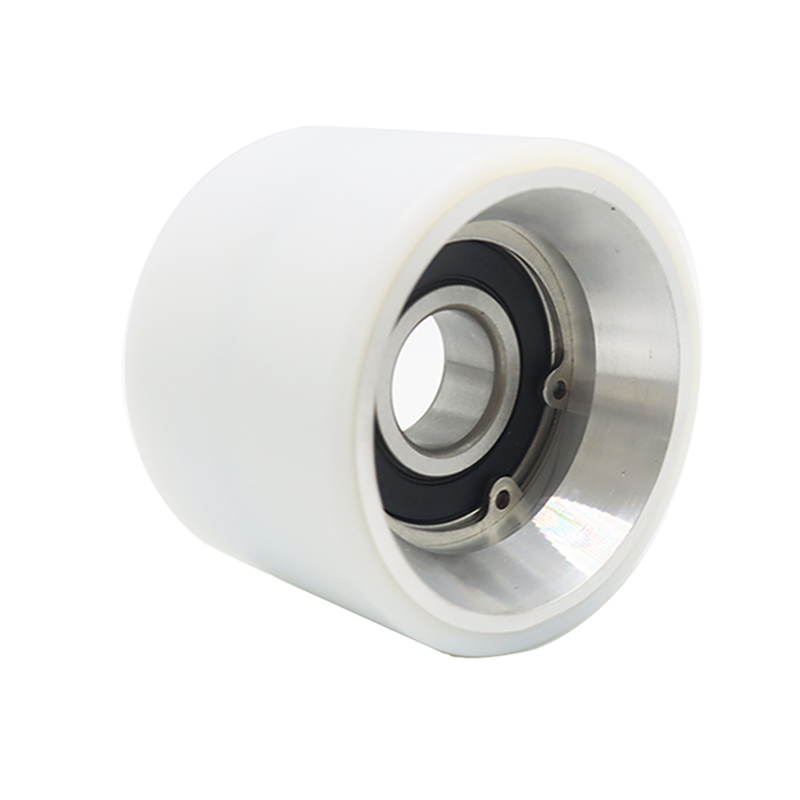
In most cases, escalator noise comes from worn or damaged escalator rollers, particularly the step rollers and chain rollers that guide the step band along its track. As the outer polyurethane layer wears down or develops flat spots, the roller no longer rolls smoothly against the guide rail, which produces a repetitive clicking, knocking, or grinding sound that often gets louder as the escalator speeds up.
This is one of the most frequent questions building maintenance teams search for: why escalator makes noise when running. While other components such as the drive chain, handrail, or comb plate can also contribute to noise, roller-related issues account for a large share of reported cases because rollers are constantly under load and in direct contact with the track every time the escalator runs.
Understanding the relationship between roller condition and noise level helps maintenance teams catch problems early, before a worn escalator step roller leads to uneven step movement or accelerated wear on neighboring components.
The horizontal bar chart above illustrates how frequently different components are identified as the source of escalator noise during routine inspections. Step and chain rollers represent the largest share, which aligns with the fact that these parts undergo continuous rolling contact and load-bearing stress with every cycle of the step band. Drive chain tension issues follow closely, often appearing alongside roller wear since a loose chain can accelerate uneven roller contact. This distribution helps explain why technicians typically begin diagnostics at the roller and chain assembly before inspecting other components.
How Roller Wear Develops Into Vibration and Noise
An escalator wheel assembly is designed to roll smoothly along a fixed track, distributing the weight of the step band evenly across multiple contact points. When the outer surface of a roller wears unevenly, develops a flat spot, or hardens due to age, the contact between the roller and track becomes irregular. Each rotation then produces a small impact rather than a smooth roll, and these impacts repeat at a frequency tied directly to the escalator's speed and the roller's diameter.
Over time, this irregular contact pattern is one of the leading escalator vibration problem causes, because the impact forces transmit through the step chain and frame structure. What begins as a faint clicking sound at low speed can become a noticeable knocking or rattling at normal operating speed, and in more advanced cases, the vibration becomes perceptible to passengers standing on the steps.
The progression generally follows a recognizable pattern: minor surface wear first causes intermittent noise, then more consistent noise as wear spreads, and finally measurable vibration as the roller's rolling diameter becomes uneven across its circumference.
This line chart illustrates a typical wear progression pattern over thousands of operating hours. Noise levels, shown in the upper line, tend to rise earlier and more steeply because surface irregularities affect sound generation before they significantly affect the roller's overall geometry. Vibration, shown in the lower line, increases more gradually at first but accelerates once wear becomes pronounced enough to alter the rolling diameter. Recognizing this gap between when noise first appears and when vibration becomes noticeable gives maintenance teams a useful early warning window.
Recognizing the Symptoms of Roller Failure
Identifying escalator roller failure symptoms early can prevent more costly repairs to the step chain, track, or drive system. The table below outlines the most commonly reported symptoms, what typically causes them, and what they often indicate about the roller's condition.
| Symptom | Likely Cause | Severity Indication |
|---|---|---|
| Rhythmic clicking sound | Flat spot on roller surface | Early stage |
| Knocking that increases with speed | Uneven wear across roller width | Moderate |
| Visible cracking or chunking | Material fatigue or aging polyurethane | Advanced |
| Step vibration felt underfoot | Multiple rollers with uneven diameter | Advanced |
| Uneven step gap at comb plate | Roller wear affecting step alignment | Moderate to advanced |
Maintenance teams that log these symptoms over time often notice a pattern: escalator spare parts roller wear tends to cluster around sections of the track with the tightest curves, since these areas place more lateral load on the roller's edge compared to straight sections of track.
Roller Material and Hardness: What Affects Durability
Roller durability depends heavily on the polyurethane compound used for the outer layer, its hardness rating, and how well it bonds to the inner hub. A durable escalator wheel for heavy duty use typically uses a higher-density polyurethane formulation that resists compression set, meaning it returns to its original shape after repeated loading rather than gradually flattening.
Hardness Trade-Offs
Harder polyurethane compounds generally resist wear longer but can transmit slightly more vibration if the track surface has minor imperfections. Softer compounds absorb more vibration but may wear faster under heavy passenger loads. Manufacturers balance these properties based on the expected traffic volume of the installation, whether it is a shopping center, transit station, or commercial building.
Why Consistency Across a Set Matters
When replacing rollers, consistency in hardness and diameter across the full set is just as important as the quality of any single roller. A mismatched set, where some rollers are new and others are partially worn, can create uneven load distribution that accelerates wear on the newer rollers and reintroduces the same noise and vibration issues shortly after a partial replacement.
The radar chart compares heavy-duty and standard rollers across six performance dimensions relevant to commercial installations. Heavy-duty rollers generally extend further on wear resistance, load capacity, and service life, reflecting their suitability for high-traffic environments like transit hubs and large shopping centers. Standard rollers remain a reasonable fit for lower-traffic installations, where cost efficiency and adequate noise damping are sufficient without the added load capacity that heavy-duty designs provide.
Practical Steps to Reduce Long-Term Maintenance Costs
For building managers researching how to reduce escalator maintenance cost, the most effective approach combines early detection with scheduled component checks rather than waiting for noise to become noticeable to passengers. Catching roller wear during its early stage, when only intermittent clicking is present, generally allows for a more controlled replacement schedule.
- Schedule periodic visual inspections of step rollers and chain rollers for flat spots or surface cracking
- Log any new noise or vibration reports with the date and approximate location on the escalator
- Check chain tension regularly, since a loose chain accelerates uneven roller contact
- Replace rollers as a matched set rather than individually when wear is widespread
- Keep replacement rollers matched in hardness and diameter to the original specification
Working with an experienced escalator spare parts supplier China factory partner that maintains consistent production tolerances helps ensure that replacement rollers match the dimensional and hardness specifications of the original equipment, which supports smoother long-term performance after a roller replacement.
This column chart compares relative downtime and unplanned repair frequency across three maintenance approaches. Reactive repairs, addressed only after a failure becomes noticeable, generally correspond to the highest unplanned downtime because issues are often identified after they have already affected multiple components. Scheduled inspection programs reduce this by catching early-stage wear before it spreads. Matched-set replacement, where all rollers in a section are replaced together based on consistent wear data, tends to correspond to the lowest long-term disruption since it avoids the uneven loading that comes from mixing new and worn rollers.
Choosing a Reliable Roller Supplier
Sourcing from a high quality escalator roller manufacturer with established production processes and quality inspection procedures helps ensure that replacement rollers perform consistently across an entire set. Dimensional accuracy in the bore, outer diameter, and bearing fit all affect how smoothly a new roller integrates with the existing track and chain system.
For buildings sourcing through an escalator replacement roller OEM factory arrangement, having access to detailed specification matching is particularly useful, since OEM-aligned dimensions reduce the chance of fitment issues during installation. This is especially relevant for buildings with mixed-brand escalator fleets, where different units may use slightly different roller specifications even within the same building.
A low noise escalator roller for commercial building applications, such as shopping centers, office lobbies, and transit stations, benefits from consistent quality control during manufacturing, since even small variations in roundness or surface finish across a batch of rollers can introduce noise differences between individual steps that are noticeable to passengers over time.
- Dimensional consistency across full production batches
- Polyurethane hardness verified against original specifications
- Bearing quality suitable for continuous rotational load
- Reliable supply continuity for matched-set replacements
Frequently Asked Questions
| Q1: Why does my escalator make a clicking noise? A rhythmic clicking sound usually points to a flat spot or surface wear on one or more step rollers contacting the guide track. |
Q2: What causes escalator vibration? Vibration often develops when multiple rollers have uneven wear, causing the rolling diameter to vary slightly as the step band moves. |
| Q3: How do I know if my escalator rollers need replacing? Common signs include rhythmic clicking, knocking that increases with speed, visible cracking, or vibration felt through the steps. |
Q4: Should rollers be replaced one at a time or as a set? Replacing as a matched set is generally preferred, since mixing new and worn rollers can cause uneven loading and renewed noise. |
| Q5: How can I reduce long-term maintenance costs? Scheduled inspections that catch early wear, combined with matched-set replacements, typically reduce unplanned downtime over time. |
Q6: What makes a roller more durable for heavy traffic? Higher-density polyurethane with good compression recovery resists flattening better under continuous heavy passenger loads. |
| Q7: Does roller hardness affect noise levels? Yes, harder compounds resist wear longer but may transmit slightly more vibration on tracks with minor surface imperfections. |
Q8: Why does roller wear concentrate near curves? Curved sections of track place more lateral load on roller edges compared to straight sections, leading to faster localized wear. |