
 English
 中文简体
中文简体
The direct answer: choosing the right elevator guide shoe in 2026 depends on three core factors - elevator speed, load capacity, and the type of guide rail installed. For low-speed passenger elevators below 1.0 m/s, a sliding elevator guide shoe made from polyurethane or nylon is typically sufficient. For high-speed elevators operating above 2.5 m/s, a roller elevator guide shoe is the industry-standard choice, delivering lower friction, reduced vibration, and longer service intervals.
Elevator guide shoes are critical components in every elevator system. They sit at the top and bottom of the car frame and counterweight, maintaining precise alignment along the guide rail throughout every journey. A mismatch between guide shoe type and operating conditions leads to accelerated wear, increased noise, passenger discomfort, and costly unplanned downtime. This guide walks through everything needed to make an informed decision in 2026.
Content
- 1 What Is an Elevator Guide Shoe and How Does It Work?
- 2 Sliding vs Roller Elevator Guide Shoe: Core Differences
- 3 Guide Shoe Materials: Polyurethane, Nylon, and Beyond
- 4 Performance Radar: Choosing by Application Type
- 5 Key Selection Criteria for Elevator Guide Shoe in 2026
- 6 Elevator Guide Shoe Maintenance: Inspection and Replacement Intervals
- 7 Elevator Guide Shoe Replacement: What to Expect
- 8 About Ningbo Yinzhou Fukangda Elevator Parts Factory
- 9 Frequently Asked Questions
What Is an Elevator Guide Shoe and How Does It Work?
An elevator guide shoe is a precision component mounted on the car frame and counterweight that rides along the vertical guide rail inside the elevator shaft. Its primary function is to keep the elevator car traveling in a controlled, stable path - preventing lateral movement, oscillation, and contact between the car and shaft walls. Without properly functioning guide shoes, the elevator car would shift unpredictably during travel, creating both a safety hazard and a poor ride experience.
Each elevator car is typically fitted with four guide shoes - two at the top and two at the bottom of the car frame. The counterweight assembly carries an additional set. When the elevator moves, the guide shoe maintains contact with the guide rail flange, absorbing minor rail imperfections and managing the forces generated by acceleration, deceleration, and load shifts.
In a sliding elevator guide shoe, a replaceable liner - typically polyurethane or nylon - provides a low-friction surface against the rail. In a roller elevator guide shoe, spring-loaded rollers make contact with the rail faces, virtually eliminating sliding friction and enabling smooth high-speed operation. The choice between these two fundamental designs has significant downstream effects on noise, vibration, maintenance frequency, and component lifespan.
Guide Shoe Type by Elevator Speed Application (%)
This chart illustrates how guide shoe selection is heavily dictated by elevator operating speed. At low speeds, sliding guide shoes dominate due to their simplicity and cost-effectiveness. The transition zone between 1.0 and 2.5 m/s sees a mix of both types, often influenced by building class and vibration tolerance requirements. Above 2.5 m/s and particularly in high-speed passenger elevator applications, roller guide shoes are effectively universal - their rolling contact mechanism is the only practical way to manage friction and noise at such velocities.
Sliding vs Roller Elevator Guide Shoe: Core Differences
Understanding the operational distinctions between sliding and roller guide shoes is fundamental to making the right selection. Both types fulfill the same guiding function, but their mechanical principles, maintenance profiles, and ideal operating conditions differ significantly.
Sliding Elevator Guide Shoe
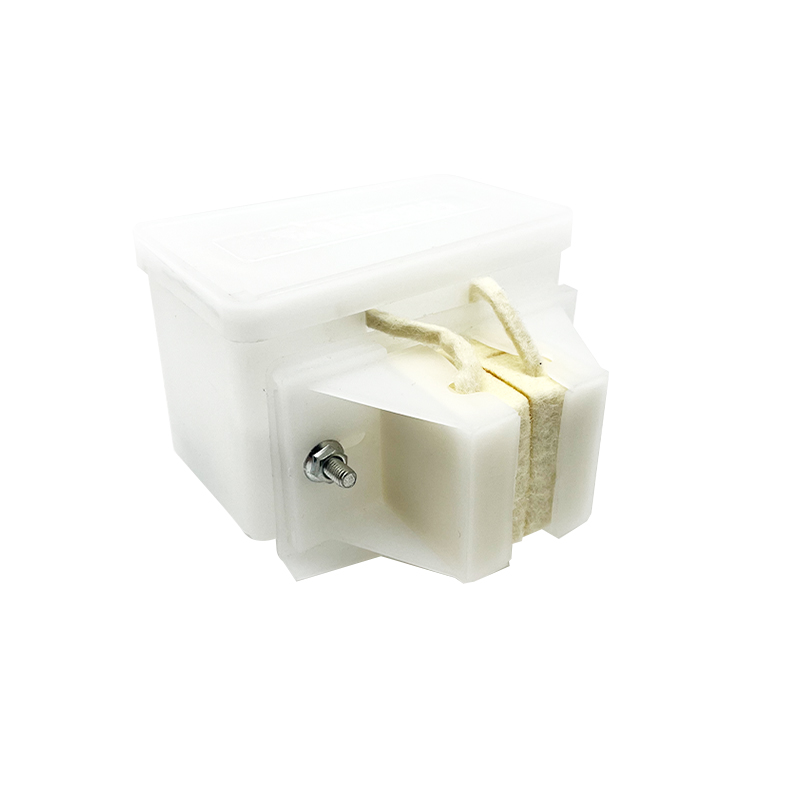
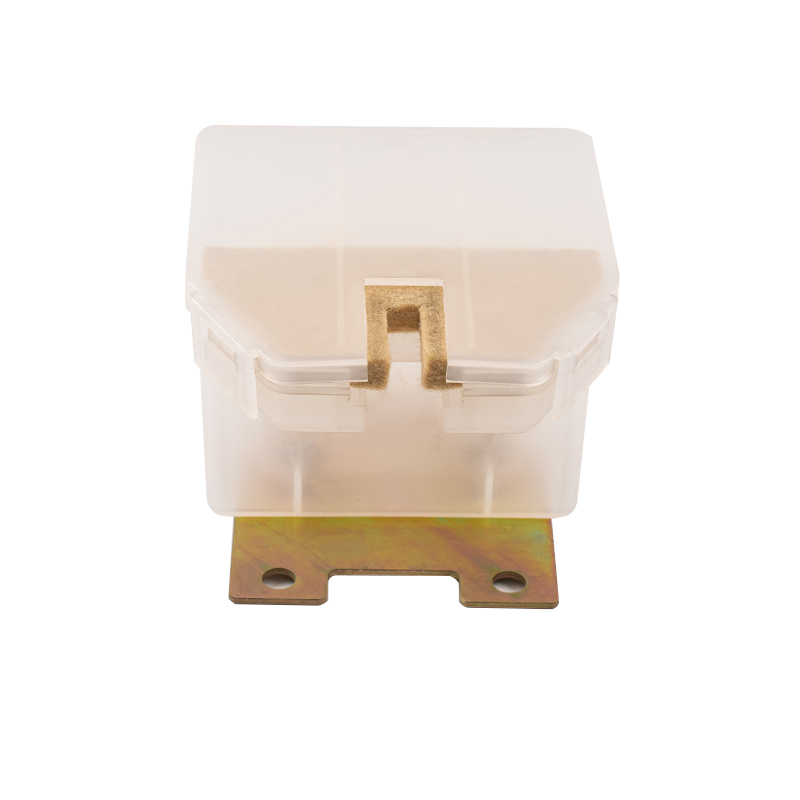
The sliding guide shoe uses a fixed liner material - most commonly polyurethane elevator guide shoe compounds or engineered nylon - that maintains constant surface contact with the guide rail. This design is mechanically simple, compact, and well-proven over decades of elevator installations. Lubrication from an oil reservoir or automatic lubrication system reduces friction and extends liner life. Typical liner replacement intervals range from 12 to 36 months depending on operating frequency and rail condition.
Roller Elevator Guide Shoe
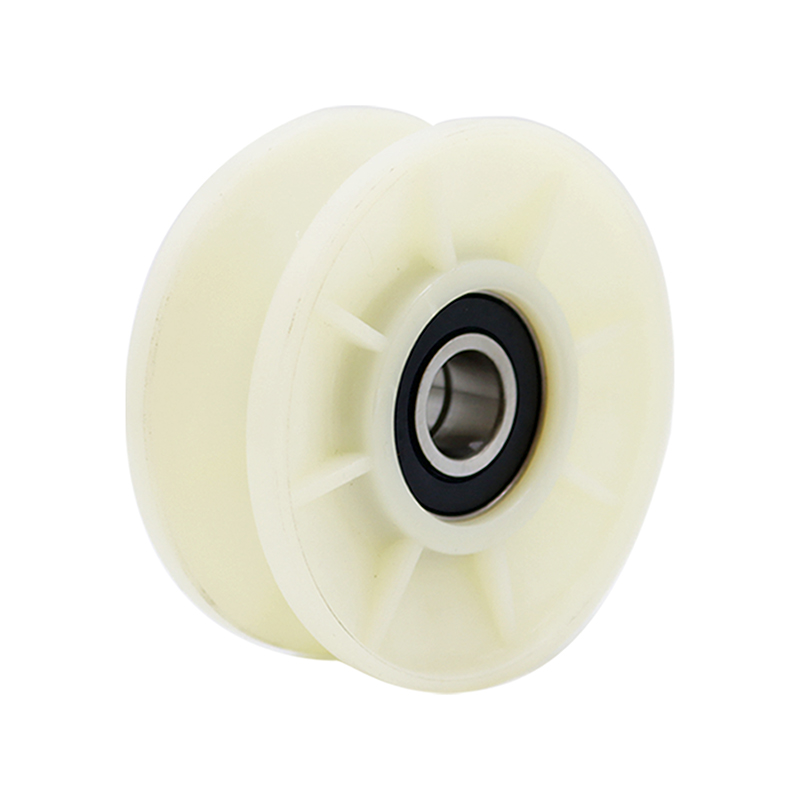
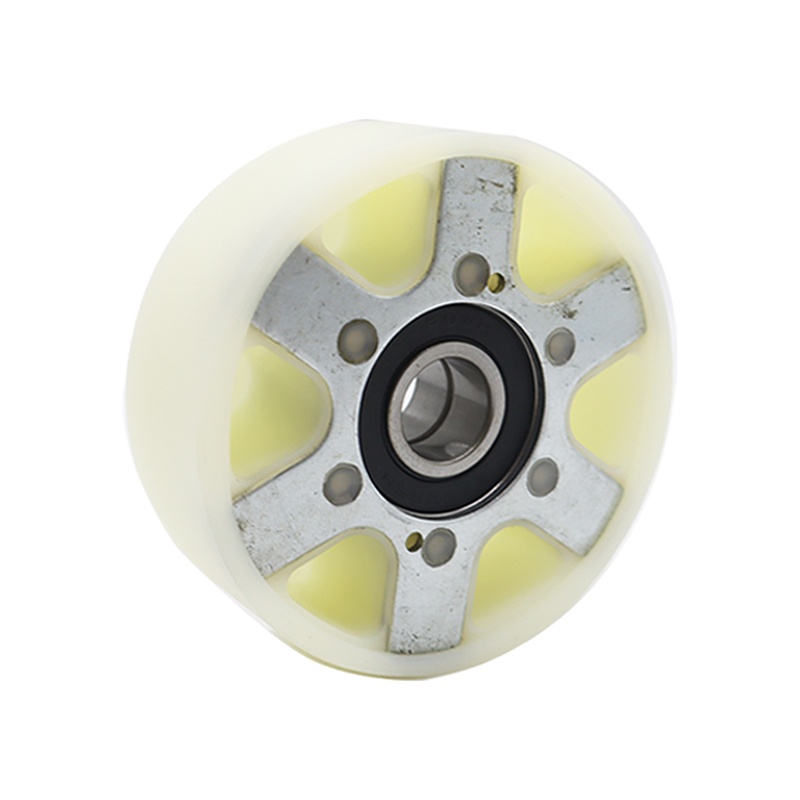
The roller guide shoe replaces sliding contact with rolling contact through precision-engineered spring-loaded wheels. Three rollers - one for each rail face - maintain gentle, consistent contact without requiring the lubrication systems that sliding shoes depend on. The rolling mechanism absorbs rail surface imperfections dynamically, making it the preferred solution for high speed elevator guide shoe applications and premium passenger elevator environments where ride quality is paramount.
| Attribute | Sliding Guide Shoe | Roller Guide Shoe |
|---|---|---|
| Friction Type | Sliding (surface contact) | Rolling (point contact) |
| Speed Range | Up to 2.0 m/s | 0.5 m/s to 10+ m/s |
| Lubrication Required | Yes (oil or grease) | Minimal |
| Noise Level | Moderate | Low |
| Vibration Dampening | Good | Excellent |
| Maintenance Interval | 12-36 months (liner) | 24-60 months (roller) |
| Typical Application | Residential, freight, low-rise | Commercial, high-rise, high-speed |
Guide Shoe Materials: Polyurethane, Nylon, and Beyond
The material composition of a guide shoe liner or roller directly determines wear rate, noise characteristics, and compatibility with different rail surface finishes. In 2026, three materials dominate the market for sliding liner applications, while roller guide shoes use specialized rubber and polymer composites for their contact wheels.
Polyurethane Elevator Guide Shoe Liners
Polyurethane has emerged as the material of choice for modern sliding guide shoe liners. Its combination of high elasticity, excellent abrasion resistance, and consistent low-friction performance across a wide temperature range makes it superior to older nylon formulations in most passenger elevator applications. Polyurethane liners typically exhibit 30 to 50 percent longer service life than equivalent nylon liners under similar operating conditions. They also produce less noise during operation - a critical advantage in residential buildings and hotels.
Nylon Liners
Nylon (PA6 and PA66 grades) remains widely used for freight elevator guide shoe liners where ride quality is secondary to load capacity and cost efficiency. Nylon offers good compressive strength and is relatively easy to machine to precise tolerances. It is, however, more susceptible to moisture absorption, which can cause dimensional changes and affect clearance precision in humid environments.
Cast Iron and Metallic Shoes
Older elevator installations may still use cast iron sliding guide shoes, particularly in industrial and freight applications. These require regular lubrication and generate more noise but offer exceptional dimensional stability and load-bearing capacity. In modern installations, metallic guide shoes are largely replaced by polymer-based designs, though they remain appropriate for certain heavy-duty environments.
Material Performance Comparison - Liner Lifespan (Months at 200 Trips/Day)
The column chart compares average service life across four major guide shoe material categories under identical operating conditions of approximately 200 elevator trips per day. Polyurethane liners achieve around 42 months of service, representing a substantial improvement over nylon (28 months) and cast iron (18 months). Roller guide shoe wheels using polyurethane compounds reach 54 or more months because rolling contact generates far less surface wear than sliding. This lifespan advantage directly translates into lower long-term maintenance costs and reduced elevator downtime - a critical consideration for high-traffic buildings.
Performance Radar: Choosing by Application Type
Different building types and elevator applications place different demands on guide shoe performance. A freight elevator in a warehouse prioritizes load capacity and durability over ride comfort, while a passenger elevator in a luxury hotel demands whisper-quiet operation and minimal vibration. The radar chart below maps three common guide shoe configurations against six key performance dimensions to help identify the optimal match for each scenario.
Guide Shoe Configuration Performance Radar
The radar chart clearly illustrates the strengths and trade-offs of each guide shoe configuration. Roller polyurethane guide shoes score highest on ride comfort, noise reduction, and speed capacity - making them the obvious choice for high-speed passenger elevators. Sliding polyurethane guide shoes excel in maintenance simplicity and cost efficiency while still delivering good comfort, making them ideal for residential and mid-rise commercial installations. Cast iron sliding shoes stand out only in raw load capacity, and their low scores on comfort and noise limit them to industrial freight applications where those factors are secondary. No single type dominates all dimensions, which is why application context is the decisive factor in guide shoe selection.
Key Selection Criteria for Elevator Guide Shoe in 2026
Selecting the right elevator guide shoe requires evaluating a structured set of technical and operational parameters. The following criteria represent the industry consensus among elevator engineers and maintenance professionals in 2026.
1. Rated Speed and Guide Rail Specification
Match the guide shoe type precisely to the elevator's rated speed. For a guide shoe for passenger elevator operating above 1.75 m/s, roller type is strongly recommended. Verify that the guide shoe clearance specification matches the guide rail width and flange dimensions - common rail sizes include T-rails in 9mm, 12mm, 16mm, and 19mm blade widths. Improper clearance causes accelerated wear and unacceptable noise levels.
2. Load and Safety Factor Requirements
The guide shoe assembly must withstand both static and dynamic loads, including the forces generated during emergency braking by the safety gear. For a standard 1000 kg passenger elevator, guide shoe assemblies are typically rated to handle lateral forces of 5 to 15 kN per shoe during normal operation, with significantly higher transient loads during safety gear engagement.
3. Building Environment and Maintenance Access
Buildings with limited maintenance access benefit from roller guide shoes with their longer service intervals. In environments with temperature extremes or high humidity, material selection becomes critical - polyurethane compounds should be specified with appropriate temperature ratings, typically -30 to +80 degrees Celsius for standard applications. Residential buildings particularly benefit from the quiet operation of roller or polyurethane sliding shoes.
4. Compatibility with Existing Elevator Guide Shoe Assembly
For elevator guide shoe replacement projects, dimensional compatibility with the existing car frame brackets is essential. Key measurements include the mounting hole pattern, overall height and width, and the distance between the guide shoe centerline and the car frame mounting surface. Consulting the original elevator guide shoe assembly drawings or working with an experienced elevator guide shoe supplier prevents costly mismatches during installation.
- Confirm rated speed compatibility before selecting guide shoe type
- Verify guide rail dimensions - blade width, flange width, and surface finish
- Check mounting bracket dimensions and hole patterns for replacement projects
- Assess building maintenance schedule and access constraints
- Specify material temperature ratings for extreme environments
- Request compliance documentation from the elevator guide shoe manufacturer
Elevator Guide Shoe Maintenance: Inspection and Replacement Intervals
Proper elevator guide shoe maintenance is one of the most cost-effective investments in elevator reliability. Industry data from service organizations indicates that approximately 22% of elevator noise complaints and 18% of vibration incidents are directly attributable to worn or improperly adjusted guide shoes. Regular inspection prevents these issues from escalating into safety events or major component failures.
Signs of Guide Shoe Wear
- Increased lateral vibration or swaying during travel, particularly noticeable at mid-floor stops
- Squeaking, scraping, or knocking noises that correlate with elevator movement speed
- Visible liner material loss exceeding 3mm from original thickness
- Uneven wear pattern suggesting rail alignment issues or improper shoe adjustment
- Roller guide shoe wheels that no longer spin freely or show flat spots
- Accumulation of liner debris at the base of the guide rail
Recommended Inspection and Replacement Schedule
Wear Rate Over Time: Sliding vs Roller Guide Shoe (% liner/roller remaining)
This line chart illustrates the diverging wear trajectories of sliding polyurethane liners versus roller polyurethane wheels at 200 trips per day. Sliding liners reach the 20% remaining replacement threshold at approximately 30 months, requiring liner replacement before the 36-month mark. Roller wheels, by contrast, still retain over 60% of material at 36 months due to the fundamental difference between rolling and sliding wear mechanics. This data makes a compelling case for roller guide shoes in high-traffic installations where minimizing maintenance interventions is a priority. The orange replacement threshold line serves as a practical planning tool for maintenance scheduling.
Inspection should be conducted at least every 6 months for high-traffic elevators (above 200 trips per day) and annually for lower-use installations. During inspection, technicians should measure liner thickness with a micrometer, check clearance between the shoe and rail flange, and assess the oil reservoir level in lubricated sliding shoe systems.
Elevator Guide Shoe Replacement: What to Expect
Elevator guide shoe replacement is a standard maintenance procedure that a qualified elevator mechanic can typically complete within 2 to 4 hours per elevator. For a full replacement of all eight guide shoes (four car shoes plus four counterweight shoes), budget for a full day of elevator downtime in most commercial installations. The procedure involves lowering the car to the lowest landing, securing it on maintenance stops, accessing the car frame, removing the worn shoes, installing new assemblies, and performing alignment checks before returning the elevator to service.
When sourcing replacement guide shoes, always work with a verified elevator guide shoe manufacturer or authorized elevator guide shoe supplier. Request material certifications and dimensional inspection reports. For critical applications, factory acceptance testing data confirms that guide shoe assemblies meet the specified clearance tolerances - typically within 0.1 to 0.3 mm for precision passenger applications.
| Replacement Scenario | Typical Labor Time | Key Checks Required | Downtime (hours) |
|---|---|---|---|
| Liner-only replacement (sliding) | 1-2 hours per car | Clearance, lubrication | 2-3 |
| Full shoe assembly replacement | 3-5 hours per car | Alignment, clearance, leveling | 4-8 |
| Roller wheel replacement | 2-3 hours per car | Spring tension, roller spin check | 3-5 |
| Slide to roller upgrade | 4-8 hours per car | Bracket compatibility, full alignment | 6-12 |
About Ningbo Yinzhou Fukangda Elevator Parts Factory
Ningbo Yinzhou Fukangda Elevator Parts Factory, founded in 2006, is based in Da'ao Industrial Park, Yinzhou District, Ningbo City, Zhejiang Province, China. For nearly two decades, the company has specialized in the research and development, production, and sales of precision elevator components, establishing itself as a trusted elevator guide shoe supplier and elevator guide rail manufacturer in both domestic and international markets.
The Fukangda production center is equipped with advanced hardware and plastic processing machinery, mature assembly production lines, and rigorous inspection procedures. These capabilities ensure consistent high precision, high quality, and high performance across all product lines, while supporting reliable supply chain continuity for customers worldwide.
With a strong reputation in China's elevator industry, Fukangda has built mature cooperation partnerships with leading elevator brands. The company's customer base spans major domestic and international elevator manufacturers and installers across diverse building applications. This depth of cooperation experience means Fukangda's guide shoe products are engineered to meet the precise dimensional and performance requirements of real-world elevator installations.
Frequently Asked Questions
These are the most common questions buyers, building managers, and elevator technicians ask when evaluating or maintaining elevator guide shoes.
Q1. What is an elevator guide shoe?
An elevator guide shoe is a component mounted on the car frame and counterweight that rides along the vertical guide rail inside the elevator shaft. It keeps the car aligned during travel, prevents lateral movement, and absorbs minor rail imperfections. Each elevator car typically has four guide shoes installed at the top and bottom of the car frame.
Q2. How does an elevator guide shoe work?
In sliding guide shoes, a polymer liner maintains surface contact with the guide rail flange, using lubrication to minimize friction. In roller guide shoes, three spring-loaded wheels contact the three faces of the T-rail, allowing the car to travel smoothly with rolling rather than sliding contact. Both types constrain the car to travel in a controlled vertical path.
Q3. Why are guide shoes important in elevators?
Guide shoes are essential for passenger safety, ride comfort, and equipment longevity. Without functioning guide shoes, the elevator car would sway or contact the shaft walls during travel. Worn guide shoes are a leading cause of elevator vibration and noise complaints, and in advanced stages of wear they can affect the engagement of safety devices like governor ropes and car safeties.
Q4. What are elevator guide shoes made of?
The housing or body of guide shoes is typically made from cast iron, steel, or aluminum alloy. The liner or contact element - the wearing part - is made from polyurethane, nylon (PA6/PA66), or rubber compounds depending on the application. Polyurethane elevator guide shoes are the most common choice in modern installations due to their superior wear resistance and noise performance.
Q5. Why is my elevator vibrating?
Elevator vibration commonly results from worn guide shoe liners with excessive clearance, allowing the car to oscillate against the rail during travel. Other causes include misaligned guide rails, guide rails with worn or damaged surfaces, imbalanced loads, or roller guide shoes with flat-spotted or seized wheels. A qualified technician should inspect the guide shoe assembly and rail alignment when vibration is noticed.
Q6. Can worn guide shoes cause noise?
Yes. Worn guide shoes are one of the most frequent causes of elevator noise. When liner material wears below an acceptable thickness, the metallic shoe body may begin making intermittent contact with the rail, producing scraping or knocking sounds. Dry sliding shoes - where the lubrication reservoir has run empty - produce squeaking noises. Roller guide shoes with damaged wheels create rhythmic thumping as flat spots contact the rail.
Q7. How often should elevator guide shoes be replaced?
Replacement frequency depends on operating intensity and guide shoe type. Sliding polyurethane liners in high-traffic elevators typically require replacement every 24 to 36 months. Roller guide shoe wheels last 36 to 54 months under similar conditions. Low-traffic residential elevators may have significantly longer intervals. Liner thickness measurement during semi-annual inspections is more reliable than fixed time intervals.
Q8. How to inspect elevator guide shoes?
Inspection involves measuring liner thickness with a micrometer or feeler gauge, checking the clearance between the shoe and guide rail flange, verifying that roller wheels spin freely and show no flat spots, and examining the oil reservoir level in lubricated sliding systems. Rail contact surfaces should also be checked for scoring or pitting that would accelerate liner wear. Always follow local elevator safety codes when performing inspections.
Q9. What are the signs of guide shoe wear?
Key signs include increased lateral vibration during travel, unusual scraping or knocking noises, visible liner material loss or surface cracking, debris accumulation at the base of the guide rail, uneven wear patterns on the liner surface, and roller wheels that resist turning or show visible flat spots. Any of these indicators warrants prompt inspection and likely elevator guide shoe replacement before conditions worsen.
Q10. How do I find a reliable elevator guide shoe supplier?
Look for an elevator guide shoe manufacturer with verifiable production experience, quality certifications (ISO 9001 or equivalent), and documented cooperation with major elevator brands. Request dimensional inspection reports and material certifications before ordering. An established elevator guide shoe supplier should be able to provide product drawings, tolerances, and technical support for installation and compatibility verification.