
 English
 中文简体
中文简体
Content
- 1 Escalator Step Roller: Definition and Core Function
- 2 How an Escalator Step Roller Works Inside the Step Chain System
- 3 Escalator Step Roller vs Escalator Guide Roller: Key Differences
- 4 Common Roller Types Found in Escalator Systems
- 5 Materials Used in Escalator Roller Wheel Construction
- 6 Escalator Roller Diameter and Load Distribution
- 7 Recognizing Wear Patterns in Escalator Rollers Over Time
- 8 Common Causes of Escalator Step Roller and Track Roller Failure
- 9 Why Escalator Rollers Make Noise During Operation
- 10 Structural Anatomy of an Escalator Step Roller
- 11 Comparing Roller Performance Across Key Criteria
- 12 Buyer Checklist: Selecting the Right Escalator Step Roller
- 13 Frequently Asked Questions About Escalator Step Rollers
- 13.1 Q1. What is an escalator roller
- 13.2 Q2. What does an escalator roller do
- 13.3 Q3. What is an escalator step roller
- 13.4 Q4. What is the difference between an escalator step roller and a guide roller
- 13.5 Q5. How long do escalator rollers last
- 13.6 Q6. When should escalator rollers be replaced
- 13.7 Q7. What causes escalator roller failure
- 13.8 Q8. Why do escalator rollers make noise
- 13.9 Q9. What materials are escalator rollers made from
- 13.10 Q10. Are polyurethane rollers suitable for escalators
Escalator Step Roller: Definition and Core Function
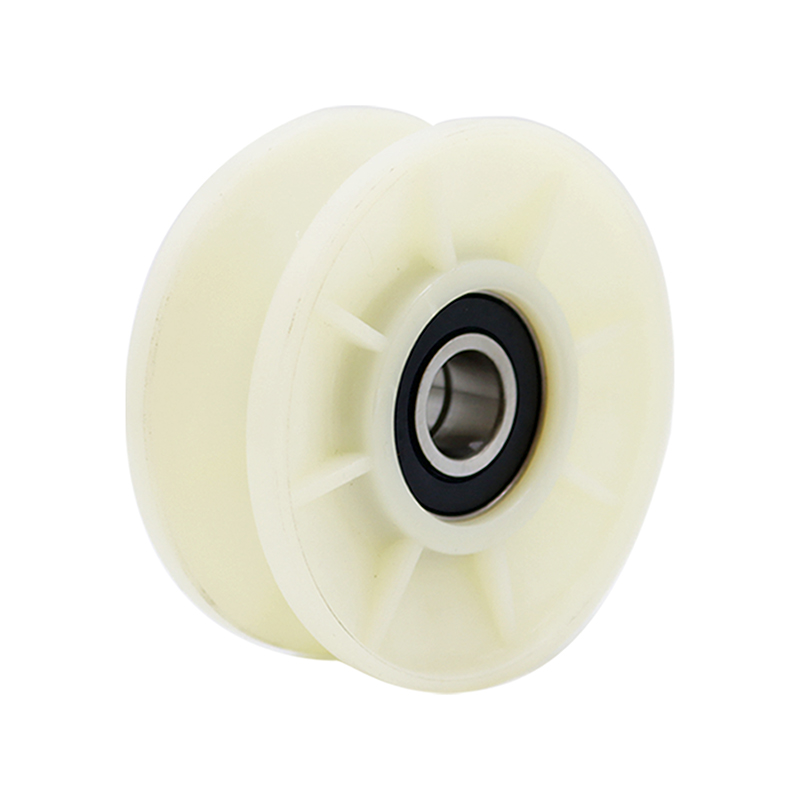
An escalator step roller is the small load bearing wheel mounted beneath each escalator step that rides along a fixed steel track, allowing the step to travel smoothly through the incline, the flat landing sections, and the curved transition zones without dragging or binding against the track surface.
Every escalator step is connected to a continuous step chain, and each connection point relies on a set of rollers underneath the step body. These rollers are what convert the pulling motion of the drive chain into a controlled, level ride for passengers. Without a properly functioning escalator roller at each mounting point, the step would scrape against the track, generate excess friction, and eventually distort the flat riding surface passengers stand on.
The term escalator roller is often used as a general category that includes several roller types working together, but the step roller specifically refers to the primary wheel positioned directly under the step, carrying the majority of the passenger load as the step moves through its full travel path from bottom landing to top landing and back through the return track.
How an Escalator Step Roller Works Inside the Step Chain System
Most escalator step designs use two rollers per step, positioned at slightly different points along the step axle. This dual roller arrangement lets the step follow two separate tracks at once, an upper track and a lower track, which are spaced differently near the top and bottom landings than they are along the straight incline.
As the step chain pulls the step forward, the step roller and its paired roller travel along their respective tracks at slightly different heights. Near the landings, the track spacing narrows, which forces the step tread to flatten out so passengers can step on and off safely. Along the incline, the tracks widen slightly apart, producing the familiar staircase profile.
Typical Roller Pairing on a Single Step
- Main step roller, positioned at the front of the step axle and carrying the primary passenger load
- Secondary or trailing roller, positioned toward the rear of the step, helping maintain step orientation through curved sections
- Both rollers rotate independently on sealed bearings mounted to the step axle
Because the step roller is in constant rolling contact with the track, its bearing, its wheel diameter, and the hardness of its outer tread all directly influence how quietly and evenly the escalator runs. A worn or out of round escalator roller wheel will produce a noticeable rhythmic bump that repeats with every rotation.
Escalator Step Roller vs Escalator Guide Roller: Key Differences
Buyers sourcing replacement parts often mix up the step roller with the escalator guide roller, but the two components serve different purposes within the same step assembly. The step roller is the load bearing wheel that supports passenger weight, while the guide roller is typically a smaller, secondary wheel that keeps the step chain properly aligned along an auxiliary track rather than carrying the main load.
| Feature | Escalator Step Roller | Escalator Guide Roller |
|---|---|---|
| Primary role | Carries passenger load along the main track | Keeps the step chain aligned on the auxiliary track |
| Typical diameter range | Around 70 to 90 millimeters | Around 40 to 60 millimeters |
| Contact surface | Wider tread for even weight distribution | Narrower tread focused on tracking accuracy |
| Load exposure | High, direct passenger contact through the step | Lower, mainly chain and alignment forces |
In practice, replacement orders often need to specify which roller is being requested, since an escalator step roller and an escalator guide roller are rarely interchangeable even when they look similar in general shape.
Common Roller Types Found in Escalator Systems
Beyond the step roller and guide roller, several other roller categories appear throughout an escalator or moving walk assembly. Understanding where each type sits helps buyers identify the correct replacement part rather than ordering by diameter alone.
- Escalator step roller, the main load bearing wheel beneath each step
- Escalator guide roller, aligning the step chain along the auxiliary track
- Escalator track roller, running along the main structural track rail that carries the step chain through the truss
- Handrail drive roller, part of the handrail drive system rather than the step assembly
- Newel roller, located at the entry and exit points where the handrail wraps around
Diameter Reference by Roller Type
The chart below shows typical, illustrative diameter reference ranges used across common escalator roller categories, provided as a general orientation rather than a fixed specification for any particular escalator model.
Illustrative diameter reference by roller category, for general orientation only
Materials Used in Escalator Roller Wheel Construction
The outer tread material of an escalator roller wheel largely determines how the roller performs across noise, wear resistance, and ride comfort. Three material families appear most often in commercial escalator systems.
Polyurethane
Polyurethane tread compounds are widely used because they combine a firm rolling surface with enough elasticity to absorb small track irregularities. This tends to reduce vibration transfer into the step compared to harder materials, while still holding its shape under repeated loading over long operating periods.
Rubber Compound
Rubber tread rollers offer a softer contact surface, which can help with cushioning but generally wears at a faster rate under continuous commercial traffic. Rubber compounds are more commonly found in lighter duty applications or in older installations still using original parts.
Nylon and Engineering Plastic
Nylon and other engineering plastics are valued for dimensional stability and resistance to oil or grease exposure. These materials tend to run harder and can be slightly louder than polyurethane, so they are often selected for specific mechanical positions rather than as a general step roller replacement.
| Material | Noise Characteristic | Wear Resistance | Common Use Case |
|---|---|---|---|
| Polyurethane | Low to moderate | Generally higher | Step roller and track roller replacement |
| Rubber Compound | Low | Moderate | Lighter duty or legacy systems |
| Nylon or Engineering Plastic | Moderate | High dimensional stability | Specific mechanical or guide positions |
Escalator Roller Diameter and Load Distribution
Roller diameter affects more than the physical fit of a replacement part. A larger diameter escalator roller generally spreads passenger load across a wider contact patch and rotates fewer times per meter of travel, which can lessen cumulative wear on the outer tread over comparable operating periods.
Smaller diameter rollers rotate more often for the same travel distance, which increases the number of load cycles the tread and bearing experience. This is one reason diameter and width should be matched closely to the original part rather than substituted with a similar looking roller of a different size.
Relative load bearing index by roller diameter, illustrative reference scale
Recognizing Wear Patterns in Escalator Rollers Over Time
Escalator rollers wear gradually rather than failing without warning, which is why routine visual and audible checks are useful for maintenance planning. Early signs include a slight flattening on one side of the tread, minor surface cracking, or a change in rolling sound as the escalator moves through a full cycle.
The chart below illustrates a general wear progression pattern comparing polyurethane and rubber compound treads across increasing operating hours. Actual wear rates vary with traffic volume, environment, and maintenance practices, so the figures here are illustrative rather than measured values from a specific installation.
Illustrative tread wear progression, general reference only
Visual Checks Worth Adding to a Maintenance Routine
- Listen for a repeating bump or tap that occurs once per rotation of a specific step
- Look for a flat facet on the tread surface where the roller has stopped rotating freely
- Check for surface cracking, chunking, or discoloration on the outer tread
- Feel for excess play or looseness when rocking the roller by hand near the axle
- Note any change in running sound after cleaning, since debris buildup can mimic roller wear
Common Causes of Escalator Step Roller and Track Roller Failure
Roller failure rarely comes from a single cause. In most cases, several contributing factors combine over an extended period before a roller needs replacement.
- Track misalignment, which places uneven pressure on one side of the roller tread
- Insufficient or inconsistent lubrication at the bearing, increasing internal friction
- Moisture or debris intrusion in exposed or outdoor installations
- Gradual hardening of the tread compound after long term exposure to temperature swings
- Seal wear at the bearing, allowing contaminants to enter the internal races
- Sustained heavy pedestrian traffic without corresponding inspection intervals
An escalator track roller that runs along the main structural rail is particularly sensitive to track alignment, since even a small deviation repeats on every pass and accelerates localized wear on one edge of the tread.
Why Escalator Rollers Make Noise During Operation
A newly installed escalator roller typically runs with a quiet, consistent rolling sound. Noise tends to develop gradually and usually points to one of a few underlying mechanical changes rather than a sudden defect.
Frequent Noise Sources
- A flat spot on the roller tread, producing a rhythmic thump matched to rotation speed
- Bearing wear, which can create a higher pitched grinding or humming tone
- Track surface wear, causing a dull knocking sound as the roller passes over pitted sections
- Resonance carried through the step and truss structure, amplifying a minor roller sound into something more noticeable in the passenger area
Because sound travels along the entire step chain, the roller producing the noise is not always the one closest to where the sound seems loudest, which is why a full roller inspection is generally more reliable than judging by ear alone.
Structural Anatomy of an Escalator Step Roller
The diagram below breaks down the main structural parts of a typical escalator step roller assembly, from the outer tread that contacts the track to the axle and bracket that hold the roller in position.
Simplified structural illustration of a step roller assembly
Function of Each Component
- Tread, the outer contact surface that meets the track and absorbs rolling load
- Hub, the structural core that transfers force between the tread and the bearing
- Bearing, allowing the roller to rotate smoothly around the axle with minimal internal friction
- Axle or shaft, connecting the roller assembly to the step frame
- Mounting bracket, securing the roller assembly to the step body
Comparing Roller Performance Across Key Criteria
Different roller types are optimized for different priorities. The radar chart below compares a step roller, a guide roller, and a track roller across five general performance criteria, presented as an illustrative reference for buyers weighing which roller type applies to their maintenance need.
Illustrative performance comparison across five general criteria
Buyer Checklist: Selecting the Right Escalator Step Roller
Matching a replacement escalator roller to the original specification helps avoid uneven wear, added noise, or premature failure after installation. The checklist below outlines the main points worth confirming before placing an order.
| Consideration | What to Confirm |
|---|---|
| Diameter and width | Match the original roller exactly to preserve step geometry |
| Bearing type | Confirm sealed or open bearing configuration and bore size |
| Tread material | Select a material suited to indoor, outdoor, or high traffic conditions |
| Mounting configuration | Check axle mounting hole pattern and bracket compatibility |
| Hardness rating | Align tread hardness with existing rollers to avoid uneven step behavior |
| Running environment | Account for moisture, dust, or temperature exposure at the installation site |
Sourcing from a manufacturer that produces both step rollers and related track and guide rollers under consistent process controls can make it easier to keep dimensions and hardness consistent across a full replacement set, rather than mixing parts from multiple unrelated sources.
Frequently Asked Questions About Escalator Step Rollers
Q1. What is an escalator roller
An escalator roller is a small wheel component used throughout the step and track system of an escalator, allowing steps and the step chain to move smoothly along fixed metal tracks.
Q2. What does an escalator roller do
It reduces friction between the moving step chain and the fixed track, supporting load, guiding movement, and helping the escalator run with a steady, controlled motion.
Q3. What is an escalator step roller
An escalator step roller is the primary load bearing wheel mounted directly beneath an escalator step, carrying passenger weight as the step travels through its full path.
Q4. What is the difference between an escalator step roller and a guide roller
The step roller carries the main passenger load along the primary track, while the guide roller is generally smaller and focused on keeping the step chain aligned on an auxiliary track.
Q5. How long do escalator rollers last
Service life varies with traffic volume, material, and maintenance practices, so it is best evaluated through regular inspection rather than a fixed time estimate.
Q6. When should escalator rollers be replaced
Rollers are typically considered for replacement once flat spots, cracking, excess noise, or bearing play become noticeable during routine inspection.
Q7. What causes escalator roller failure
Common contributing factors include track misalignment, inconsistent lubrication, moisture exposure, and gradual hardening of the tread material over time.
Q8. Why do escalator rollers make noise
Noise usually comes from a flat spotted tread, bearing wear, or a worn track surface, and can sometimes be amplified through the step and truss structure.
Q9. What materials are escalator rollers made from
Common tread materials include polyurethane, rubber compounds, and nylon or other engineering plastics, each offering a different balance of noise, wear resistance, and hardness.
Q10. Are polyurethane rollers suitable for escalators
Polyurethane is a widely used tread material for escalator rollers because it generally combines durable wear resistance with a comparatively quiet rolling characteristic.