
 English
 中文简体
中文简体
Content
- 1 Roller Guide Shoe Or Sliding Guide Shoe, Which Type Applies
- 2 How A Guide Shoe Actually Works Inside The Shaft
- 3 Roller Guide Shoe Structure And Where It Performs Best
- 4 Sliding Guide Shoe Structure And Where It Performs Best
- 5 Comparing Speed Range Between Roller And Sliding Types
- 6 Clearance Tolerance Differences Across Guide Shoe Types
- 7 Adoption Pattern Of Roller Guide Shoes In Taller Buildings
- 8 Performance Comparison Across Key Selection Factors
- 9 Installation Requirements That Affect Long Term Performance
- 10 Matching Guide Shoe Type To Building And Elevator Use
- 11 Recognizing When A Guide Shoe Needs Replacement
- 12 About Ningbo Yinzhou Fukangda Elevator Parts Factory
- 13 Frequently Asked Questions
Roller Guide Shoe Or Sliding Guide Shoe, Which Type Applies
The short answer is that an elevator Roller Guide Shoe is the better fit for high-speed passenger elevators in mid to high-rise buildings, while an elevator Sliding Guide Shoe is the standard choice for freight elevators and lower-speed passenger elevators. Both belong to the broader category of elevator guide shoe types, and the correct choice depends almost entirely on car speed, load pattern, and how much ride smoothness a building actually needs.
A guide shoe sits between the elevator guide rail and the car or counterweight, keeping both moving strictly up and down along the rail without deflecting, tilting, or swinging during travel. This single component has a direct effect on ride comfort, rail wear, and how much maintenance attention the elevator system needs over its service life.
How A Guide Shoe Actually Works Inside The Shaft
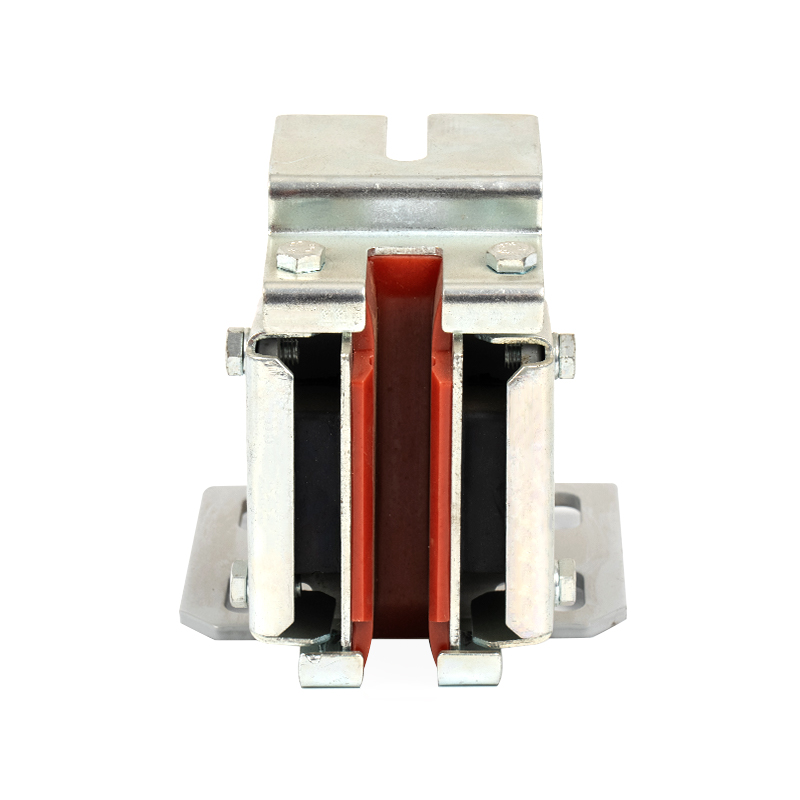
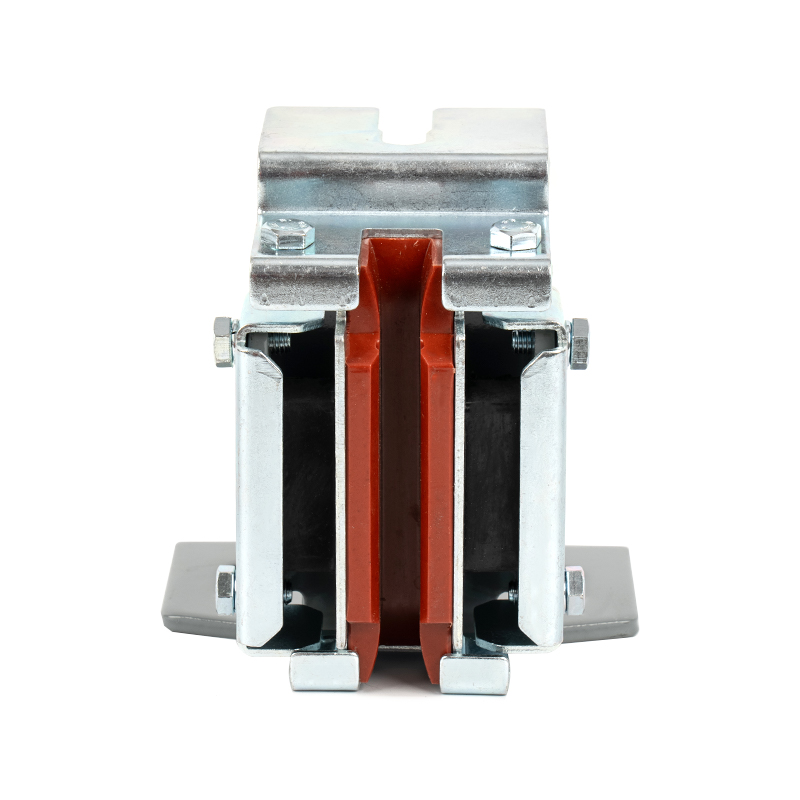
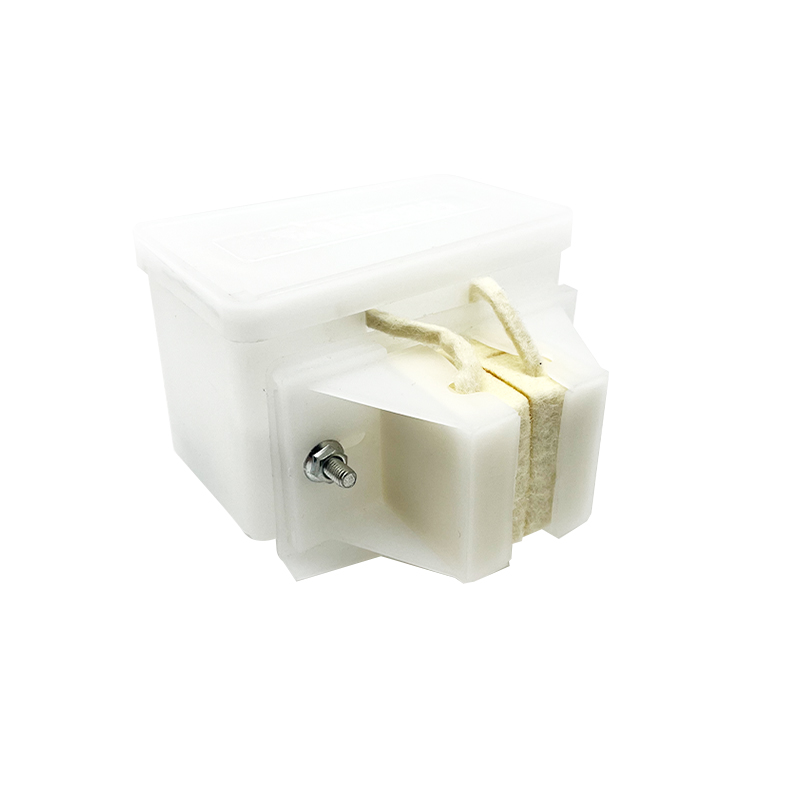
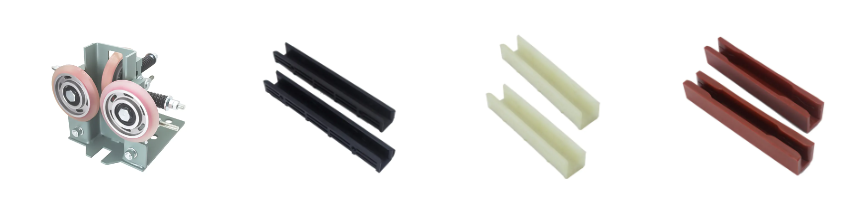
Every guide shoe, regardless of type, is built from three core parts: the shoe lining that contacts the rail, the guide rail body it rides along, and the guide shoe seat that fixes the assembly to the car frame or counterweight frame. On sliding designs, the upper section can also carry an oil cup that feeds lubricant between the shoe lining and the rail surface, which reduces friction and extends lining life.
Core Components At A Glance
- Shoe lining, the wear surface that contacts the guide rail directly
- Guide rail body, the vertical steel track running through the shaft
- Guide shoe seat, the bracket connecting the shoe to the car or counterweight
- Oil cup, present on sliding types to lubricate the lining and rail contact
Once these parts are assembled and aligned, the guide shoe keeps the car frame constrained to a single vertical path, which is exactly why alignment accuracy during installation matters as much as the material quality of the shoe itself.
Roller Guide Shoe Structure And Where It Performs Best
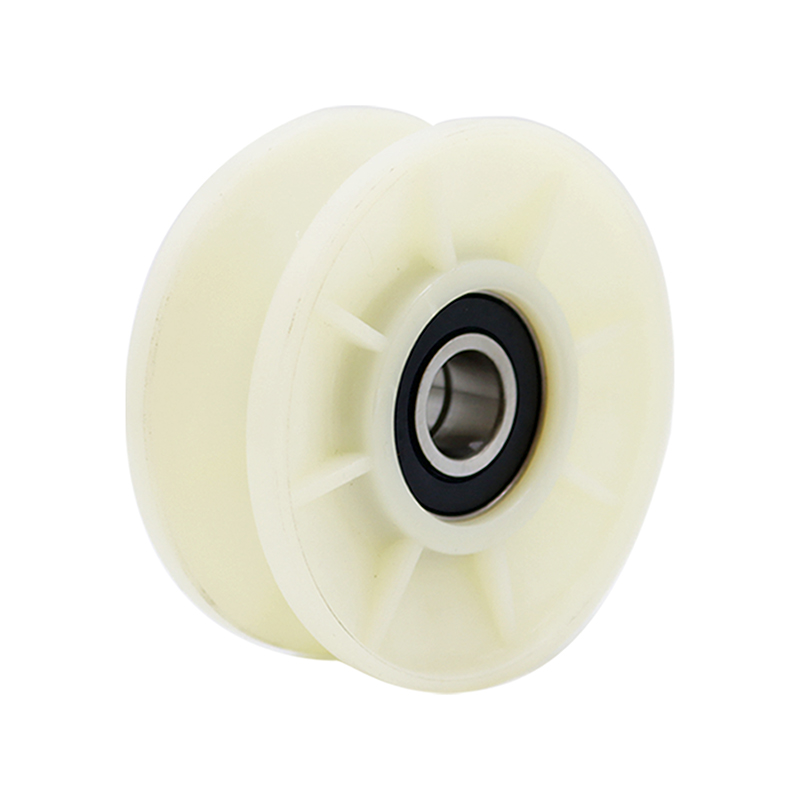
A roller guide shoe replaces the fixed sliding lining with a set of rotating wheels that roll along the guide rail surface instead of dragging across it. Because the contact point rolls rather than slides, friction drops sharply, which allows the car to travel at higher speeds with noticeably less vibration transferred into the cabin.
This rolling contact is the main reason a roller guide shoe manufacturer typically targets passenger elevators in taller buildings, where speed and ride quality both increase together. Roller guide shoes are also common on modernization projects where an older elevator is being upgraded to a faster passenger unit without changing the existing guide rail.
| Feature | Typical Behavior |
|---|---|
| Contact Type | Rolling wheel contact along the rail surface |
| Friction Level | Low, reduces heat buildup at higher speeds |
| Lubrication Need | Minimal, wheel bearings require periodic checks only |
| Common Setting | Mid to high-rise passenger elevators |
Sliding Guide Shoe Structure And Where It Performs Best
A sliding guide shoe keeps a fixed lining in continuous contact with the rail rather than rolling across it. This design comes in two forms: the fixed sliding guide shoe, which holds a rigid position against the rail, and the elastic sliding guide shoe, which uses a spring-loaded mechanism to absorb small rail irregularities and reduce the shock passed into the car.
Fixed sliding guide shoes are mainly used on freight elevators, where the clearance on both sides of the shoe should stay consistent and the gap between the lining and the top surface of the rail is generally kept in the range of 0.5 to 2 millimeters. This tight, consistent clearance matters more for freight applications because uneven loading places repeated lateral pressure on the guide shoe assembly.
Fixed Versus Elastic Sliding Types
- Fixed sliding guide shoe, rigid mounting, typically paired with freight elevators
- Elastic sliding guide shoe, spring-supported lining, commonly used on low-speed passenger elevators
- Both types depend on an oil cup at the top of the shoe to keep the lining lubricated
- Both types suit medium and high-rise buildings running at lower travel speeds
Buyers comparing a sliding guide shoe supplier against a roller-based option usually find that sliding types cost less to maintain in slower systems, since the lining wears predictably and replacement intervals are easy to plan around routine servicing.
Comparing Speed Range Between Roller And Sliding Types
Speed capability is the single clearest dividing line between the two elevator guide shoe types. The chart below illustrates the general speed range each type is commonly matched to across passenger and freight elevator projects.
These ranges are general industry patterns rather than fixed limits, since the actual ceiling depends on the full elevator system design, not the guide shoe alone. Even so, the pattern explains why roller guide shoes dominate express and high-rise passenger cars while sliding types remain common on freight and lower-rise buildings.
Clearance Tolerance Differences Across Guide Shoe Types
Clearance between the shoe lining and the rail directly affects how much side-to-side movement a car experiences. Tighter, more consistent clearance generally reduces vibration but requires more precise installation and rail alignment.
Roller guide shoes tend to run with a tighter effective gap because the wheel maintains constant rolling contact against the rail, while sliding shoes are set with a small working clearance so the lining does not bind against the rail surface during travel.
Adoption Pattern Of Roller Guide Shoes In Taller Buildings
As building heights and elevator travel speeds have increased across new construction and modernization projects, demand has shifted steadily toward roller-based systems for passenger cars. The line below reflects this general directional trend rather than a fixed statistic.
This shift has been driven largely by two factors reported consistently across elevator industry discussion: rising expectations around ride smoothness in passenger buildings, and a growing share of modernization projects that increase car speed without replacing the full rail system.
Performance Comparison Across Key Selection Factors
Choosing between roller and sliding designs often comes down to weighing several performance factors together rather than picking based on speed alone. The radar chart below places both types against five factors buyers commonly evaluate.
Roller guide shoes generally score higher on speed capability, ride smoothness, and noise control, while sliding guide shoes tend to score higher on maintenance simplicity and load handling for freight duty, which is why freight elevators still rely heavily on fixed sliding designs.
Installation Requirements That Affect Long Term Performance
Correct installation determines whether either guide shoe type performs as intended over the life of the elevator. The upper and lower guide shoes must be installed on the same vertical line once fitted, with no skew or twist between them, and both must line up with the center of the safety jaw assembly.
For fixed sliding guide shoes used on freight elevators specifically, the clearance on both sides of the shoe should remain consistent along the full travel length, and the gap between the lining and the top surface of the rail is generally kept within the 0.5 to 2 millimeter range described earlier. Getting this clearance wrong in either direction tends to show up quickly as uneven wear or a rougher ride.
Installation Checkpoints Worth Confirming
- Upper and lower shoes aligned on a single vertical line
- No visible skew or twist across the guide shoe seat
- Alignment centered against the safety jaw on both car and counterweight sides
- Consistent side clearance maintained along the full rail run
- Oil cup filled and functioning correctly on sliding type shoes
Matching Guide Shoe Type To Building And Elevator Use
Selecting between an elevator Roller Guide Shoe and an elevator Sliding Guide Shoe becomes straightforward once the building profile and elevator duty are clear. The table below summarizes the general pattern buyers and elevator parts teams typically follow.
| Building Or Elevator Profile | Commonly Matched Guide Shoe Type |
|---|---|
| High-rise passenger elevator | Roller guide shoe |
| Mid-rise passenger elevator | Roller guide shoe or elastic sliding guide shoe |
| Low-speed passenger elevator | Elastic sliding guide shoe |
| Freight elevator | Fixed sliding guide shoe |
| Modernization with speed upgrade | Roller guide shoe replacement |
Facility teams working through an elevator guide shoe replacement project often start from this same profile matching before requesting samples from a custom elevator guide shoe supplier, since matching the existing rail width and shoe seat dimensions is just as important as matching the guide shoe type itself.
Recognizing When A Guide Shoe Needs Replacement
Guide shoes wear gradually, and most elevator maintenance teams learn to watch for a handful of consistent warning signs rather than waiting for a full failure. Unusual side-to-side movement in the car, a grinding or squeaking sound near the top or bottom of the car frame, and visible wear grooves on the shoe lining are the most common early indicators.
Sourcing teams handling an elevator guide shoe replacement program typically request matched dimensions for both the rail width and the guide shoe seat before ordering, since even a well-made shoe will perform poorly if the fit against the existing rail is incorrect. Working with an established elevator guide shoe factory China based supply relationship often shortens this matching process because production teams can reference rail profile drawings directly against existing tooling.
About Ningbo Yinzhou Fukangda Elevator Parts Factory
Ningbo Yinzhou Fukangda Elevator Parts Factory was founded in 2006 and is located in Da'ao Industrial Park, Yinzhou District, Ningbo City, Zhejiang Province, China. The company focuses on the research, development, production, and sales of elevator parts, working as both an elevator guide shoe manufacturer and elevator guide rail company serving domestic and international elevator supply chains.
The production center runs a variety of advanced hardware and plastic processing equipment alongside mature assembly lines and inspection procedures, supporting precision, quality, and stable supply continuity across every production batch. As an OEM elevator guide shoe and China elevator guide shoe manufacturer, Fukangda has built long-standing cooperation with recognized elevator brands operating in the domestic market, including relationships spanning Hitachi, Mitsubishi, Otis, Thyssen, Guangri, Kangli, Asia Pacific, Suzuki, and Singlin project channels, reflecting a strong reputation built over years of consistent supply within the elevator parts industry.

Frequently Asked Questions
It is a sliding or rolling device fitted between the elevator car or counterweight and the guide rail, keeping travel restricted to a single vertical path.
It stabilizes the car or counterweight on the rail, preventing deflection, tilting, or swinging while the elevator moves up and down.
A typical setup uses four guide shoes on the car frame and four on the counterweight frame, positioned at the upper and lower corners of each.
The seat and rail body are typically metal, while the shoe lining is often a wear-resistant material designed to reduce friction against the rail.
Guide rails come in a range of standard T-shaped profile sizes, with the correct size selected based on car weight, speed, and rail span between brackets.
Rails are mounted section by section on wall brackets inside the shaft, checked for vertical alignment, and joined with fishplates before guide shoes are fitted.
Technicians measure rail width, working face flatness, and vertical alignment along the shaft using calipers and straightness checks at multiple points.