
 English
 中文简体
中文简体
The direct answer: sliding guide shoes are the preferred choice for low-to-medium speed elevators (up to 1.75 m/s) where cost efficiency and simple maintenance matter most, while roller guide shoes are the engineering standard for high-speed, high-load, and comfort-sensitive elevator installations above 1.75 m/s. The difference is not merely about motion type — it reflects a fundamental trade-off between operational simplicity and ride quality, noise performance, and long-term wear characteristics under demanding duty cycles.
Both the elevator sliding guide shoe and the roller guide shoe are core elevator rail guide components that keep the elevator cabin centered on its guide rails during travel. Without properly functioning elevator guide system parts, lateral forces, vibration, and rail irregularities would transfer directly to passengers, creating discomfort, noise, and in extreme cases, accelerated wear to the cabin structure. Understanding the mechanical differences, performance profiles, and application boundaries of each type is essential for elevator engineers, building facility managers, and procurement specialists making informed specification decisions.
Content
- 1 What Is a Sliding Guide Shoe and How Does It Work?
- 2 What Is a Roller Guide Shoe and Why Is It Used in High-Speed Elevators?
- 3 Side-by-Side Performance Comparison: Sliding vs Roller Guide Shoe
- 4 Speed Range and Application Suitability: Where Each Type Excels
- 5 Elevator Guide Shoe Insert and Liner: Wear, Replacement, and Material Selection
- 6 Maintenance Requirements: Comparing Lifecycle Cost and Service Intervals
- 7 Elevator Rail Guide Components: Installation and Adjustment Guidelines
- 8 About Fukangda Elevator Parts: Quality Elevator Guide System Parts Since 2006
- 9 Frequently Asked Questions
What Is a Sliding Guide Shoe and How Does It Work?
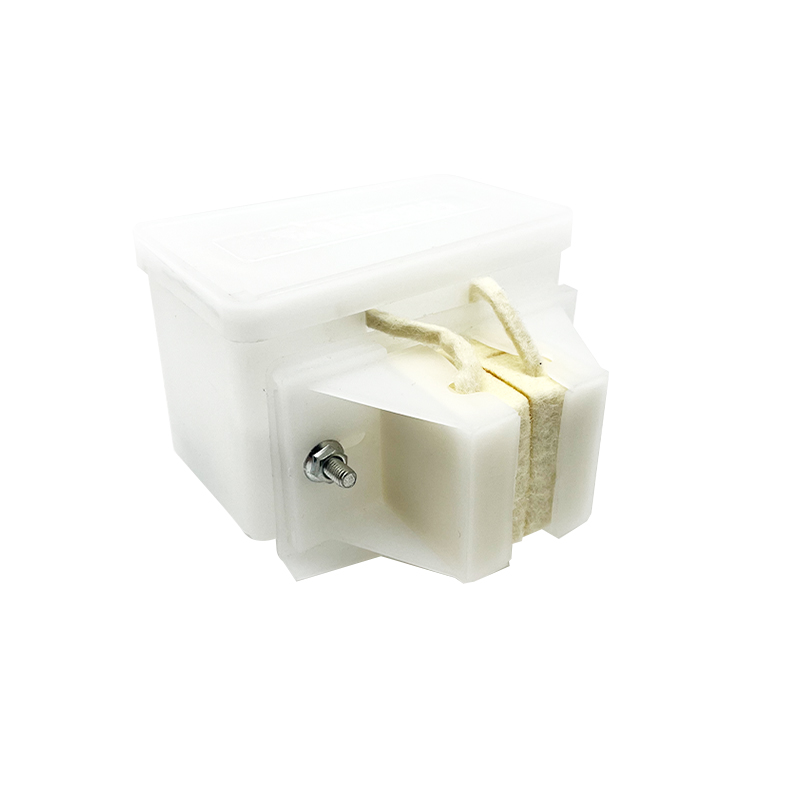
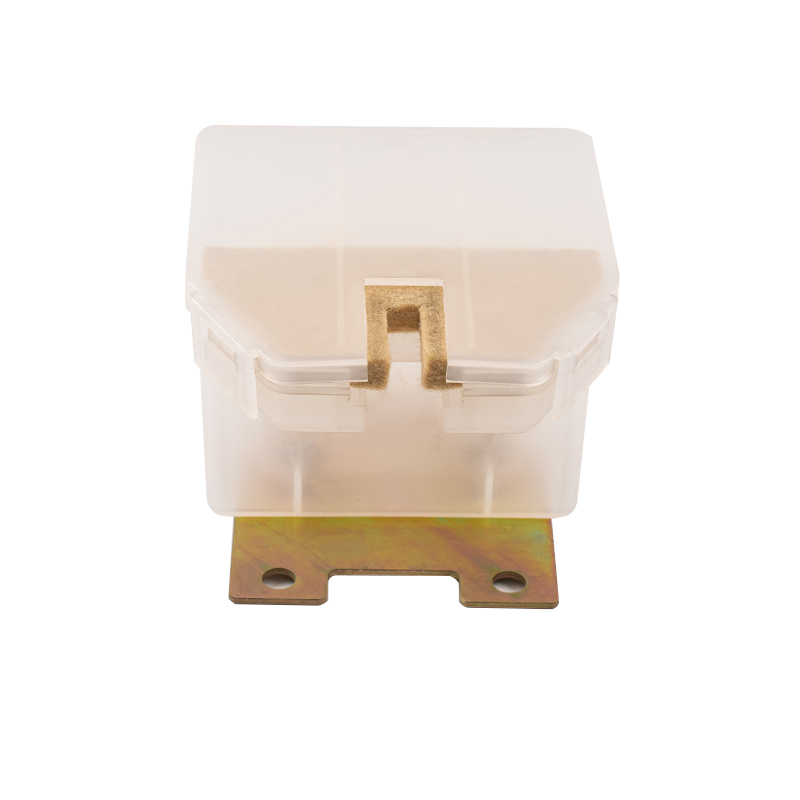
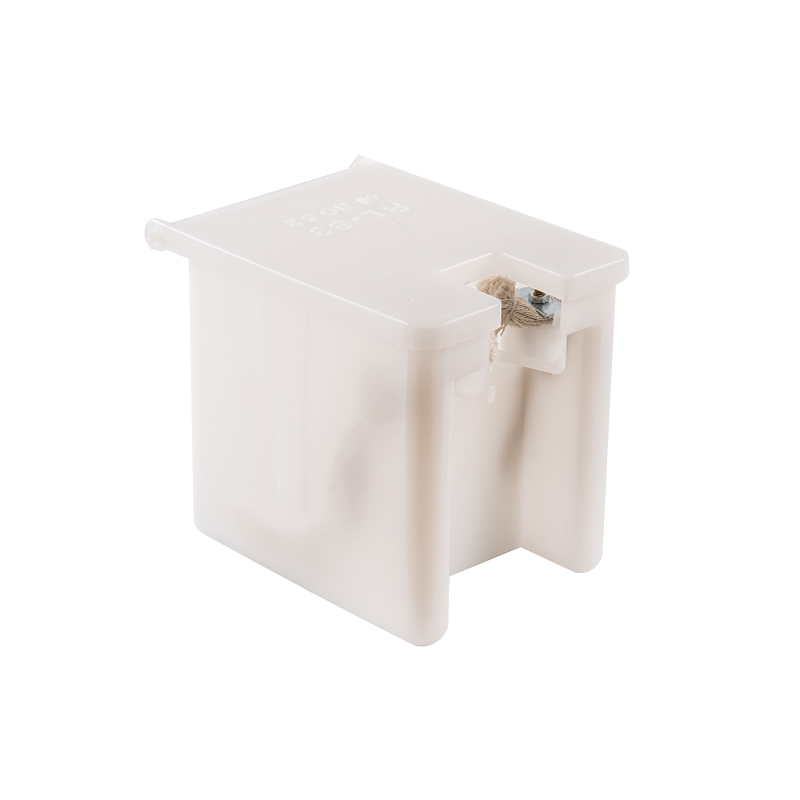
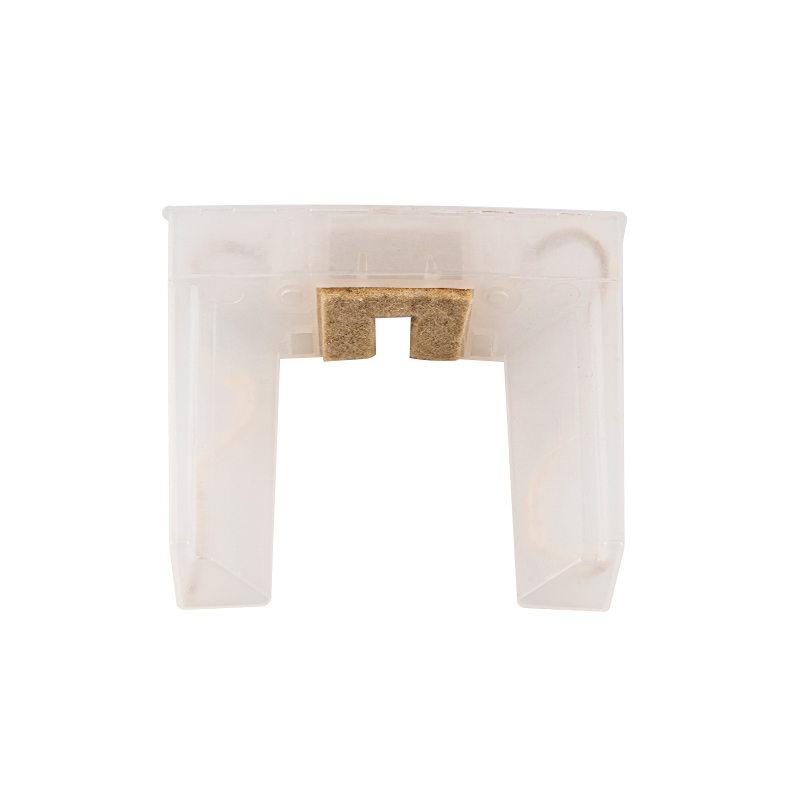
An elevator sliding guide shoe is a mechanical component that maintains contact between the elevator cabin or counterweight and the guide rail through direct sliding friction. The standard sliding guide shoe consists of three functional sub-components: the shoe head, the shoe body, and the shoe seat. The shoe head is the wear element that contacts the rail directly — typically a replaceable elevator guide shoe insert or elevator shoe liner made from engineering polymers such as nylon, UHMWPE, or oil-impregnated bronze. The shoe body transmits lateral forces and torque between the shoe head and the mounting structure, while the shoe seat bolts the assembly to the elevator sling or cabin frame.
The guiding action is passive — no moving sub-parts are involved in the contact mechanism. As the cabin travels, the elevator guide pad surfaces slide along the machined faces of the T-section guide rail, maintaining horizontal alignment through three-face contact (top of rail blade, and both side flanks). Lubrication is provided by a felt wicking pad or oil reservoir integrated into the shoe head, reducing friction and extending the service life of the elevator shoe liner insert.
The lift sliding guide shoe is mechanically straightforward, compact, and relatively inexpensive to manufacture and replace. Its primary limitation is that sliding friction increases with speed — at cabin velocities above approximately 1.75 m/s, heat generation, noise, and wear rates become economically and operationally disadvantageous compared to rolling contact alternatives.
Structural Components of a Sliding Guide Shoe
- Shoe Head (Guide Insert / Liner): The sacrificial contact element. Made from self-lubricating polymers or metal alloys. Designed for periodic replacement — typically every 2 to 5 years depending on speed and duty cycle. Available in multiple profile sizes to match standard T-rail cross-sections.
- Shoe Body: Cast iron, ductile iron, or die-cast aluminum alloy body that transfers guiding forces from the rail to the cabin frame. Provides the structural backbone of the elevator guide rail shoe assembly.
- Shoe Seat / Base Plate: Bolted connection interface to the elevator sling crosshead or cabin frame. Often includes slotted adjustment holes for rail alignment compensation during installation.
- Lubrication System: Felt pad, oil reservoir, or grease nipple providing continuous or periodic lubrication to the guide pad contact surface. Critical for controlling friction coefficient and thermal buildup.
What Is a Roller Guide Shoe and Why Is It Used in High-Speed Elevators?
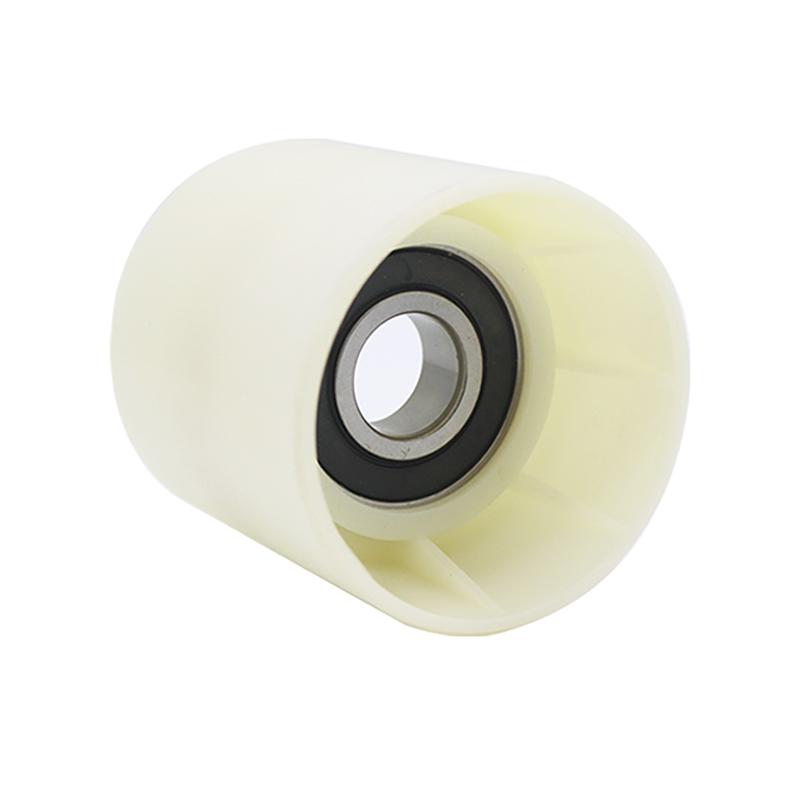
A roller guide shoe replaces the sliding contact of a conventional elevator sliding guide shoe with rolling contact via polyurethane-tired wheels mounted on spring-loaded or fixed arms. A typical roller guide shoe assembly for an elevator cabin guide shoe application includes three rollers arranged to contact the three faces of the guide rail — one roller on the rail blade face, and two rollers on the opposite flank faces — replicating the three-point constraint geometry of sliding guide shoes but with rolling rather than sliding contact.
The rolling contact mechanism reduces the dynamic coefficient of friction from approximately 0.15–0.25 (sliding) to 0.01–0.03 (rolling), resulting in a dramatic reduction in heat generation, noise emission, and rail surface wear at equivalent travel speeds. Spring preloading of the roller arms maintains constant rail contact even through rail joint irregularities and minor rail misalignment, acting as a passive vibration absorber that significantly improves cabin ride quality.
Roller guide shoes are widely specified in high-end office towers, star-rated hotels, high-rise residential buildings, commercial complexes, and ultra-high-speed elevator installations where cabin speeds exceed 2.5 m/s and passenger comfort expectations are elevated. The wear resistance and dynamic stability of quality roller guide shoe assemblies allow these elevator guide system parts to maintain consistent operating performance through multi-year, high-duty-cycle operation without the linear wear degradation that characterizes sliding contact.
Side-by-Side Performance Comparison: Sliding vs Roller Guide Shoe
The following table provides a structured technical comparison of elevator sliding guide shoes versus roller guide shoes across the parameters that most directly affect installation, operation, and lifecycle cost decisions.
| Parameter | Elevator Sliding Guide Shoe | Roller Guide Shoe |
|---|---|---|
| Contact Type | Sliding (surface friction) | Rolling (wheel contact) |
| Friction Coefficient | 0.15 – 0.25 | 0.01 – 0.03 |
| Recommended Speed Range | Up to 1.75 m/s | 1.0 – 10+ m/s |
| Noise Level | Moderate (increases with speed) | Low (speed-independent at rated range) |
| Vibration Absorption | Low (rigid contact) | Good (spring-loaded arms) |
| Ride Comfort | Adequate for low-speed use | High, even on imperfect rails |
| Rail Lubrication Needed | Yes (continuous or periodic) | Minimal to none |
| Wear Element | Elevator guide shoe insert / liner | Polyurethane roller tire |
| Maintenance Complexity | Low (liner swap) | Medium (spring/roller inspection) |
| Assembly Complexity | Simple | Moderate |
| Typical Application | Residential, light commercial, freight | High-rise, premium, high-speed |
Performance Radar: Sliding Guide Shoe vs Roller Guide Shoe
This radar chart reveals the complementary strengths of the two guide shoe types across six critical performance dimensions. The elevator sliding guide shoe scores highest on installation simplicity and maintenance ease — both directly relevant to total cost of ownership in low-to-medium duty installations. The roller guide shoe dominates on ride comfort, speed suitability, and noise control, explaining its adoption in premium and high-speed elevator applications where passenger experience is a differentiating factor. Neither type is universally superior; the correct choice is application-specific and determined by speed rating, building type, and lifecycle cost priorities.
Speed Range and Application Suitability: Where Each Type Excels
Speed is the primary engineering parameter that determines whether a lift sliding guide shoe or a roller guide shoe is appropriate for a given installation. The relationship between elevator speed and guide shoe performance is not linear — the effects of sliding friction, heat generation, and vibration all scale non-linearly with velocity, creating a threshold around 1.75–2.0 m/s beyond which sliding contact becomes technically and commercially suboptimal.
Relative Noise Level vs Elevator Speed: Sliding vs Roller Guide Shoe
This line chart illustrates how noise levels evolve with increasing elevator speed for both guide shoe types. The sliding guide shoe exhibits a steep, nonlinear increase in noise as speed rises — a direct consequence of friction and surface vibration scaling with velocity. The roller guide shoe maintains a nearly flat noise profile across the full operational speed range, confirming its acoustic superiority at speeds above 1.75 m/s. The red dashed threshold line marks the critical speed point where the operational gap between the two technologies becomes commercially significant for building owners and elevator specifiers.
The following breakdown outlines recommended application categories for each guide shoe type based on building typology and speed rating:
Sliding Guide Shoe: Optimal Use Cases
- Low-rise residential buildings (up to 6 floors), typically with cabin speeds of 0.63–1.0 m/s
- Freight and service elevators where noise and ride comfort are secondary to load capacity and durability
- Counterweight guide shoe applications on any speed range (counterweights do not carry passengers, so comfort is irrelevant)
- Retrofit or replacement scenarios where the existing guide rail and frame geometry is designed for sliding shoe dimensions and budget constraints favor a like-for-like swap
- Industrial environments where simplicity of maintenance is paramount and elevator usage is moderate
Roller Guide Shoe: Optimal Use Cases
- High-rise office towers and commercial complexes with cabin speeds above 1.75 m/s
- Five-star hotels and premium residential towers where ride quality and noise control are brand differentiators
- High-speed and ultra-high-speed elevators (2.5 m/s to 10+ m/s) found in supertall and megatall buildings
- Elevator cabin guide shoe positions in any installation where passenger comfort surveys or acoustic standards must be met
- Installations with guide rail joints that are difficult to perfect, where spring-loaded roller arms provide passive compensation
Elevator Guide Shoe Insert and Liner: Wear, Replacement, and Material Selection
The elevator guide shoe insert — also referred to as the elevator shoe liner or elevator guide pad — is the primary wear element in any sliding guide shoe assembly. Selecting the correct liner material directly determines service intervals, rail surface condition, and the operational smoothness of the elevator guide rail shoe over its service life.
Common Elevator Guide Shoe Insert Materials
| Material | Friction Coeff. | Wear Rate | Typical Lifespan | Best For |
|---|---|---|---|---|
| Nylon (PA6/PA66) | 0.20–0.30 | Low | 2–4 years | Residential, low-speed |
| UHMWPE | 0.15–0.22 | Very Low | 3–5 years | Medium-speed, commercial |
| Oil-Impregnated Bronze | 0.10–0.18 | Low | 4–6 years | High-load, heavy freight |
| PTFE Composite | 0.08–0.14 | Very Low | 5–8 years | Precision, low-vibration |
The elevator guide pad insert should be inspected at each scheduled maintenance visit. Replacement is typically indicated when the insert liner thickness is worn to within 2–3 mm of the retaining groove depth, when visible scoring or cracking appears on the contact surface, or when the friction noise between the elevator cabin guide shoe and the rail increases noticeably during operation. Delayed replacement of worn elevator shoe liners leads to metal-on-metal contact between the shoe body and the rail surface, causing rapid and expensive rail flange damage that cannot be corrected without section replacement.
Elevator Guide Shoe Insert Lifespan by Material (Years, Average)
This horizontal bar chart compares the average service lifespan of four common elevator guide shoe insert materials used in lift sliding guide shoe applications globally. PTFE composite inserts deliver the longest average service life at approximately 6.5 years — more than double the lifespan of standard nylon inserts — owing to their exceptionally low friction coefficient and resistance to abrasive wear. Oil-impregnated bronze provides a strong balance of load capacity and longevity, particularly in high-load freight applications, while UHMWPE is the most popular choice for commercial applications due to its low wear rate and cost efficiency. Selecting the correct elevator shoe liner material for the specific speed and duty cycle of an installation is one of the most impactful decisions in reducing the total maintenance cost of elevator guide system parts.
Maintenance Requirements: Comparing Lifecycle Cost and Service Intervals
Maintenance cost over the operational life of an elevator system is a frequently underweighted factor in guide shoe selection decisions. Both sliding and roller guide shoe types have distinct maintenance profiles that affect labor costs, spare parts inventory, and system downtime across a 20-to-30-year elevator service life.
Maintenance Task Frequency Comparison (Times per 5 Years, Typical Commercial Installation)
This grouped column chart compares the typical frequency of three maintenance task categories — lubrication, wear part replacement, and full inspection — for sliding and roller guide shoes over a representative 5-year commercial elevator service period. The most striking difference is in lubrication frequency: sliding guide shoe assemblies require lubrication approximately 10 times over 5 years (roughly every 6 months), while roller guide shoes require lubrication only once due to their sealed bearing design. Wear part replacement intervals are also more favorable for roller guide shoes, with roller tires typically lasting longer between replacements than elevator shoe liner inserts in equivalent-speed applications. This data supports the conclusion that roller guide shoes carry lower cumulative labor costs over a long installation life, partially offsetting their higher initial component cost.
Key maintenance checkpoints for elevator cabin guide shoe assemblies of both types include:
- Sliding Guide Shoe: Check lubrication wicking pad saturation or oil reservoir level every 6 months. Measure elevator guide shoe insert liner thickness and inspect for cracking, deformation, or scoring annually. Confirm that the shoe seat mounting bolts remain torqued to specification and that the shoe head clearance relative to the rail is within ±0.5 mm of the design specification.
- Roller Guide Shoe: Inspect roller tire surface for flat spots, surface cracking, or hardness change every 12 months. Verify spring preload force is within specification (typically 30–80 N depending on model). Check roller bearing for abnormal noise during manual rotation. Confirm the elevator guide rail components contact geometry remains correct and that rail-to-roller clearance is consistent across all three contact positions.
Elevator Rail Guide Components: Installation and Adjustment Guidelines
Correct installation of elevator guide system parts is as important as component selection. Improperly installed elevator rail guide components — regardless of whether they are sliding or roller type — will generate abnormal noise, accelerated wear, and in severe cases, unsafe lateral forces on the cabin frame. The following installation principles apply to both guide shoe types.
Rail Alignment and Clearance Setting
Guide rail verticality must be within EN 81 or equivalent national standard tolerances — typically no more than 1 mm deviation per 5 m of rail height. For elevator sliding guide shoe installations, the total side clearance between the elevator guide pad and the rail flank faces is typically set at 0.5–1.0 mm per side, with tighter clearances improving guidance accuracy at the cost of slightly higher friction. For roller guide shoe installations, the spring preload geometry is factory-set but must be verified against the specific rail section size during installation.
Shoe Seat Mounting and Torque Requirements
The elevator cabin guide shoe seat must be bolted to the sling crosshead or car frame using the fastener grades and torque values specified by the guide shoe manufacturer. Under-torqued connections allow micro-movement that progressively loosens mounting surfaces and misaligns the elevator guide rail shoe relative to the rail axis. Lock-washers or thread-locking compound should be used on all guide shoe mounting fasteners to prevent vibration-induced loosening over the elevator's service life.
Lubrication System Setup for Sliding Guide Shoes
The felt wicking pad or oil reservoir in a lift sliding guide shoe must be filled with the correct grade of elevator guide rail lubricant — typically a mineral oil with viscosity in the ISO VG 68 to VG 100 range or a manufacturer-specified synthetic alternative. Using grease instead of oil, or exceeding oil quantity recommendations, causes excess lubricant to accumulate on the rail surface and contaminate the safety gear (progressive safety device), which is both a safety hazard and a regulatory non-compliance issue.
About Fukangda Elevator Parts: Quality Elevator Guide System Parts Since 2006
Ningbo Yinzhou Fukangda Elevator Parts Factory has been designing, manufacturing, and supplying precision elevator guide system parts since its founding in 2006. Located in Da'ao Industrial Park, Yinzhou District, Ningbo City, Zhejiang Province, China — one of China's foremost manufacturing clusters for elevator components — Fukangda combines deep product engineering expertise with advanced hardware and plastic processing equipment to deliver elevator rail guide components that meet demanding performance specifications.
Fukangda's production capabilities span the full range of elevator cabin guide shoe types — including elevator sliding guide shoes, roller guide shoes, elevator guide shoe inserts, and associated elevator guide system parts — backed by mature assembly production lines and rigorous inspection procedures. The company's product development approach is centered on achieving high precision, high quality, and high performance across its portfolio, ensuring continuous supply chain reliability for elevator manufacturers, maintenance contractors, and building operators worldwide.
Whether you are specifying new elevator guide rail components for a high-rise commercial project or sourcing replacement elevator shoe liner inserts for an existing installation, Fukangda's technical team is available to support material selection, dimensional verification, and compatibility assessment across a broad range of T-rail profiles and cabin frame designs.
Frequently Asked Questions
Q1: What is the difference between a sliding guide shoe and a roller guide shoe?
A sliding guide shoe uses direct surface contact between a replaceable elevator guide shoe insert (liner) and the guide rail, relying on lubrication to reduce friction. A roller guide shoe uses spring-loaded polyurethane wheels to maintain rolling contact with the rail, eliminating sliding friction entirely. Roller guide shoes produce significantly less noise and vibration at higher speeds, making them the standard for elevators above approximately 1.75 m/s, while sliding guide shoes remain widely used in lower-speed residential and freight applications due to their simpler design and easier maintenance.
Q2: How often should the elevator guide shoe insert (liner) be replaced?
Typical replacement intervals for elevator shoe liner inserts range from 2 to 5 years for standard nylon or UHMWPE inserts in commercial applications, and up to 6 to 8 years for PTFE composite inserts in precision-grade installations. The correct replacement trigger is not time-based but condition-based: replace the elevator guide pad insert when the liner thickness is worn to within 2–3 mm of the retaining groove, when cracking or scoring is visible, or when audible friction noise increases during elevator travel. Delayed replacement risks metal-to-metal contact between the shoe body and the rail, causing expensive rail damage.
Q3: Can a sliding guide shoe be replaced with a roller guide shoe on an existing elevator?
Yes, it is technically possible to upgrade from sliding guide shoes to roller guide shoes on an existing elevator installation, but it requires careful compatibility verification. The roller guide shoe assembly must physically fit within the existing sling or cabin frame shoe seat dimensions, and the roller spring geometry must be compatible with the rail section size (T-rail profile) installed in the hoistway. A qualified elevator engineer should review the cabin frame, sling crosshead dimensions, and rail specification before specifying replacement elevator rail guide components. In most cases, roller guide shoe upgrade kits are available that use the same mounting bolt pattern as common sliding shoe seat designs.
Q4: Why is my elevator making noise at the guide shoe area? What should I check?
Abnormal noise originating from the elevator guide rail shoe area typically has one of four causes: worn or dry elevator guide shoe insert requiring liner replacement or re-lubrication; loose shoe seat mounting bolts allowing micro-movement against the cabin frame; rail joint step or surface irregularity causing impact noise as the guide pad or roller crosses the joint; or in roller guide shoes, a flat-spotted or hardened roller tire requiring replacement. Begin diagnosis by checking lubrication oil levels and liner wear condition — these are the most common causes and the easiest to address. If noise persists after lubrication and liner replacement, inspect the rail surface quality and joint alignment with a straight-edge gauge.
Q5: What type of lubrication oil should I use for an elevator sliding guide shoe?
Elevator sliding guide shoes should be lubricated with a mineral oil in the ISO VG 68 to VG 100 viscosity grade, or a synthetic equivalent specified by the guide shoe or elevator manufacturer. It is important to use oil, not grease — grease is too viscous to wick correctly through felt pads and creates excess accumulation on the rail surface that can contaminate safety gear components. The lubrication reservoir or felt pad should be checked and refilled approximately every 6 months in a standard commercial installation, or more frequently if the elevator operates at higher duty cycles or in warm ambient temperature environments where oil evaporation is accelerated.
Q6: How do I select the correct elevator guide shoe insert size for my installation?
Selecting the correct elevator guide shoe insert requires knowing three key dimensions: the guide rail blade width and flank width (e.g., T89, T114, T127 per EN standards), the shoe head internal channel dimensions of the existing elevator guide rail shoe body, and the required liner material grade for the operating speed and load conditions. Most manufacturers catalog inserts by rail section compatibility — for example, a T89/16 designation indicates compatibility with an 89 mm wide rail with a 16 mm blade thickness. If you are unsure of the rail or shoe head dimensions, measure the existing worn liner or the shoe body channel before ordering, as using an incorrectly sized elevator guide pad insert will result in improper contact geometry and accelerated wear.