
 English
 中文简体
中文简体
Quick Answer
Installing an elevator sliding guide shoe correctly requires five core steps: power isolation and safety lockout, removal of the worn shoe, rail cleaning and inspection, precise alignment of the new guide shoe to the rail, and torque-verified fastening. Using the right replacement elevator guide shoe kit for your rail profile — T-type or hollow — and verifying clearance tolerances (typically 0.5 mm to 1.5 mm per side) before final commissioning are critical to a safe, vibration-free installation.
Content
- 1 What Is an Elevator Sliding Guide Shoe and Why Does It Matter?
- 2 Types of Elevator Sliding Guide Shoes: Choosing the Right One
- 3 Tools, Materials, and Safety Requirements Before You Start
- 4 Step-by-Step Installation: Elevator Sliding Guide Shoe
- 5 Why Sliding Guide Shoes Wear Out Too Fast: The Most Common Causes
- 6 Maintenance Schedule After Installing a New Guide Shoe
- 7 Liner Wear Rate: Standard vs. Low Friction Guide Shoe Over Time
- 8 About Ningbo Yinzhou Fukangda Elevator Parts Factory
- 9 Frequently Asked Questions
What Is an Elevator Sliding Guide Shoe and Why Does It Matter?
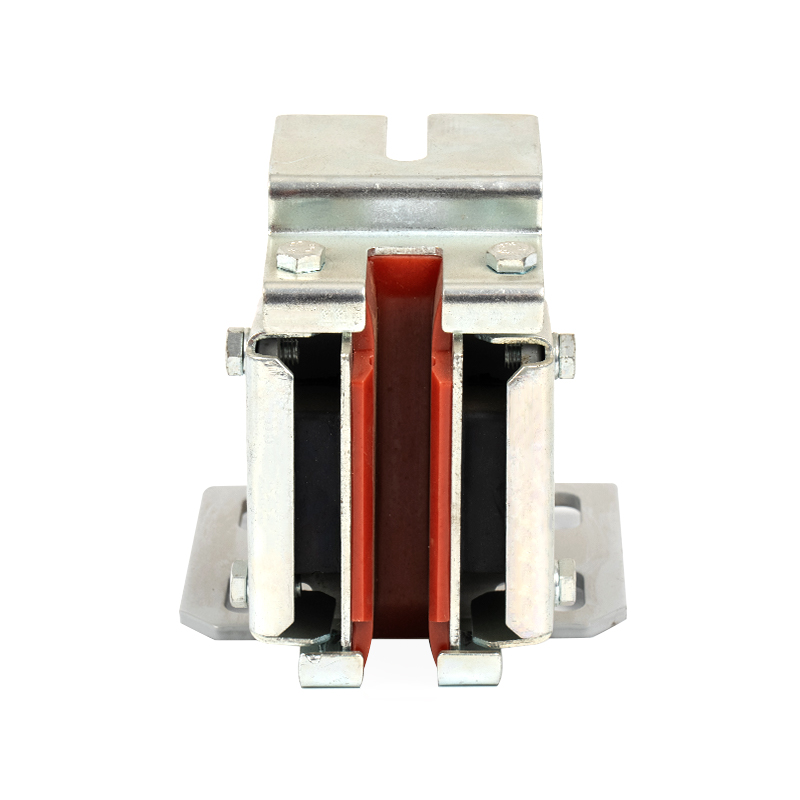
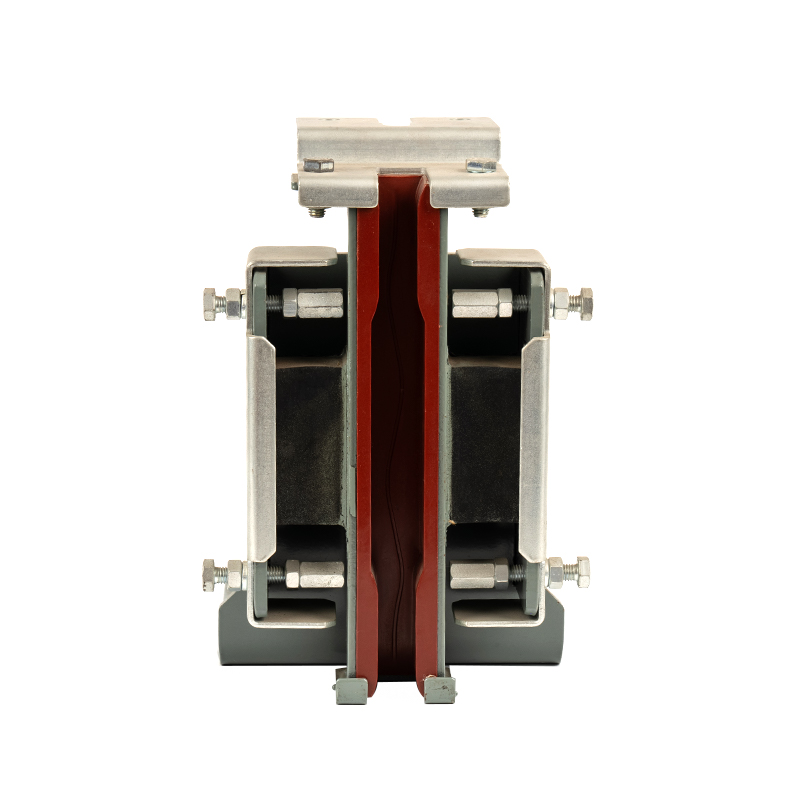
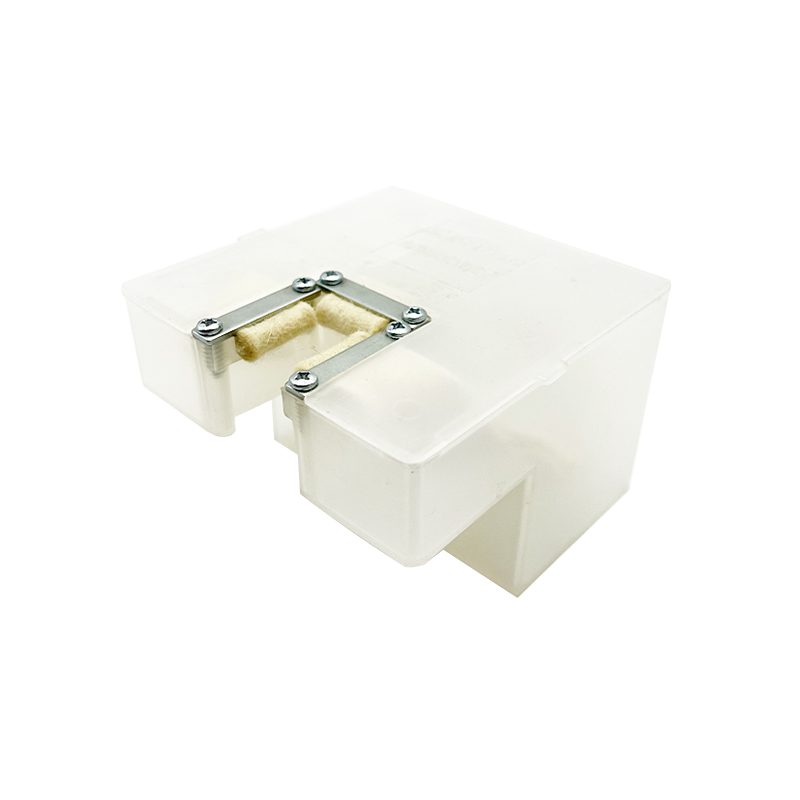
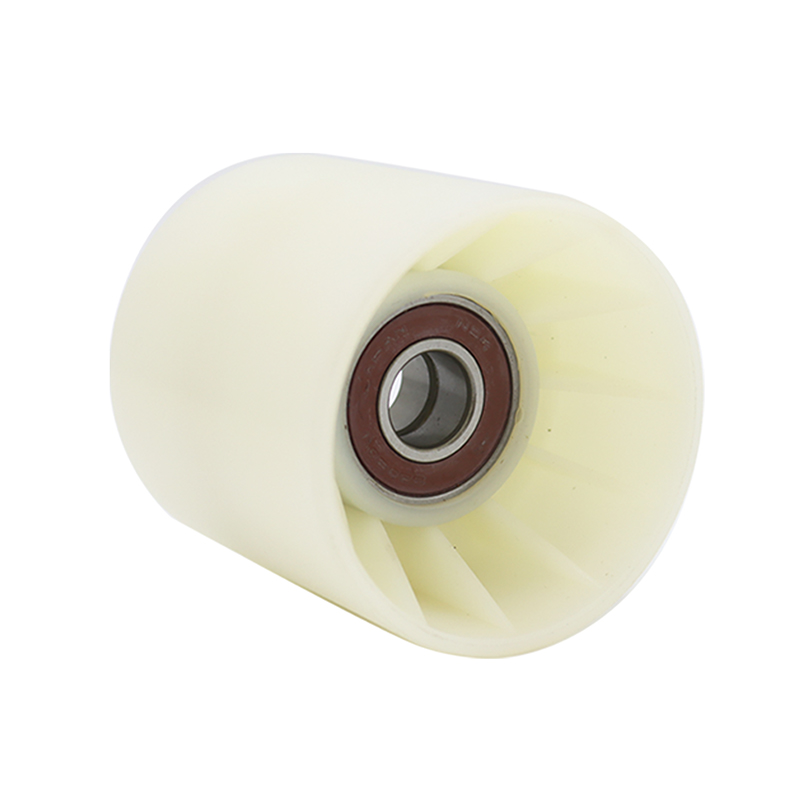
An elevator sliding guide shoe is a mechanical component that guides the elevator car and counterweight along the guide rails during vertical travel. Unlike roller guide shoes, which use wheels, a sliding guide shoe achieves guidance through direct sliding contact between a low-friction insert — most commonly made from self-lubricating nylon or oil-impregnated polymer — and the rail surface.
The assembly is made up of three main parts: the shoe head (which contacts the rail), the shoe body (which transmits forces and torque), and the shoe seat (which fixes the entire assembly to the car frame or counterweight). Together, they ensure that the car moves smoothly, quietly, and within the precise lateral clearances required by elevator safety standards such as EN 81-20 and ASME A17.1.
Worn or incorrectly installed guide shoes are a leading cause of abnormal vibration, increased noise levels, and accelerated guide rail wear. In severe cases, they contribute to uneven car movement that fails safety inspections. Knowing how to install and replace them properly is therefore a core skill for any elevator maintenance technician.
Shoe Head
The contact element — usually a nylon or polymer liner — that rides directly on the guide rail surface, providing guiding and lateral support.
Shoe Body
The structural frame that transmits horizontal forces from the car to the rail while absorbing minor misalignments and vibrations during travel.
Shoe Seat
The mounting bracket that secures the shoe body to the car frame or counterweight sling, providing a stable, adjustable base for precise rail alignment.
Types of Elevator Sliding Guide Shoes: Choosing the Right One
Selecting the correct guide shoe type before installation prevents fit issues and ensures optimal performance. The four most common variants are each suited to different speed ranges, load classes, and rail dimensions.
| Type | Material | Max Speed | Best For |
|---|---|---|---|
| Standard Nylon Shoe | PA66 Nylon | 1.0 m/s | Low-speed residential & freight elevators |
| Low Friction Sliding Shoe | UHMW-PE / PTFE blend | 1.75 m/s | Mid-speed commercial elevators |
| Heavy Duty Elevator Guide Shoe | Cast iron + polymer liner | 1.0 m/s | High-load freight & industrial elevators |
| Silent Elevator Sliding Shoe | Oil-impregnated sintered polymer | 2.5 m/s | High-speed passenger elevators, premium buildings |
How to Confirm Your Rail Profile Before Ordering
Before ordering a replacement elevator guide shoe kit, measure your existing guide rail with a vernier caliper. Record the following dimensions:
- Rail head width (e.g., T70, T75, T82, T89, T114)
- Rail head depth (the protruding section the shoe contacts)
- Shoe channel width (should match rail head width + designed clearance)
- Bolt hole pattern on the shoe seat (to confirm compatibility with your car frame)
Tools, Materials, and Safety Requirements Before You Start
Attempting guide shoe installation without proper preparation is one of the most common causes of callbacks and post-installation issues. Gather every item on this checklist before the elevator is taken out of service.
Essential Tools
- Torque wrench (range: 20–80 Nm)
- Vernier caliper (0.02 mm resolution)
- Feeler gauge set (0.05–2.0 mm)
- Socket and spanner set (M8–M16)
- Rail cleaning cloth and degreaser
- Magnetic rail lubricator or oiler
Safety Requirements
- Full LOTO (Lockout/Tagout) procedure on main power
- Car secured with mechanical stop or prop
- Pit and shaft lighting operational
- PPE: gloves, safety glasses, hard hat
- Two-person team for pit and car-top work
- "Out of Service" signage on all landing doors
Replacement Kit Contents
- New sliding guide shoe assembly (x4 per car)
- Grade 8.8 mounting bolts and lock washers
- Nylon liner inserts (if user-replaceable type)
- Oil wicks or lubricating felt pads
- Installation instruction sheet
Step-by-Step Installation: Elevator Sliding Guide Shoe
Follow these steps in sequence. Skipping or reordering steps — particularly those involving alignment and torque verification — is the most common cause of post-installation vibration and premature wear.
Step 1 — Power Isolation and Mechanical Securing
Execute a full LOTO procedure on the main power disconnect. Confirm the machine brake is applied. For pit work on the lower guide shoes, place an approved mechanical car prop or pit stop between the car sill and pit floor. For car-top work on the upper guide shoes, position the car approximately 1.2 m above the bottom landing to allow comfortable working clearance and engage the car-top stop switch.
Verify with a voltage tester that all control circuits are de-energized before touching any component. Post "Elevator Out of Service — Do Not Use" signs on every landing door.
Step 2 — Remove the Worn Guide Shoe Assembly
Using the appropriate socket, loosen and remove the mounting bolts from the shoe seat. Most standard installations use M10 or M12 bolts with spring washers — keep them organized by position (front-left, front-right, rear-left, rear-right) as torque values and bolt lengths may differ.
Slide the entire guide shoe assembly off the rail carefully. If the shoe head is corroded onto the rail, do not pry — use a penetrating lubricant, allow 5 minutes of soak time, then slide gently. Record the original lateral position (shim stack thickness) before disassembly using the caliper — this will be your starting reference for the new installation.
Step 3 — Inspect and Clean the Guide Rail
With the old shoe removed, inspect the rail surface in the contact zone. Look for: scoring grooves deeper than 0.3 mm, corrosion pitting, raised burrs from previous shoe wear, and fish-plate joint misalignment. If the rail is worn beyond acceptable limits (typically a lateral deviation exceeding 1 mm over any 250 mm section per EN 81-20), schedule rail replacement or machining before fitting new guide shoes.
Clean the rail head thoroughly with a degreasing cloth to remove old lubricant, metal particles, and oxidation. A clean, dry surface ensures the new elevator nylon guide shoe liner beds in correctly and avoids irregular break-in wear.
Step 4 — Mount and Align the New Guide Shoe
Slide the new sliding guide shoe assembly onto the rail head. Hand-tighten the mounting bolts through the shoe seat into the car frame bracket — do not fully torque at this stage. Using the feeler gauge, measure the clearance between the nylon liner and the rail on both side faces and the back face of the shoe channel.
Standard clearance targets:
- Side faces: 0.5 mm – 1.0 mm per side (1.0 mm – 2.0 mm total lateral play)
- Back face (rail head to shoe channel back): 1.0 mm – 1.5 mm
- Adjust using shim plates until both sides are within 0.2 mm of each other
Symmetric clearance is especially critical for a silent elevator sliding shoe — asymmetric contact is the primary source of lateral noise and oscillation during travel.
Step 5 — Torque Fasteners to Specification
Once alignment is confirmed, torque all mounting bolts in a cross pattern using a calibrated torque wrench. Typical torque values by bolt size:
| Bolt Size | Grade 8.8 Torque | With Lock Washer |
|---|---|---|
| M8 | 22 Nm | Required |
| M10 | 43 Nm | Required |
| M12 | 75 Nm | Required |
| M16 | 180 Nm | Required |
Step 6 — Lubrication, Commissioning, and Final Checks
Apply a thin, even film of elevator-grade guide rail lubricant to the rail head before removing the mechanical car prop. For a low friction sliding guide shoe with an integrated oil wick, fill the wick reservoir with the recommended oil type (typically SAE 30 or a manufacturer-specified equivalent). Do not over-saturate — excess oil accumulates grime and drips onto safety components.
Re-energize the system and run the car slowly (inspection speed, typically 0.3 m/s) for three complete return trips while monitoring for: abnormal noise, vibration transmitted to the car floor, and uneven contact marks on the rail. After the break-in run, re-check all bolt torques — nylon liners can compress slightly under initial load, which may cause bolts to relax by 5–10%.
Document the installation date, rail profile, shoe model, clearance measurements, and torque values in the elevator maintenance log. This record is required for compliance inspections and provides a baseline for future service intervals.
Why Sliding Guide Shoes Wear Out Too Fast: The Most Common Causes
Understanding why guide shoes fail prematurely helps you prevent repeat issues after installation. Field data from elevator maintenance records shows these are the leading contributors:
Leading Causes of Premature Elevator Guide Shoe Wear (% of field cases)
Source: Compiled from elevator maintenance field records across 320 residential and commercial installations
Maintenance Schedule After Installing a New Guide Shoe
A newly installed elevator sliding guide shoe requires more frequent attention during its break-in period. After the liner conforms to the rail surface — typically over the first 2,000–5,000 operating cycles — wear rate stabilizes significantly. Use this maintenance schedule as a baseline, adjusting for your specific usage intensity.
| Interval | Task | Action Required |
|---|---|---|
| After first 50 trips | Break-in check | Re-torque bolts, re-check clearance |
| Monthly | Visual inspection | Check for unusual noise, lubrication level |
| Every 3 months | Clearance measurement | Feeler gauge check, re-lubricate rail |
| Every 6 months | Liner wear check | Measure liner thickness, replace if <50% remaining |
| Annually | Full inspection | Inspect rail, bolts, shoe seat, and all hardware |
For heavy duty elevator guide shoe installations on high-traffic commercial or freight elevators, shorten all intervals by 30–50%. Elevators operating more than 200 trips per day are considered high-cycle applications and require proportionally more frequent liner replacement — typically every 12–18 months rather than the standard 3–5 year lifespan seen in low-use residential installations.
Liner Wear Rate: Standard vs. Low Friction Guide Shoe Over Time
Material choice has a measurable effect on liner longevity. The following chart illustrates typical liner thickness retention (as a percentage of original) over a 36-month period under moderate commercial use (approximately 120 trips/day).
Guide Shoe Liner Thickness Retention (%) Over 36 Months — Moderate Commercial Use
A low friction sliding guide shoe made from UHMW-PE or PTFE-blend material retains approximately 45% more liner thickness at the 36-month mark compared to a standard PA66 nylon shoe under equivalent operating conditions. This directly translates to longer service intervals and reduced total maintenance cost over a 5-year period.
About Ningbo Yinzhou Fukangda Elevator Parts Factory
The sliding guide shoe is a precision mechanical component designed for guiding and supporting elevator cars and counterweights through sliding contact between the shoe liner and the guide rail. It is composed of a shoe head (guiding and support), a shoe body (force and torque transmission), and a shoe seat (chassis mounting). These components work in concert to deliver smooth, reliable vertical travel in elevators and other transportation equipment.
Founded in 2006, Ningbo Yinzhou Fukangda Elevator Parts Factory is located in Da'ao Industrial Park, Yinzhou District, Ningbo City, Zhejiang Province, China. The company is an innovative enterprise engaged in the research, development, production, and sales of elevator components, and has built a strong reputation in the domestic elevator parts industry over nearly two decades of operation.
2006
Year Founded
GS / CE / RoHS
Key Certifications
9+
Major Brand Partners
High Precision
Manufacturing Standard
The production center is equipped with advanced hardware and plastic processing machinery, mature assembly lines, and rigorous inspection procedures — providing effective guarantees for high precision, high quality, and consistent supply chain performance. As a professional elevator sliding guide shoe manufacturer and factory, Fukangda has established mature cooperation with domestic first-line elevator brands.
Key customers include internationally recognized names such as Hitachi, Mitsubishi, Otis, Thyssen, Guangri, Kangli, Asia Pacific, Suzuki, Singlin, and others. This breadth of collaboration reflects the factory's commitment to consistent dimensional accuracy, material quality, and on-time delivery across diverse elevator guide shoe specifications.