
 English
 中文简体

Picture a 1.75 m/s passenger lift that starts to hum somewhere between the fourth and sixth floors. The machine is quiet, the ropes are new, and nothing shows on the controller. The fault usually sits at the rail: a joint that was never dressed flush, a bracket shimmed slightly off plumb, or a shoe lining that has worn into a shape of its own.
Lift guide rails are the reference surface for the whole vertical ride. They set the path the car follows, they absorb the lateral loads the guide shoes push into them, and they give the safety gear something solid to clamp. Rail size, machining quality, joint work and alignment cost far less to get right during installation than to correct afterwards.
Content
- 1 What Lift Guide Rails Do in a Lift System
- 2 The Rail-to-Shoe Interface Decides Noise and Wear
- 3 Rail Size Sets the Shoe and the Lubrication Point
- 4 Checks Worth Doing Before Rails Go Up
- 5 Alignment and Lubrication in Service
- 6 Sourcing Checklist for a Rail-and-Shoe Package
- 7 Frequently Asked Questions About Lift Guide Rails
What Lift Guide Rails Do in a Lift System
A rail looks like a plain steel bar from the pit, but it does three jobs at once, and each one sets a different requirement.
- Guidance: the machined head is the track the car and counterweight shoes follow, so its straightness and finish show up directly as ride comfort.
- Load path: eccentric car loads, rope sway and, in tall shafts, building sway reach the rails through the shoes and pass into the brackets and shaft structure.
- Safety gear surface: progressive and instant safety gears clamp the rail head to stop the car, which makes head width, hardness, surface condition and joint quality safety parameters rather than comfort extras.
A T-section rail has three zones: the head the shoe wraps, the blade (web) that carries bending, and the foot that accepts the fishplate at joints and the clips at brackets. Rail steel is specified by tensile strength and elongation in ISO 7465 and its Chinese equivalent GB/T 22562, and the head is either cold-drawn to final size or machined after drawing.
Machining is what tightens head width, straightness and twist. Cold-drawn rail covers most villa and low-rise work; as speeds climb past roughly 2 m/s, machined rail becomes the common specification and the surface the shoe runs on is noticeably more consistent.
| Rail designation | Nominal head width | Typical duty | Surface note |
|---|---|---|---|
| T70-1/B | 70 mm | Villa lifts, low-speed passenger and goods lifts | Often cold-drawn, light shoe loads |
| T75-3/B | 75 mm | Standard passenger and goods lifts up to about 1.75 m/s | Cold-drawn common, machined for quieter rides |
| T89/B | 89 mm | Mid- and high-rise passenger lifts, roughly 1.75 to 2.5 m/s | Machined head usual |
| T114/B | 114 mm | Higher-speed passenger lifts, roughly 2.5 to 4 m/s | Machined, tighter straightness |
| T127-1/B | 127 mm | High-speed and heavy-duty passenger lifts | Machined, thicker blade |
| T140-1/B | 140 mm | Very high-speed and large-capacity lifts | Machined, bracket and clip sizing critical |
The Rail-to-Shoe Interface Decides Noise and Wear
The guide shoe is the only part that touches the rail, so the pairing matters more than either component on its own. A sliding shoe wraps the head with a lining, usually cast iron, nylon or a self-lubricating composite, and runs with a small clearance per side. A roller shoe uses three rollers with spring preload, tolerates misalignment better and keeps friction low at higher speeds.
Two mismatches keep coming back in service work:
- A shoe built for a 75 mm head fitted to a 70 mm rail, or the reverse, leaves slack or binds. The car knocks on one side at start-up and the lining wears on a taper.
- A cast-iron lining run dry on a rail that was specified for oiled operation squeals within weeks, and the head picks up scoring that no amount of oil will polish out later.
Clearance, preload and lining material should come from the lift maker's data rather than from whatever is on the shelf. The comparison between sliding and roller guide shoes walks through those trade-offs in more detail.
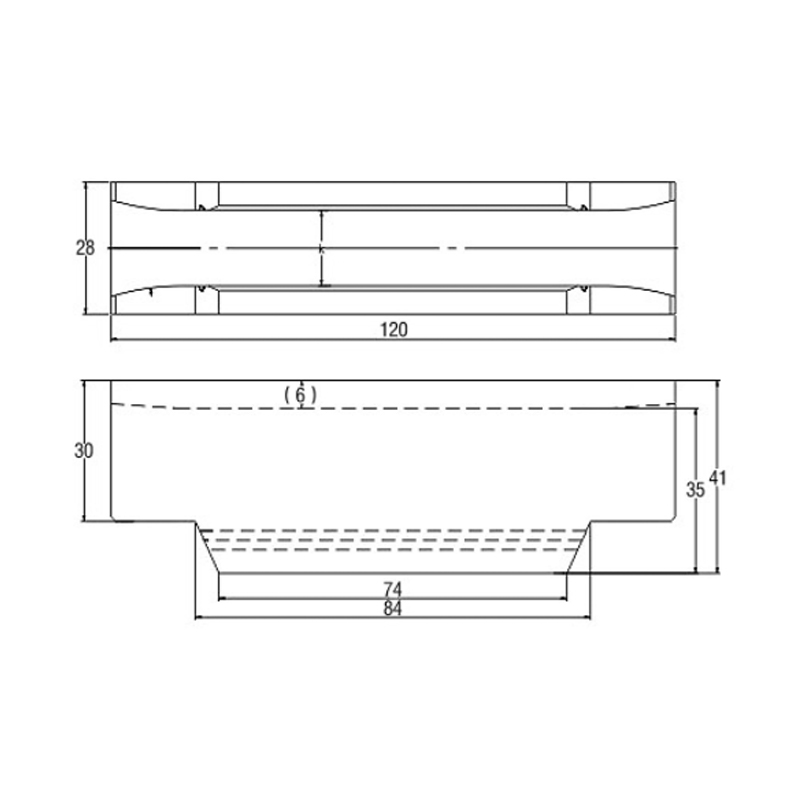 FKD-T001 Elevator Guide Shoe Lining, 120 mm Width120 mm-wide guide shoe lining with 5, 9, 10 or 16 mm thickness options, designed to reduce rail friction and wear in elevator guide shoes.View Product →
Rail Size Sets the Shoe and the Lubrication Point
Head width is the number that travels with the rail through an entire specification: it selects the shoe family, the lining size, the clearance setting and even the volume of oil the lubrication system has to deliver. The chart below shows the nominal head width behind each common designation.
Two practical consequences follow. First, a heavier car on a wider rail needs a shoe with enough roller preload or lining area to spread the load; a small villa shoe dropped onto a T114 section will wear out of flat long before its rated life. Second, lubrication has to scale with the running surface. Oil cups feed the head through a felt or wick contact, and a wide head at speed wipes the film away faster than a narrow head on a slow villa lift ever will.
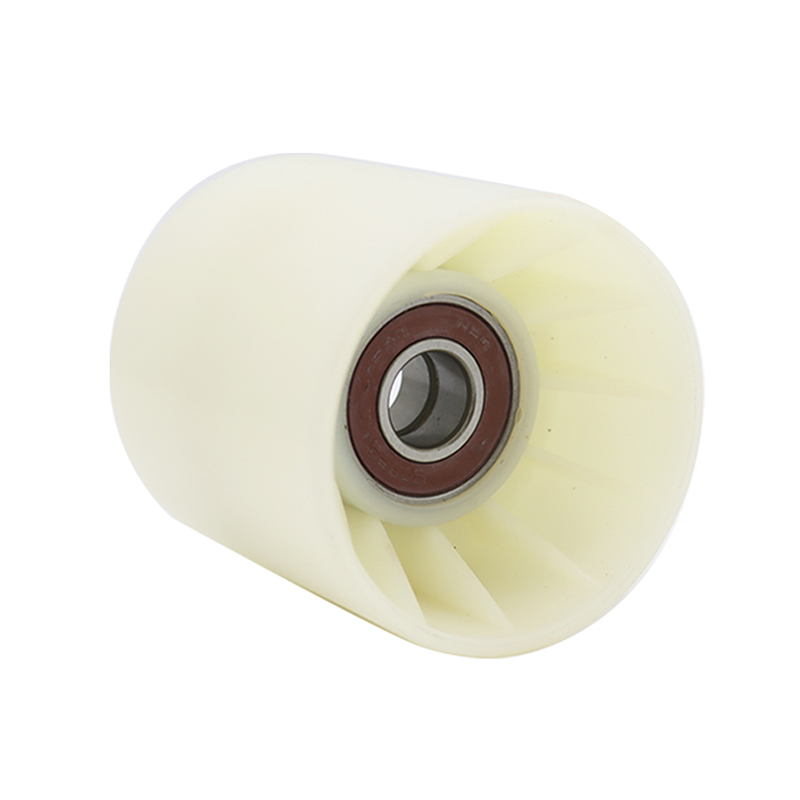
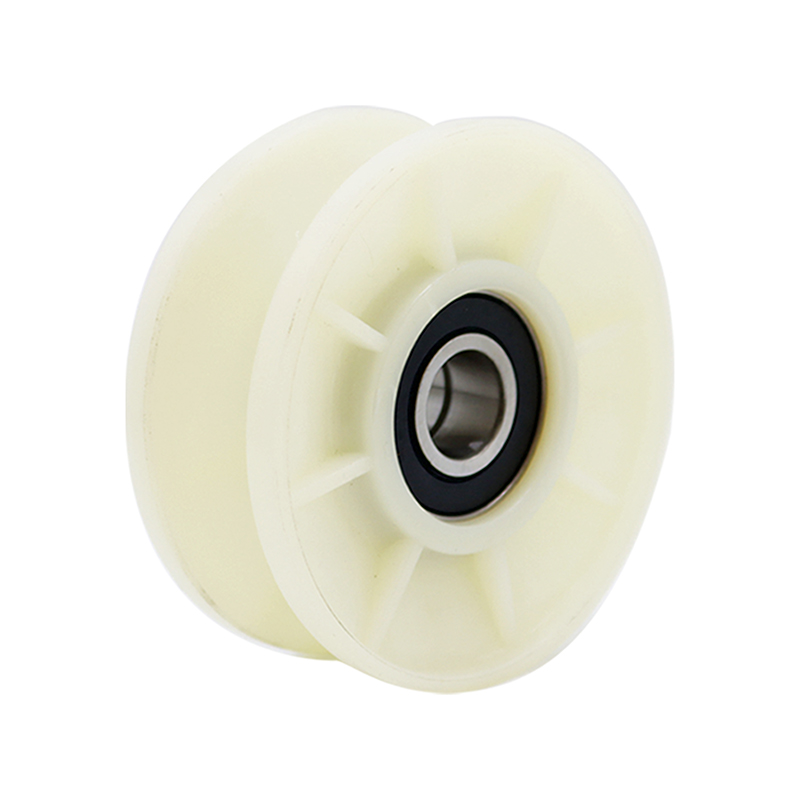
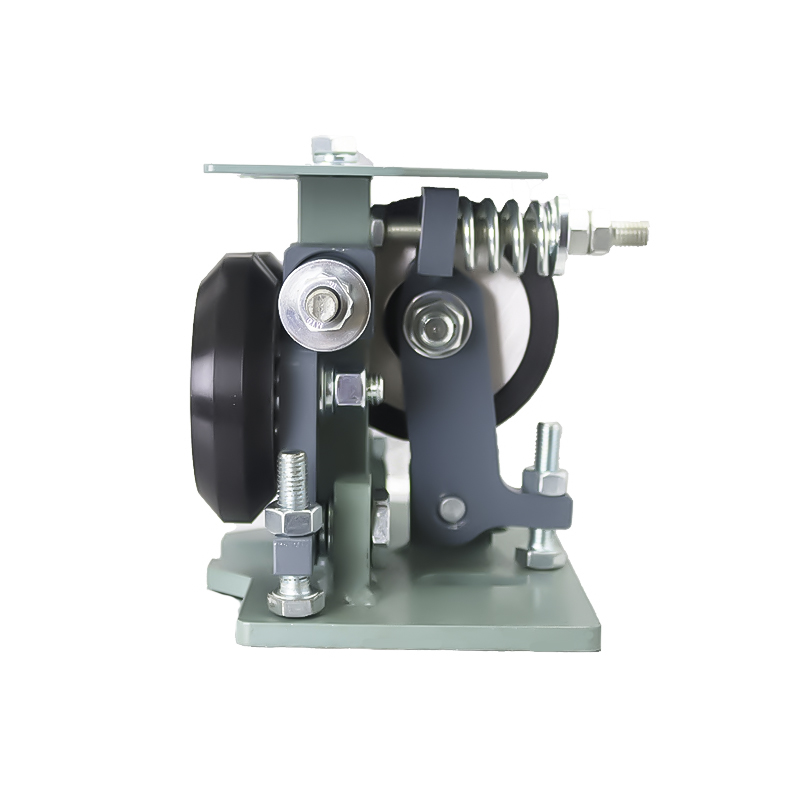 FKD-R90-1 Roller Guide Shoe for ElevatorsA roller guide shoe rated to 1400 kg and 2.0 m/s, with three-side spring cushioning, two-hole mounting, and compatibility with 10/16 mm guide rails.View Product →
Checks Worth Doing Before Rails Go Up
Most rail problems are decided in the first hour of installation, not in the third year of service. A quick bench inspection and a straight run through the shaft catch nearly all of them.
- Straightness and twist. Lay each rail on trestles and check the head with a straightedge along the full length; a rail that rocks on its foot will twist the car later.
- Head condition. Reject nicks, rolled edges, rust pits or chatter marks on the running surface. A 0.05 mm burr at a joint is felt by every passenger.
- Joint faces. Fishplate faces must be square and matched. If the two ends came from different batches, check head width before clamping them together.
- Hardware match. Rail clips, fishplates and brackets must suit the foot width and hole pattern of the section actually supplied, not the one on the original drawing.
- Length planning. Standard stock is 5 m, with 3 m and 4 m sections cut for villas and low-rise shafts. Plan so joints do not land where the safety gear clamps during a test.
Alignment and Lubrication in Service
Verticality is normally held to about 0.7 mm over any 5 m of rail, with the car rails parallel and in the same plane within a similar band. Bracket spacing comes from the lift maker, commonly in the region of 2.0 to 2.5 m for standard passenger duty, and each bracket is shimmed rather than forced. Joints decide noise: the gap at the head is usually capped near 0.5 mm, any step between the two rails is dressed to roughly 0.05 mm, and the transition is polished in the direction of travel.
Lubrication is the other half of the same job. Oil cups bolt to the shoe or slipper and wipe a thin film onto the head as the car travels, so the film stays continuous instead of pooling. A dry head produces stick-slip and the familiar high-pitched squeal; an over-filled cup drips into the pit and turns dust into an abrasive paste that wears both lining and rail. Roller shoes and self-lubricating composite linings often run dry by design, and adding oil to those systems does more harm than good.
 FKD-B500 Round Elevator Oil Cup, 500 mlA 500 ml round oil cup with anti-drip nozzle function and corrosion-resistant, easy-clean construction for elevator lubrication and maintenance.View Product →
Sourcing Checklist for a Rail-and-Shoe Package
Buyers who order rails and shoes separately tend to discover the mismatch on site. Sending one specification sheet with the enquiry avoids most of it:
- Rail designation and standard, for example T89/B to ISO 7465, plus head width in millimetres.
- Cold-drawn or machined head, and the surface or straightness tolerance required.
- Length per piece, total quantity, and whether fishplates, clips and brackets are included.
- Shoe type and lining material, with running clearance or roller preload taken from the lift maker's data.
- Lubrication method, oil cup capacity, and a spare set of linings for the first service interval.
Because rails and shoes wear as a pair, most experienced buyers keep both on one purchase order and one inspection record. The guide shoe range covers the matching side of that package, from sliding and roller shoes to linings sized for common head widths.