
 English
 中文简体
中文简体
Content
- 1 Elevator Guide Shoes Protect Rails by Acting as a Controlled Friction Interface Between the Car and the Guide Rail
- 2 What an Elevator Guide Shoe Is and How It Works
- 3 The Two Main Types of Elevator Guide Shoes and Their Rail Protection Mechanisms
- 4 How Guide Shoes Prevent the Specific Rail Damage Mechanisms
- 5 Guide Shoe Types, Materials, and Rail Protection Performance Comparison
- 6 The Role of Lubrication Systems in Protecting Guide Rails
- 7 Signs of Guide Shoe Wear and the Rail Damage That Follows
- 8 Maintenance Schedule and Replacement Intervals for Elevator Guide Shoes
- 9 Frequently Asked Questions About Elevator Guide Shoes
- 9.1 How many guide shoes does a typical elevator have, and where are they located?
- 9.2 What happens to the guide rails if guide shoe liners are not replaced on time?
- 9.3 Can roller guide shoes be retrofitted to an elevator that originally had sliding guide shoes?
- 9.4 How does guide shoe clearance affect rail wear and ride quality?
- 9.5 Do elevator guide shoes affect the safety gear and overspeed governor system?
- 9.6 What is the cost difference between replacing guide shoe liners versus replacing damaged guide rails?
Elevator Guide Shoes Protect Rails by Acting as a Controlled Friction Interface Between the Car and the Guide Rail
Elevator guide shoes prevent damage to elevator rails by interposing a replaceable, low-friction contact surface between the elevator car frame and the steel guide rail. Rather than allowing the steel car frame to contact the rail directly — which would cause rapid rail wear, surface scoring, and metal fatigue — the guide shoe provides a sacrificial liner or rolling element that absorbs lateral forces, distributes contact pressure, and dissipates the energy of vibration and misalignment. When the guide shoe wears out, it is replaced at low cost; the guide rail, which is far more expensive and difficult to replace, remains protected. This is the core rail-protection principle: the guide shoe wears so the rail does not have to.
What an Elevator Guide Shoe Is and How It Works
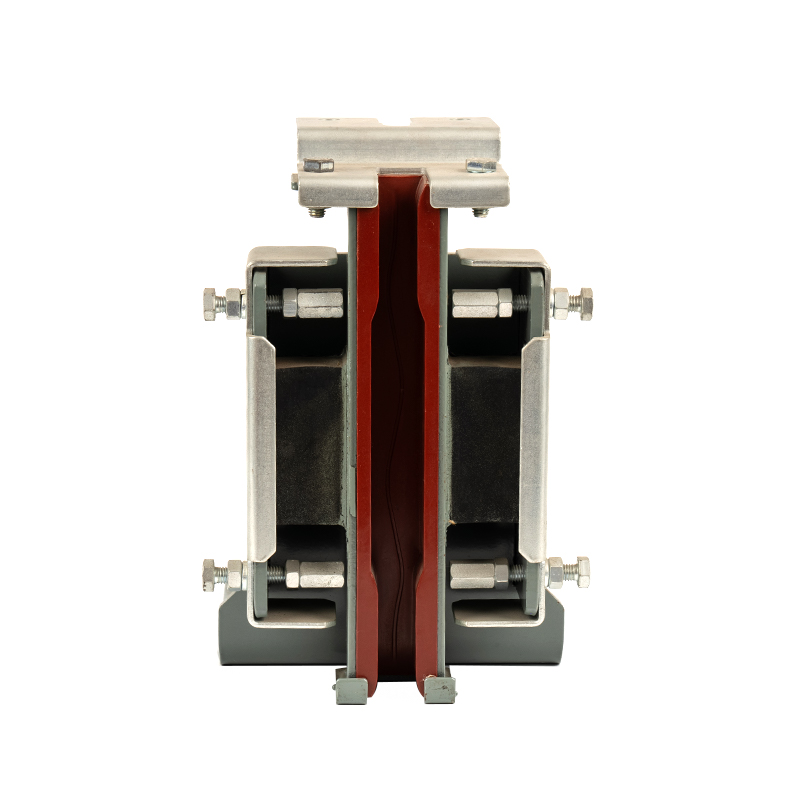
An elevator guide shoe is a mechanical component mounted to the elevator car frame and counterweight frame that maintains the correct positional relationship between the car and its guide rails as the car travels up and down the hoistway. Each elevator car typically uses four guide shoes — one at each corner of the car frame — engaging the two guide rails that run the full height of the hoistway.
The Three-Surface Contact Principle
A standard T-shaped elevator guide rail has three contact surfaces: the rail head face (front), and the two rail head flanks (sides). The guide shoe wraps around or engages all three surfaces simultaneously through its liner or roller elements. This three-point contact constrains the elevator car from moving laterally or rotating in the hoistway plane, while allowing free vertical travel. The contact pressure on each surface depends on the car's load distribution, hoistway alignment, and travel speed — and it is at these contact surfaces that rail damage would occur if the guide shoe were absent or worn.
Spring Loading and Clearance Management
Most sliding guide shoes incorporate a spring-loaded mounting that maintains consistent contact pressure against the rail regardless of minor variations in rail alignment or car frame deflection under load. The spring preload is typically set to between 50–150 N (11–34 lbf) per shoe, providing enough contact force to prevent rattling and maintain alignment while avoiding excessive friction that would increase wear on both the liner and the rail surface.
The Two Main Types of Elevator Guide Shoes and Their Rail Protection Mechanisms
The two principal guide shoe designs — sliding and roller — protect rails through fundamentally different mechanisms, each with distinct advantages and maintenance requirements.
Sliding Guide Shoes
Sliding guide shoes use a replaceable insert — typically made from ultra-high molecular weight polyethylene (UHMWPE), nylon, or bronze — that slides directly against the rail surface. The insert material is specifically chosen to have a lower hardness than the steel guide rail, ensuring that any abrasive wear occurs in the softer insert rather than scoring the harder rail surface. UHMWPE inserts, the most common type in modern installations, have a coefficient of friction against steel of approximately 0.15–0.25 — low enough to minimize heat generation and rail wear at typical elevator speeds.
Sliding guide shoes are standard for elevator travel speeds up to approximately 1.5–2.0 m/s (300–400 fpm). Above this speed, friction-generated heat accumulates faster than it can dissipate, which is why higher-speed elevators use roller designs.
Roller Guide Shoes
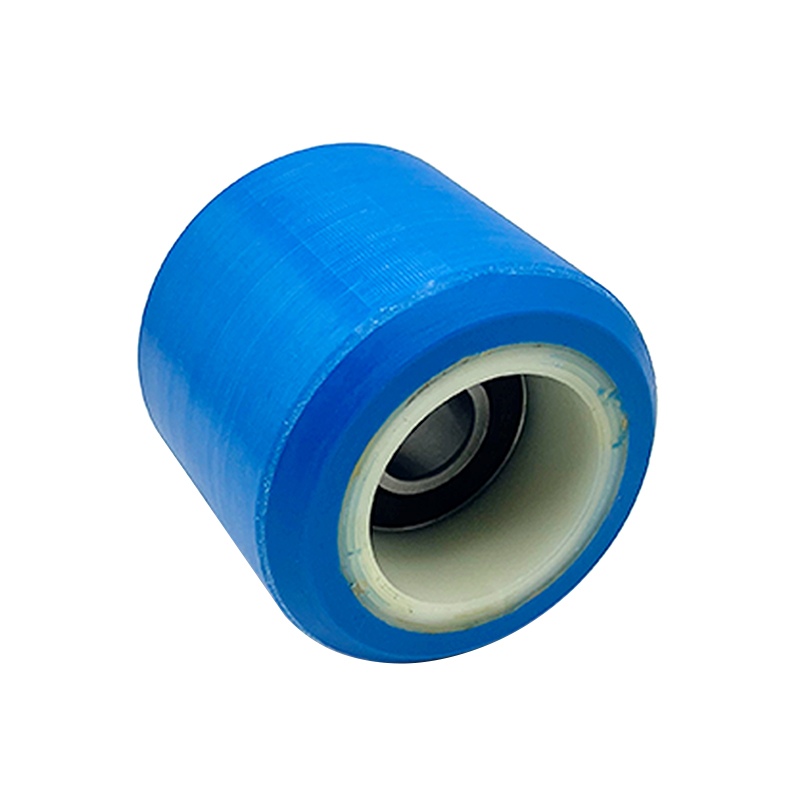
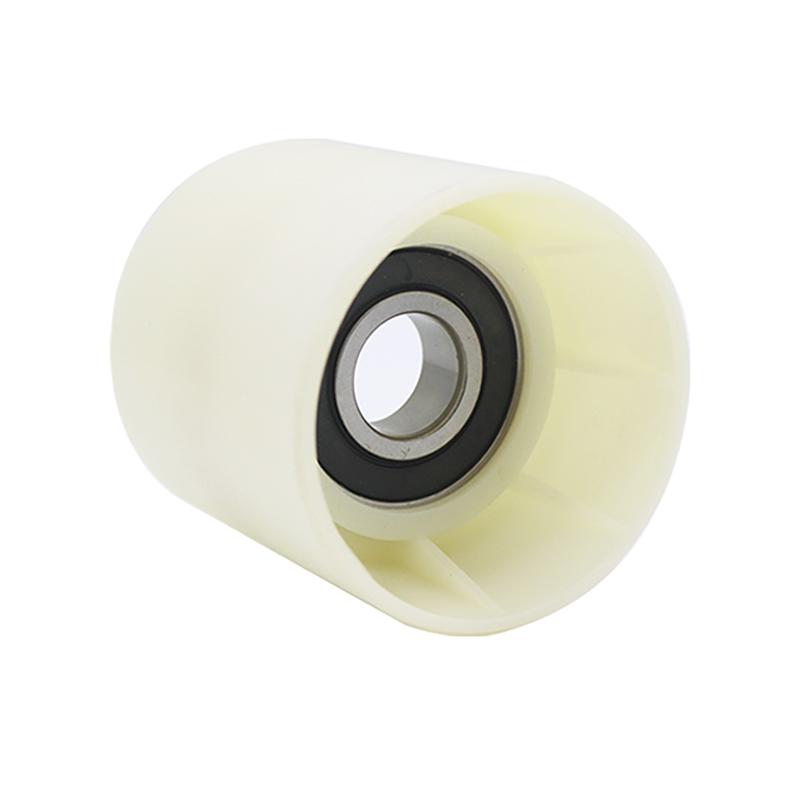
Roller guide shoes replace the sliding insert with three polyurethane-coated steel rollers — one for the rail head face and one for each flank — that roll along the rail surface. Because the contact is rolling rather than sliding, the friction coefficient drops to approximately 0.01–0.05, and heat generation is dramatically reduced. This makes roller guide shoes the standard choice for high-speed elevators traveling at 2.5 m/s (500 fpm) and above, with installations in high-rise buildings commonly operating at 6–10 m/s (1,200–2,000 fpm).
Roller guide shoes protect rails not only through reduced friction but through their vibration-damping properties. The polyurethane roller compound absorbs rail surface irregularities — joint gaps, minor misalignments, surface roughness — preventing these from transmitting as impact loads into the rail. This shock absorption significantly reduces the peak contact stresses on rail surfaces that would otherwise cause surface fatigue and pitting over time.
How Guide Shoes Prevent the Specific Rail Damage Mechanisms
Guide rails face several distinct damage mechanisms during elevator operation. Understanding how the guide shoe addresses each one clarifies why its design and maintenance are so critical.
Abrasive Surface Wear
The most common form of rail damage in sliding guide shoe installations is abrasive wear of the rail head surface. A properly functioning sliding guide shoe with a fresh UHMWPE liner causes rail wear rates of approximately 0.01–0.05 mm per year under normal operating conditions — a negligible rate given that guide rails typically have a serviceable rail head width of 16–20 mm. A worn-through liner that allows metal-to-metal contact between the steel shoe body and the rail can increase wear rates by a factor of 10–50×, scoring the rail surface and creating grooves that accelerate wear exponentially. Regular liner replacement is the single most effective rail protection measure in sliding shoe systems.
Impact Loading at Rail Joints
Guide rail sections are typically 5 meters long and joined end-to-end with fish plates. Even with careful installation, a small step or gap at each joint creates an impact load each time the guide shoe passes over it. At 1 m/s travel speed, a 0.5 mm joint step creates a brief impact that can generate peak contact forces 3–5× higher than steady-state traveling forces. Roller guide shoes with compliant polyurethane rollers absorb most of this impact energy, protecting both the roller and the rail joint from the metal fatigue that would otherwise develop from thousands of impact cycles per day.
Eccentric Loading and Edge Stress Concentration
When an elevator car carries an unevenly distributed load — for example, all passengers standing to one side — the car frame deflects slightly, causing the guide shoes on one side to carry a higher lateral force than those on the other. A well-designed guide shoe with a properly profiled liner or roller contact surface distributes this load across the full contact width of the rail head, preventing stress concentration at the rail head edges that would cause edge chipping and surface cracking. A worn or misaligned guide shoe concentrates load at a single point, producing visible edge wear on the rail head within weeks.
Corrosion Acceleration Through Fretting
In sliding guide shoe installations without adequate lubrication, micro-slip between the liner and the rail surface generates fine metallic debris — a phenomenon called fretting wear. This debris oxidizes rapidly, creating iron oxide particles that act as an abrasive third body at the contact interface, accelerating both liner and rail wear. Elevator guide shoe lubrication systems — either automatic oiler units mounted above the guide shoes or manual periodic lubrication — prevent fretting by maintaining a continuous thin oil film at the contact interface, typically using ISO 68 or ISO 100 machine oil applied at a rate of 2–5 ml per hour of operation.
Guide Shoe Types, Materials, and Rail Protection Performance Comparison
| Guide Shoe Type | Contact Material | Speed Range | Rail Wear Rate | Vibration Damping | Lubrication Required |
|---|---|---|---|---|---|
| Sliding — UHMWPE liner | UHMWPE plastic | Up to 2.0 m/s | 0.01–0.05 mm/year | Moderate | Yes — oil oiler |
| Sliding — Bronze liner | Phosphor bronze | Up to 1.5 m/s | 0.05–0.15 mm/year | Low | Yes — grease |
| Roller — Standard | Polyurethane on steel | 2.0–6.0 m/s | <0.01 mm/year | High | Minimal — bearing grease |
| Roller — High Speed | Precision PU compound | 6.0–12.0 m/s | <0.005 mm/year | Very High | Sealed bearing — periodic |
| Sliding — Worn liner | Metal-to-metal | Any | 0.5–2.0+ mm/year | None | N/A — critical failure |
The Role of Lubrication Systems in Protecting Guide Rails
In sliding guide shoe installations, lubrication is not optional — it is an integral part of the rail protection system. Automatic rail oiler units are mounted on the car frame above the guide shoes and deliver a controlled film of oil to the rail surface as the car travels, ensuring the sliding contact always occurs through a lubricant film rather than direct surface contact.
- Correct oil viscosity is critical: Too thin an oil film breaks down under the contact pressure of the guide shoe, providing no protection; too thick an oil collects dust and debris that act as abrasives. Most elevator manufacturers specify ISO VG 68 or VG 100 mineral oil for standard sliding guide shoe applications.
- Oil reservoir level must be checked monthly: An empty oiler reservoir means the rail runs dry — this can cause audible squealing and visible scoring of the rail surface within days in a high-usage elevator
- Excess oil is also damaging: Over-lubrication allows oil to accumulate in the pit and on rail bracket surfaces, creating a fire hazard and attracting particulate contamination that accelerates abrasive wear
- Roller guide shoes do not require rail lubrication — in fact, oil on the rail surface reduces roller friction to levels that can cause the rollers to skid rather than roll, creating flat spots on the polyurethane roller surface that cause vibration and accelerated rail wear at the skid contact points
Signs of Guide Shoe Wear and the Rail Damage That Follows
Identifying guide shoe wear before it progresses to rail damage is one of the most important functions of routine elevator maintenance. The following signs indicate a guide shoe needs attention.
- Increased vibration or rough ride: One of the earliest indicators — as guide shoe liners wear, clearance between the shoe and rail increases, allowing the car to oscillate laterally. This is felt as a rougher ride and may be accompanied by rattling sounds.
- Squealing or metallic scraping sounds: Audible noise during travel almost always indicates dry rail contact (empty oiler or failed lubrication) or a worn liner approaching metal-to-metal contact
- Black or metallic debris in the pit: Fine black powder or metallic filings in the elevator pit below the guide rails indicate active abrasive wear — either liner material wearing away or, more seriously, rail surface material being removed
- Visible grooves on the rail head: Longitudinal grooves scored into the rail head surface are the definitive sign that guide shoe wear has already caused rail damage. At this stage, the rail surface may need to be dressed (machined smooth) or the rail section replaced
- Liner thickness below minimum: During scheduled maintenance, liner thickness should be measured with a caliper. Most manufacturers specify replacement when liner thickness reaches 2–3 mm remaining — well before complete wear-through
Maintenance Schedule and Replacement Intervals for Elevator Guide Shoes
A structured maintenance program is the only reliable way to ensure guide shoes continue to protect rails throughout the elevator's service life. The following schedule reflects industry best practices for commercial elevator installations.
- Monthly: Check rail oiler reservoir level and refill as required; listen for abnormal sounds during operation; visually inspect guide rail surfaces for scoring or discoloration at accessible points
- Quarterly: Inspect guide shoe liner thickness on all four car shoes and all counterweight shoes; check spring tension and mounting hardware torque; verify rail alignment at accessible joint locations
- Annually: Full hoistway inspection including all rail joints, rail bracket fixings, and guide rail surface condition across the full travel height; roller shoe bearing condition check and regreasing
- Liner replacement interval: Sliding guide shoe UHMWPE liners typically require replacement every 3–5 years in normal-use commercial elevators; high-use installations (hospitals, transit hubs) may require replacement every 1–2 years
- Roller replacement interval: Polyurethane rollers in standard-speed elevators typically last 5–10 years; high-speed roller shoe bearings should be replaced every 5 years regardless of apparent condition as a preventive measure
Frequently Asked Questions About Elevator Guide Shoes
How many guide shoes does a typical elevator have, and where are they located?
A standard traction elevator installation uses eight guide shoes in total — four mounted on the car frame (one at each upper and lower corner) and four mounted on the counterweight frame in the same arrangement. Each set of four shoes engages the two guide rails (two shoes per rail, upper and lower). Some larger freight elevators or high-speed passenger elevators may use additional guide shoes at intermediate car frame positions to control deflection in taller car frames. The counterweight guide shoes are sometimes overlooked during maintenance inspections but wear at similar rates to the car shoes and require equal attention for rail protection.
What happens to the guide rails if guide shoe liners are not replaced on time?
When a UHMWPE liner wears completely through, the steel guide shoe body contacts the steel guide rail directly. The contact area between a worn shoe body and the rail head is typically much smaller than the designed contact area of a fresh liner — concentrating stress into a narrow line or point. This causes rapid longitudinal scoring and grooving of the rail head surface, sometimes progressing to several tenths of a millimeter of rail metal removal per week in heavily used elevators. Once the rail head is grooved, the damage cannot be reversed by liner replacement alone — the rail surface must either be machined flat (if sufficient rail head material remains) or the damaged rail section replaced entirely, at a cost that can be 10–50× higher than the cost of timely liner replacement.
Can roller guide shoes be retrofitted to an elevator that originally had sliding guide shoes?
Yes, roller guide shoe retrofits are a common modernization upgrade, particularly for elevators that have been upgraded to higher speeds or where ride quality improvement is a priority. The retrofit requires that the existing guide rail dimensions and surface condition are compatible with the roller shoe design — T89 and T127 rails are the most common standard rail profiles accommodated by commercial roller shoe products. Rail surface condition is critical: severely scored or corroded rail surfaces must be dressed or replaced before roller shoes are installed, as surface irregularities that were tolerable for sliding shoes can cause rapid roller wear and vibration in roller systems. The roller shoe mounting bracket must also be compatible with the existing car frame plank design, which may require custom adapter brackets in older installations.
How does guide shoe clearance affect rail wear and ride quality?
Guide shoe clearance — the gap between the shoe liner or roller and the rail surface — is a critical parameter set during installation and adjusted during maintenance. Too little clearance increases contact pressure and friction, accelerating both liner and rail wear while increasing the energy consumed by the drive system. Too much clearance allows the car to move laterally before the guide shoe engages the rail, producing the impact loads that cause rail joint damage and the sway motion that passengers experience as a poor ride. The correct clearance for sliding guide shoes is typically 0.2–0.5 mm per side; roller guide shoes are spring-loaded to maintain zero clearance with a controlled contact force. Clearance should be checked and adjusted whenever liners are replaced and whenever unusual ride quality is reported.
Do elevator guide shoes affect the safety gear and overspeed governor system?
Yes, indirectly but importantly. The elevator safety gear — the device that clamps onto the guide rails to stop the car in an overspeed or free-fall condition — depends on the guide rails maintaining their designed geometry and surface condition to function correctly. Safety gear engagement forces are calculated based on nominal rail head dimensions and surface friction. Severely worn or scored guide rail surfaces reduce the friction coefficient available to the safety gear, potentially extending the stopping distance beyond designed limits in an emergency. This is one of the safety-critical reasons why guide rail condition — and by extension, guide shoe condition — is subject to mandatory inspection intervals under elevator safety codes including EN 81-20, ASME A17.1, and equivalent national standards.
What is the cost difference between replacing guide shoe liners versus replacing damaged guide rails?
The cost differential illustrates precisely why timely guide shoe maintenance is essential economics, not optional housekeeping. A full set of eight UHMWPE sliding guide shoe liners for a standard passenger elevator typically costs $200–$600 in parts plus 2–4 hours of labor — a total maintenance cost of $400–$1,200 in most markets. By contrast, replacing a single 5-meter guide rail section requires sourcing the correct rail profile, hoistway access work, alignment shimming, and full safety testing — a typical cost of $2,000–$8,000 per rail section, with a full hoistway rail replacement (typically 40–60 rail sections in a 10-story building) reaching $80,000–$300,000 or more depending on building height and access difficulty. The return on investment for timely guide shoe liner replacement is among the most favorable of any elevator maintenance expenditure.