
 English
 中文简体
中文简体
When a traction elevator loses drive traction, the car starts to accelerate downward on its own. In the machine room, one device—the elevator speed governor—is the only component that can react without any electrical supply. Within a fraction of a second, it locks the governor rope, trips a lever on the car frame, and forces the safety gear against the guide rails to stop the car. Overspeed protection is its only job, and it is the last line of defense between a falling car and its occupants.
This article explains what the speed governor is, how the four-stage overspeed chain works, which components make up the system, how centrifugal and inertia governor types differ, what trip-speed limits the standards set, and what a practical maintenance check looks like.
Content
- 1 What Is an Elevator Speed Governor?
- 2 How Does an Overspeed Governor Work?
- 3 Key Components of a Governor System
- 4 Centrifugal vs. Inertia Overspeed Governors
- 5 Code Requirements and Testing
- 6 Maintenance: What To Check and When To Replace
- 7 Frequently Asked Questions
- 7.1 Q1: What is an elevator speed governor?
- 7.2 Q2: How does an elevator overspeed governor work?
- 7.3 Q3: What is the elevator governor trip speed?
- 7.4 Q4: How often should a lift governor be tested?
- 7.5 Q5: What happens when an elevator governor trips?
- 7.6 Q6: Can a speed governor stop a falling elevator?
What Is an Elevator Speed Governor?
An elevator speed governor, also called an overspeed governor, is a mechanical speed-monitoring device connected to the elevator car by a steel wire rope. Its job is limited but critical: detect the moment the car travels beyond its rated speed, and trigger the safety gear that brakes the car against its guide rails.
Governors are mandatory on traction elevators carrying passengers or loads. Codes such as EN 81-20, ASME A17.1 and the Chinese national standard GB 7588 require them on the car side and, for high-speed installations, on the counterweight side as well. The design is deliberately mechanical because overspeed protection must remain available during a total power failure. No control cabinet, power supply or network is part of the trip chain. Electrical contacts on the governor exist only to inform the control system after the event, not to initiate it.
A useful way to understand the governor is to treat it as a speed switch plus an actuator: it does not stop the car by itself. It simply ensures that the much stronger safety gear does.
How Does an Overspeed Governor Work?
The clearest way to grasp the device is to follow the four stages of an overspeed event.
Normal running. The governor rope is a closed steel wire rope loop attached to the car frame on one side, routed up over the governor sheave in the machine room, down to a tension sheave in the pit, and back to the car. As the car moves, the rope drives the sheave, and the sheave speed is exactly proportional to the car speed.
Overspeed detection. Inside the sheave, two spring-loaded pawls rotate with it. As speed rises, centrifugal force on the pawls increases. When the car reaches the trip threshold—typically 115% of rated speed—the pawls swing outward and hook onto a fixed stop on the governor frame.
Sheave lock and rope tensioning. The stop locks the sheave instantly. The car is still descending, so the rope can no longer follow it. Rope tension rises sharply on the car side and pulls the tipping lever of the safety gear actuator.
Safety gear engagement. The tipping lever forces the safety gear wedges or rollers against the guide rails. The car decelerates and stops. Instantaneous safety gears stop almost immediately; progressive safety gears absorb the energy over a controlled distance. The entire chain—from pawl movement to full car stop—can finish in less than one second. In most installations the governor monitors the downward direction only, with upward overspeed protection handled by the control system where local code requires it.
The governor rope, sheave, car frame, safety gear and pit tension device form one continuous mechanical safety chain.
Key Components of a Governor System
Six functional parts form the governor system. Knowing them helps when you are reading maintenance manuals, ordering spare parts, or explaining a fault to a technician.
| Component | Function | Location |
|---|---|---|
| Governor rope | Closed steel wire rope connecting the car to the governor sheave and the tension device | Machine room to car frame and pit |
| Governor sheave | Grooved wheel driven by the rope; houses the centrifugal pawls | Machine room or top of the hoistway |
| Centrifugal pawls and springs | Fly outward at trip speed and lock the sheave against the stop | Inside the governor sheave |
| Tension device (tension sheave and weight) | Keeps the rope taut, absorbs rope length variation, and may carry the electrical overspeed switch | Bottom of the hoistway (pit) |
| Tipping lever and actuating rod | Transfers rope tension into mechanical movement of the safety gear | Car frame |
| Car safety gear | Clamps the guide rails with wedges or rollers and brakes the car to a stop | Under or on the car frame |
In escalators and moving walks, the same speed-supervision duty belongs to a different component: a measuring wheel running against the step chain or drive belt. Although the architecture differs, the logic is identical—abnormal speed must be detected and power removed before a hazard develops.
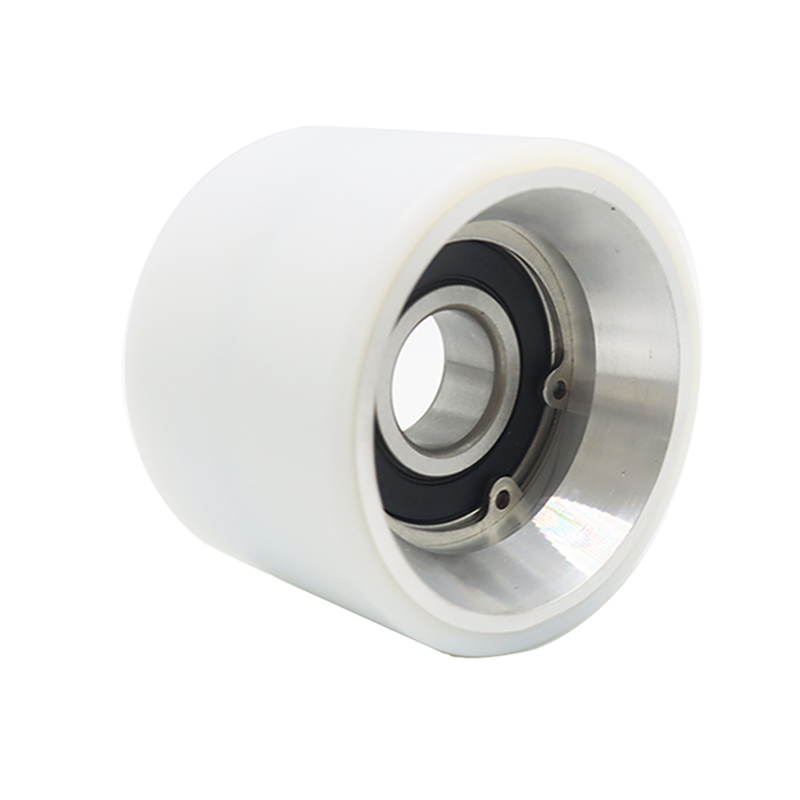
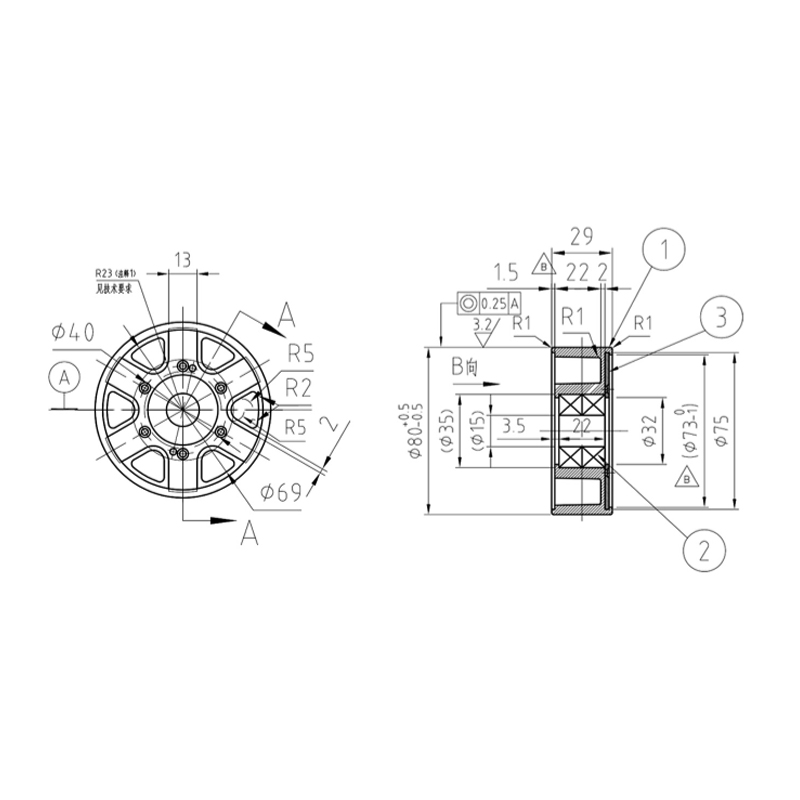 FKD-G550 Escalator Speed Measuring Wheel with Nylon Ring and 6202 BearingThis 80 mm measuring wheel combines an iron core with a nylon outer ring for wear resistance and self-lubrication, making it a reliable choice for escalator speed supervision.View Product →
Centrifugal vs. Inertia Overspeed Governors
Two mechanical principles dominate overspeed governor design: centrifugal and inertia.
Centrifugal overspeed governors are the conventional design used on the majority of elevators. Two weighted pawls pivot with the sheave, and the trip speed is set by the spring preload. Because the pawl force grows with the square of the speed, the design is inherently stable and easy to calibrate. It suits passenger and freight elevators from about 0.25 m/s up to roughly 4 m/s.
Inertia overspeed governors respond to acceleration rather than to absolute speed alone. An inertial mass is coupled to the sheave through a spring-damper arrangement; if the sheave accelerates abnormally fast, the mass briefly lags behind and trips the latch. This mechanism reacts quickly to a sudden loss of traction, which is valuable on high-speed and ultra-high-speed elevators.
| Characteristic | Centrifugal governor | Inertia governor |
|---|---|---|
| Detection basis | Absolute rotational speed of the sheave | Acceleration (abrupt change) of the sheave |
| Typical trip setting | 115–125% of rated speed | Rapid acceleration above the rated ramp; speed band set by the standard |
| Typical applications | Passenger and freight elevators up to roughly 4 m/s | High-speed and ultra-high-speed elevators |
| Adjustment | Spring preload on the pawls | Spring/damper characteristic of the inertial coupling |
| Reset after trip | Manual reset at the governor | Manual reset at the governor |
Vertical gridlines mark 100%, 125% and 150% of rated speed. The orange and red bars show the permitted trip-speed bands for each safety gear type.
A critical point for maintenance teams: the trip setting must stay inside the band shown in the chart. A governor set too high delays the safety gear; a governor set too low causes nuisance trips during normal traffic, which is also a safety concern. The setting is verified during testing and adjusted only by an authorized technician.
Code Requirements and Testing
The behavior of speed governors is regulated because the device is the last line of mechanical protection. EN 81-20 sets the minimum tripping speed at 115% of rated speed. The maximum tripping speed is limited to 125% of rated speed where an instantaneous safety gear is fitted, and to 140% where a progressive safety gear is installed. GB 7588 and ASME A17.1 use equivalent thresholds, with the exact values verified at the commissioning test.
A typical testing regimen includes the following measures:
- Acceptance test during commissioning, including a full overspeed trip of the unloaded car.
- Periodic functional governor test at the interval set by the local enforcing authority—commonly one to three years.
- Visual inspection of the governor rope, sheave, tension device and electrical switches as part of every planned maintenance visit.
Rope replacement follows the same logic as any steel wire lift rope: broken wires, corrosion or deformed strands are reasons to replace the governor rope before the next test, not after it.
Maintenance: What To Check and When To Replace
A governor is a fit-and-forget device only if it is actually checked. The practical minimum for a technician is a five-point check:
- Rope condition—broken wires, rust, flat spots and correct tension.
- Freedom of rotation—the sheave turns freely, and the pawls return cleanly to the rest position.
- Electrical switches—the overspeed and reset switches open and close in the correct sequence.
- Tension device—the weight moves freely and does not sit on the pit floor.
- Reset test—after a trip, the governor resets manually and the safety gear retracts fully.
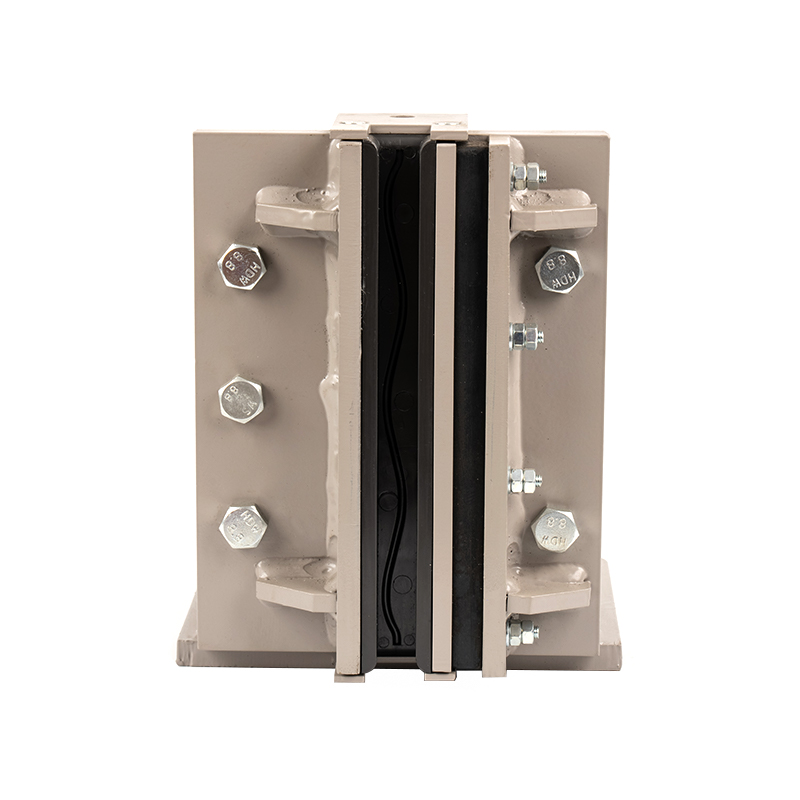
The safety gear interacts with the same guide rails that the car's guide shoes run on. A worn guide shoe can tilt the car frame slightly and delay the safety gear's grip, so guide shoe wear tolerance is part of any credible governor maintenance program. When replacing a governor or its rope, never accept an uncertified "compatible" unit: the trip-speed tolerance and locking geometry are safety-critical, and a poor copy can remove the last line of defense.
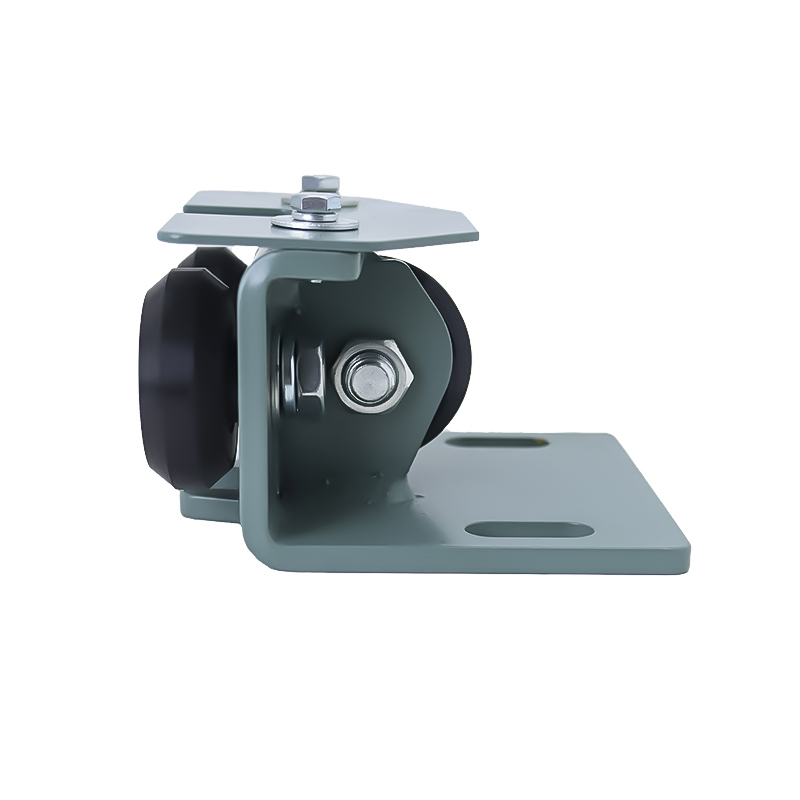 FKD-R50 Polyurethane Roller Guide Shoe for Small Passenger ElevatorsDesigned for 0.75 m/s small passenger elevators and villa lifts, this polyurethane roller guide shoe offers a durable, cost-effective alternative to sliding guide shoes.View Product →
Speed-monitoring components deserve the same attention on escalators as the governor receives on elevators; our industry note on the elevator speed measuring wheel explains why this small part is treated as a safety component. For building owners and lift contractors alike, the lesson is simple: the governor works only when the full chain—rope, sheave, tensioner, safety gear and rail interface—is in good order. As our elevator parts factory manufactures guide shoes, locks and other hoistway components, we see the consequences when any link in that chain is neglected.
Frequently Asked Questions
Q1: What is an elevator speed governor?
An elevator speed governor, also called an overspeed governor, is a mechanical safety device that watches the car's speed and triggers the safety gear if the elevator exceeds its rated speed by a set margin. It is fully mechanical and works even during a power failure.
Q2: How does an elevator overspeed governor work?
The governor rope is attached to the car and rotates a sheave in the machine room. When the car moves too fast, spring-loaded pawls inside the sheave fly outward, lock the sheave, pull the lever on the car frame, and force the safety gear to grip the guide rails.
Q3: What is the elevator governor trip speed?
The tripping speed is at least 115% of the rated speed. For instantaneous safety gears the upper limit is 125%; for progressive safety gears the upper limit is 140%, per EN 81-20, GB 7588 and equivalent codes.
Q4: How often should a lift governor be tested?
An acceptance test is required at installation. After that, local regulations typically require a functional overspeed test every one to three years, with a visual check of the governor rope and tension device at each scheduled maintenance visit.
Q5: What happens when an elevator governor trips?
The sheave locks mechanically, the safety gear engages the guide rails, and the car comes to a stop. Reset must be done manually by a qualified elevator technician, who must also re-verify the safety gear before returning the elevator to service.
Q6: Can a speed governor stop a falling elevator?
Yes. If the governor is correctly set and maintained, and if the rope, safety gear and guide rails are in good condition, the safety gear will grip the rails and bring the car to a stop within the design stopping distance.