
 English
 中文简体

A 1,000 kg passenger lift that leaves the floor with a small sideways jolt — and repeats it on stop — is usually reporting one thing: the guide shoe has lost its clearance. Not the traction machine, not the door operator. The shoe. On a lift that size the car rides on two or four shoes clamped around the rail flanges, and once the lining wears, the car starts hunting for the rail instead of following it.
The short version: an elevator guide shoe for a passenger lift is a fit-and-clearance component, not a catalogue component. Rail flange width, gib take-up, lining material, bolt pattern and rail lubrication all have to line up. Get them right and the lift runs quiet for years; get one wrong and your fitter is back with a spanner inside a month.
Content
- 1 What the Guide Shoe Does on a Passenger Lift
- 2 Sliding vs Roller Guide Shoes: A Practical Comparison
- 3 Choosing by Rated Speed, Load and Rail Width
- 4 The Lining Is the Wear Part: Clearance, Material and Replacement
- 5 Roller Guide Shoes for Higher Speeds and Quieter Rides
- 6 Ordering Checklist for Passenger Lift Guide Shoes
- 7 Frequently Asked Questions About Elevator Guide Shoes
What the Guide Shoe Does on a Passenger Lift
Three jobs, listed in the order they usually cause trouble.
- Guiding. The shoe wraps the rail flange and holds lateral movement to a fraction of a millimetre per side, keeping the car and counterweight on a straight line from pit to overhead.
- Carrying lateral load. Passenger weight offset from the car centre, rope sway and wind pressure on exposed shafts all push sideways. That load passes through the lining and gibs into the shoe body and the car frame, which is why a shoe built for a villa lift is not the one you fit to a 1,600 kg hospital car.
- Filtering vibration. Rail joints, clip run-ons and shaft alignment errors all produce impulses. A correctly adjusted shoe damps them before they reach the car floor; a worn one amplifies them into a rumble you can hear in the lobby.
Sliding shoes do this with a lining that rubs directly on the flange. Roller shoes do it with three to six rollers held against the flange by spring preload. Every other difference — model numbers, sizes, hole patterns — follows from that one mechanical choice.
Sliding vs Roller Guide Shoes: A Practical Comparison
Most passenger lift enquiries come down to this choice, and the answer is normally decided by rated speed and how much the building cares about noise.
| Selection point | Sliding guide shoe | Roller guide shoe |
|---|---|---|
| Contact with rail | Lining slides on the flange, dry or oiled | Three to six rollers run on the flange |
| Typical rated speed | Up to about 2.0-2.5 m/s | 2.5 m/s and above |
| Ride quality | Firm; rail joint impulses reach the car | Softer; joints are largely absorbed |
| Lateral stiffness | High and predictable | Set by spring preload, needs correct adjustment |
| Purchase cost | Lower | Higher |
| Running cost | Rail lubrication required; rail and lining both wear | Low friction; roller and bearing condition matter |
| Maintenance focus | Lining thickness and clearance | Roller flat spots, bearing play, preload |
| Best fit | Freight, villa, mid-rise passenger, counterweights | High-rise, hospital, high-speed and premium comfort cars |
Two notes before you compare prices. A sliding shoe costs less to buy but demands rail lubrication; skip the oil cup and both the lining and the rail wear. A roller shoe is quieter at speed, but its preload has to be set with the car loaded — a roller set too loose behaves exactly like a worn sliding shoe, and the complaint sounds identical.
Choosing by Rated Speed, Load and Rail Width
The chart above shows typical catalogue application ranges, not a standard. Plenty of 1.0 m/s freight lifts run roller shoes for maintenance reasons, and counterweights on high-speed cars still commonly use sliding shoes because nobody is sitting on them.
Rail width is the first hard filter. 10 mm and 16 mm flange families cover most passenger lift work, with 8 mm and 13 mm variants on older or lighter cars. A 10 mm shoe will not close on a 16 mm rail, and a 16 mm shoe on a 10 mm rail leaves play that no gib adjustment can remove.
Bolt pattern is the second. Two-hole and four-hole bodies are not interchangeable, and hole pitch and thread depth must match the existing car frame or counterweight bracket. Measure the old shoe before ordering, even when the model number looks familiar — drawings get revised.
Rated load is the third. Heavier cars and freight duty need a thicker lining and a larger gib contact area; a light-duty shoe on a 2,000 kg car wears through in months rather than years.
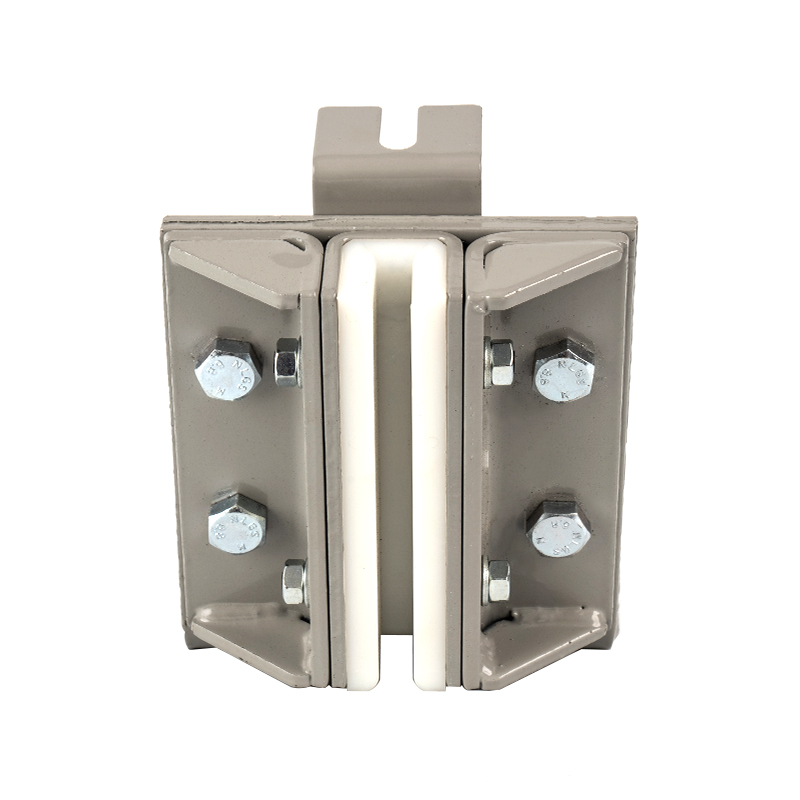
 FKD-011 Mitsubishi Passenger Elevator Sliding Guide ShoesFor medium- and low-speed Mitsubishi passenger elevators up to 1.75 m/s and 1,350 kg, with 9/10/16 mm rail-surface width options.View Product →
The rest of the range — DX20, B22, PB186A, T15 and T22 patterns, plus counterweight variants — sits under sliding guide shoes, and each listing carries the rail width and hole pattern you need for a first comparison.
The Lining Is the Wear Part: Clearance, Material and Replacement
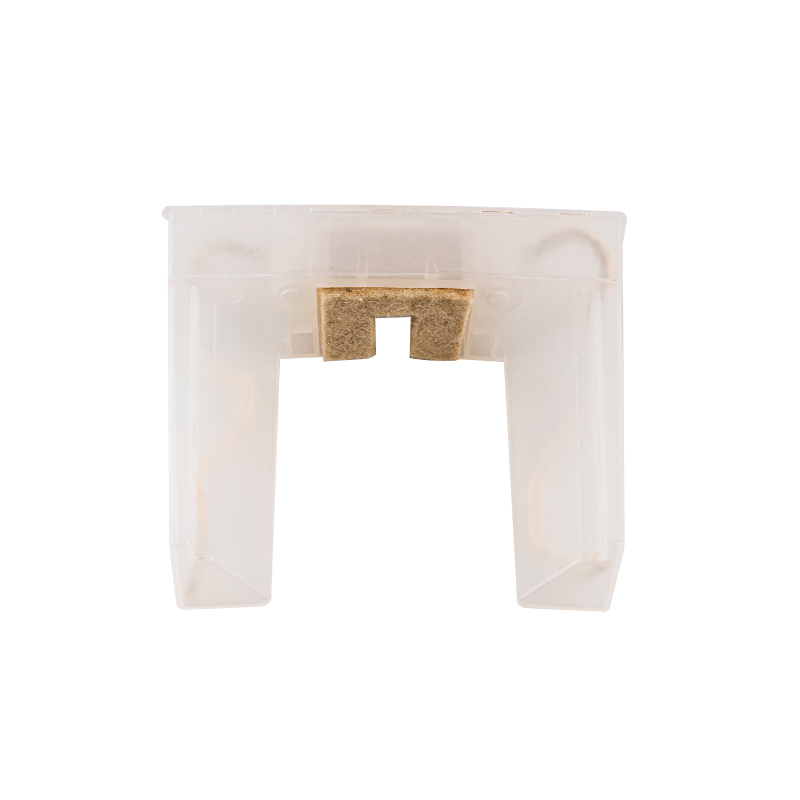
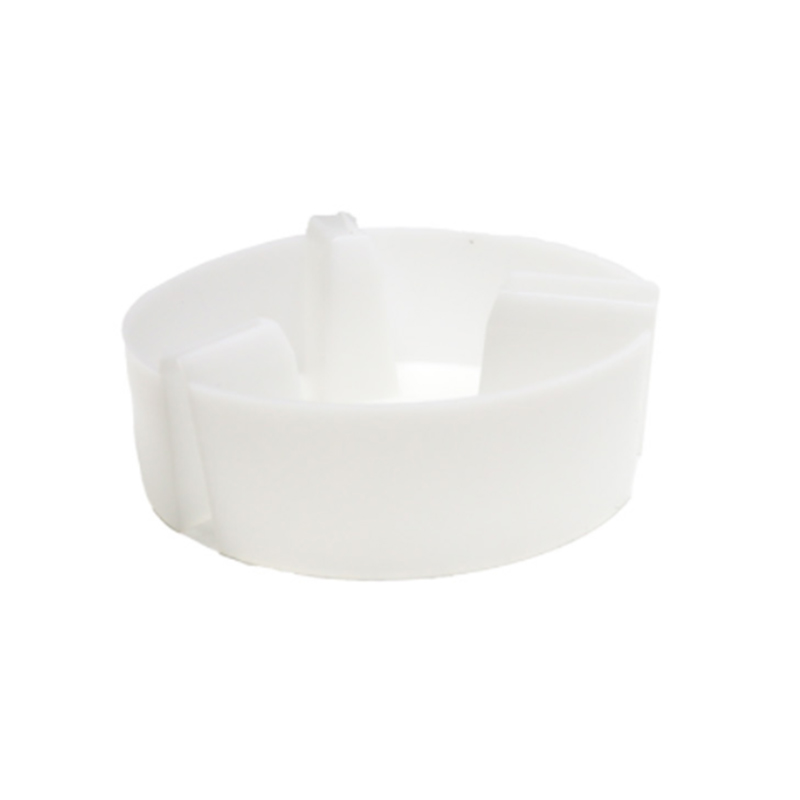
The lining — also called a boot liner or shoe lining — is the only part of the assembly meant to wear. It is normally a filled nylon or engineering-plastic insert sized by flange width and height; 121 × 10 × 16 mm is a common passenger lift size, and matching inserts run in 8, 10, 13 and 16 mm flange widths.
Clearance is set from the drawing, not by feel. Most passenger assemblies run with a few tenths of a millimetre to about 1 mm per side — tight enough to stop the car hunting, loose enough that the lining is not pinched against the flange when the car is loaded.
Replace the pair, not the single worst shoe. Shoes on the same side of a car should wear at a similar rate; if one is badly worn and its partner is not, look for a rail alignment, clip or bracket problem before fitting new parts. This walkthrough of five warning signs of guide shoe wear follows the checks in the order a fitter would make them.
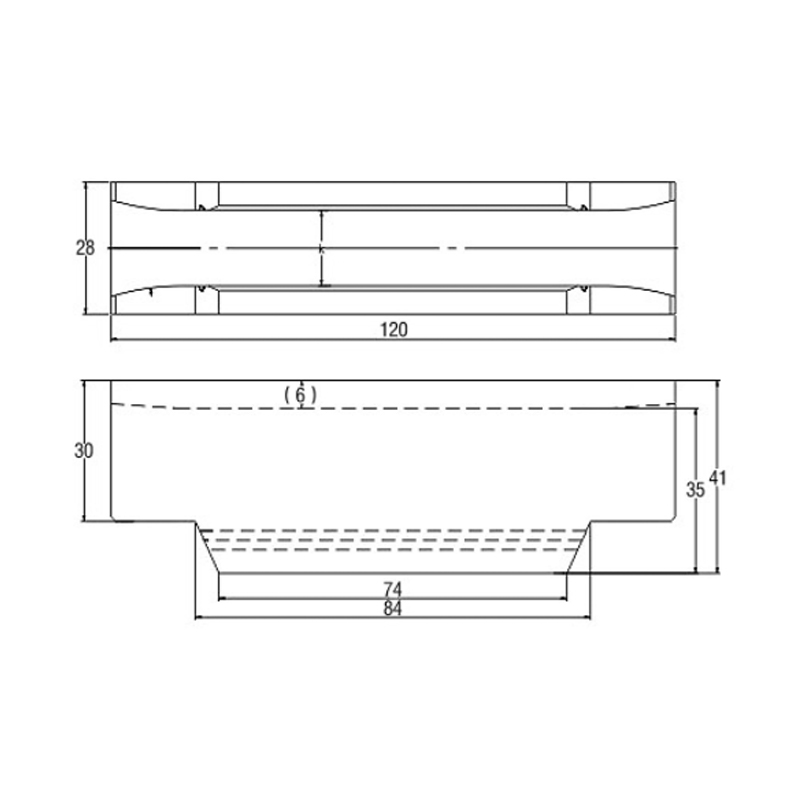 FKD-T001 Elevator Guide Shoe LiningA 120 mm-wide guide shoe lining in 5, 9, 10 or 16 mm thickness, offered as a replacement accessory to reduce rail friction and wear.View Product →
Roller Guide Shoes for Higher Speeds and Quieter Rides
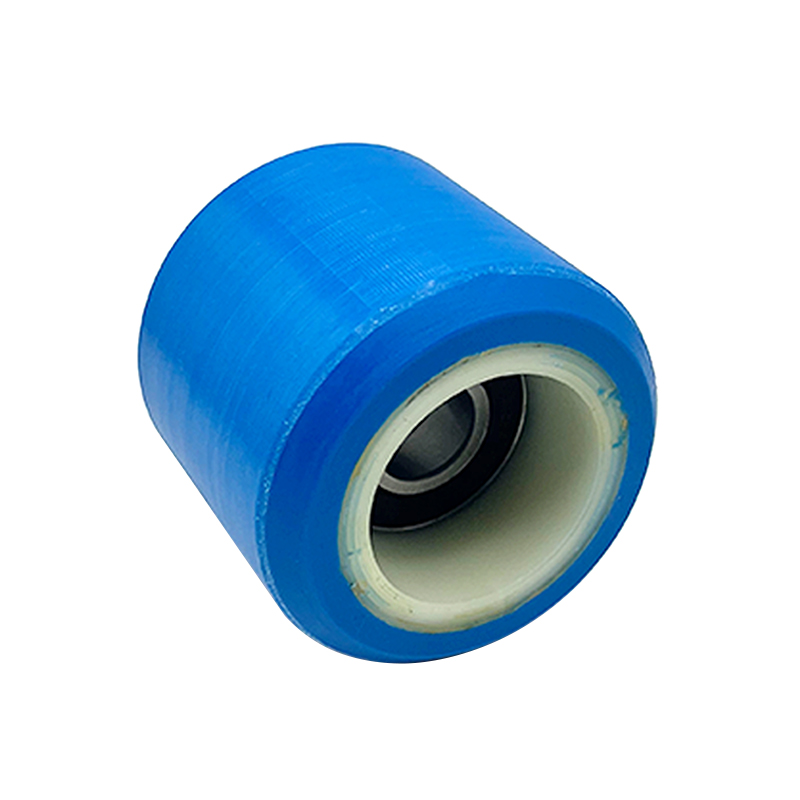
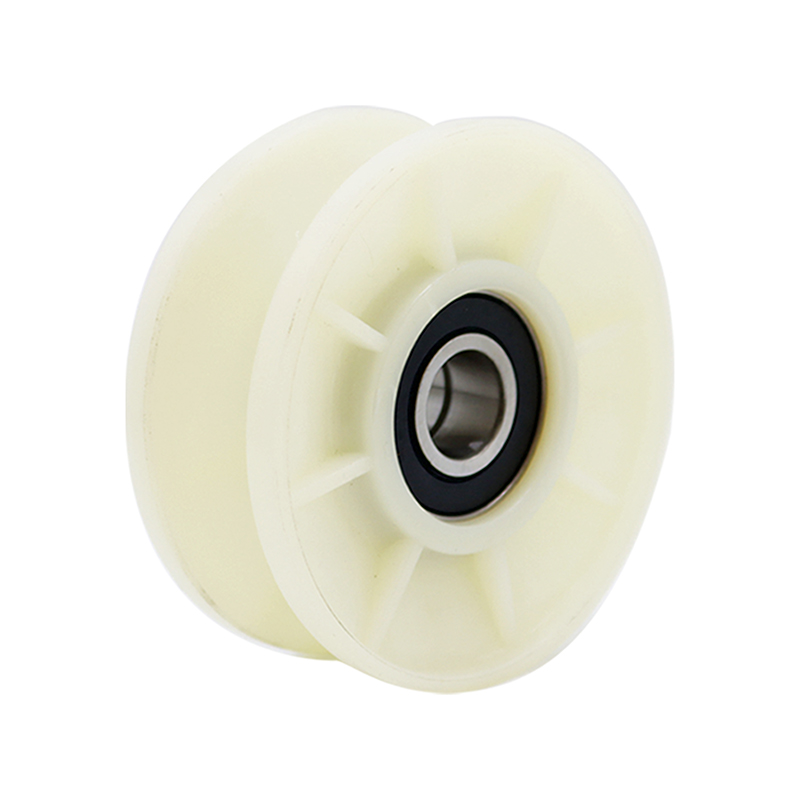
Above roughly 2.5 m/s, roller shoes take over. Rollers on the flange face and on the back run against spring preload, absorbing the rail joint impulses a sliding lining would pass straight into the car frame.
The FKDR series covers the common passenger and hospital sizes — FKDR50, FKDR762, FKDR901 and FKDR902 for mid-range cars, FKDR1251, FKDR1252 and FKDR1601 for heavier and faster installations. Roller diameter, roller compound and spring rate are what separate them, and those three numbers decide how the car feels at 3 m/s.
 FKD-R125-1 Roller Elevator Guide ShoeRoller guide shoe for speeds up to 2.5 m/s and loads up to 1,600 kg, with 10 mm or 16 mm rail-surface width options.View Product →
Two maintenance points decide whether a roller shoe delivers: keep the rail clean, and recheck preload after any rope or bracket work. Rollers left loaded and idle for months can develop flat spots, which show up as a low-frequency hum in the car.
Ordering Checklist for Passenger Lift Guide Shoes
- Rail flange width and thickness (8, 10, 13 or 16 mm).
- Bolt hole count, pitch and thread size, measured from the old shoe.
- Position: car top, car bottom or counterweight.
- Rated load and duty: passenger, hospital bed, freight or villa.
- Rated speed, so sliding versus roller is settled first.
- Lining preference: standard, self-lubricating or high-load.
- Lubrication method on site: oil cup, rail lubricator or dry running.
- Quantity per car — four is normal for passenger cars, two for counterweights.
Frequently Asked Questions About Elevator Guide Shoes
Q1. What is an elevator guide shoe and what does it do?
It is the component that wraps the guide rail flange and keeps the car or counterweight tracking in a straight line. On a passenger lift it also carries lateral loads and damps rail vibration before it reaches the car floor.
Q2. What are the signs of a worn elevator guide shoe?
A sideways jolt at start and stop, horizontal vibration at speed, a scraping note at rail joints, and polished or blackened lining faces. Once the lining is past about half its original thickness it can no longer hold clearance.
Q3. How often should elevator guide shoes be replaced?
There is no fixed interval. Duty, rail condition and lubrication decide it, so linings are checked at routine maintenance and replaced when clearance can no longer be adjusted. Busy or poorly lubricated lifts can wear a lining out within a year.
Q4. What is the difference between a sliding and a roller guide shoe?
Contact type. Sliding shoes rub a lining on the flange and suit cars up to roughly 2.5 m/s; roller shoes run on rollers with spring preload and are used above that, where lower friction and better isolation justify the price.
Q5. How do I know if I need a 10 mm or 16 mm guide shoe?
Measure the rail flange thickness and the old shoe slot. Both families are common on passenger lifts, and the bolt hole pitch has to match the car frame or counterweight bracket as well.
Q6. Can guide shoe problems cause elevator noise and vibration?
Often, yes. Worn linings, loose gibs, over-tight clearance and dry rails are among the most common causes of horizontal vibration, so ruling out the shoe first is normal practice before touching the machine.
Fukangda has been making elevator parts in Ningbo since 2006, was named a designated supplier to a top-tier lift OEM in 2008, and moved into a 5,000 m² plant in Dongwu Town in 2015. Guide shoes, linings, roller shoes, oil cups and villa lift shoes come off the same floor under an ISO 9001 quality system, with model-level traceability from FKDR and FKDT codes back to the customer drawing. Send the rail width, hole pattern and rated speed, and you will get a matching part number rather than a best guess: gary@nbfkd.com or +86 13586943387.