
 English
 中文简体
中文简体
Direct answer: The elevator oil cup is critical for elevator maintenance because it provides continuous, controlled lubrication to guide rails, rope sheaves, and sliding mechanical components — the parts most vulnerable to friction-induced wear during tens of thousands of daily operating cycles. A functioning oil cup prevents metal-on-metal contact that accelerates component degradation, increases noise, raises energy consumption, and ultimately leads to unplanned downtime. Without reliable lubrication delivery, elevator guide rails and sheave bearings deteriorate at rates 3 to 5 times faster than in properly lubricated systems.
Content
- 1 How the Elevator Oil Cup Works and Why It Cannot Be Overlooked
- 2 Types of Elevator Oil Cups and Their Applications
- 3 The Role of the Oil Cup in Elevator Safety and Regulatory Compliance
- 4 Elevator Oil Cup Replacement Parts for Elevator Maintenance: When and What to Replace
- 5 Selecting the Right Oil for Elevator Oil Cups
- 6 Adjustable Elevator Oil Cup for Industrial Elevator System: Why Precision Matters
- 7 About Ningbo Yinzhou Fukangda Elevator Parts Factory
- 8 Frequently Asked Questions
How the Elevator Oil Cup Works and Why It Cannot Be Overlooked
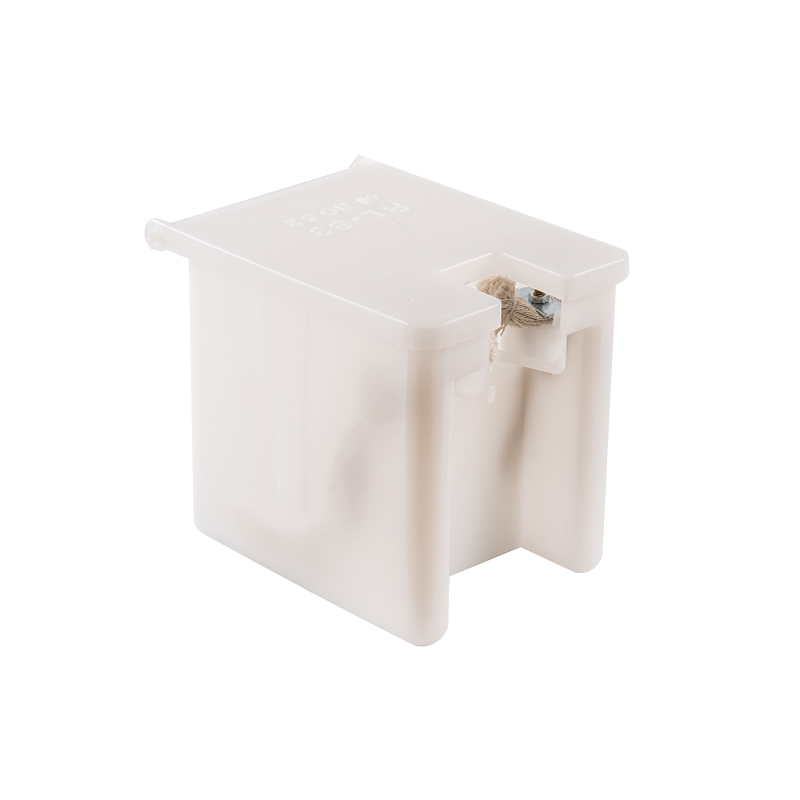
An elevator oil cup is a small but mechanically essential reservoir and delivery device that stores lubricating oil and releases it at a controlled rate to the surfaces it serves. In elevator systems, oil cups are most commonly fitted to the guide shoe assemblies — the sliding components that keep the elevator car aligned on its guide rails as it travels up and down the hoistway.
The guide shoe pads or rollers contact the rail surface continuously throughout every trip. A standard elevator in a commercial building completes between 200 and 500 trips per day, with each trip involving the full length of the guide rail. At this frequency, even a slight increase in friction — caused by insufficient lubrication — generates measurable heat, accelerates pad wear, and eventually causes surface pitting on the rail itself. Rail damage is significantly more costly to address than the regular maintenance of oil cups, because rail replacement or grinding requires extended shutdown periods and specialized hoistway access.
The oil cup functions by gravity feed or wick-based capillary action, releasing a thin film of oil onto the rail surface ahead of the guide shoe contact zone. This film reduces the coefficient of friction at the shoe-rail interface, distributing load, minimizing heat generation, and protecting both the pad and rail surface simultaneously. The rate of oil delivery is typically adjustable — a critical feature in systems where temperature, operating speed, and vertical travel distance vary.
Types of Elevator Oil Cups and Their Applications
Not all elevator oil cups serve the same function or suit the same installation environment. Understanding the main types enables maintenance teams and procurement personnel to specify the correct component for each application point within the elevator system.
Gravity-Feed Oil Cups
The most common type in residential and light commercial elevator installations. A reservoir — typically 15 to 50 mL capacity — holds oil above the delivery point, and a needle valve or adjustable orifice controls the drip rate by gravity. The drip rate is set during installation and adjusted based on observed rail surface condition at each maintenance inspection. Gravity-feed cups are reliable, simple to refill, and effective for standard vertical travel speeds up to approximately 1.75 m/s.
Wick-Type Oil Cups
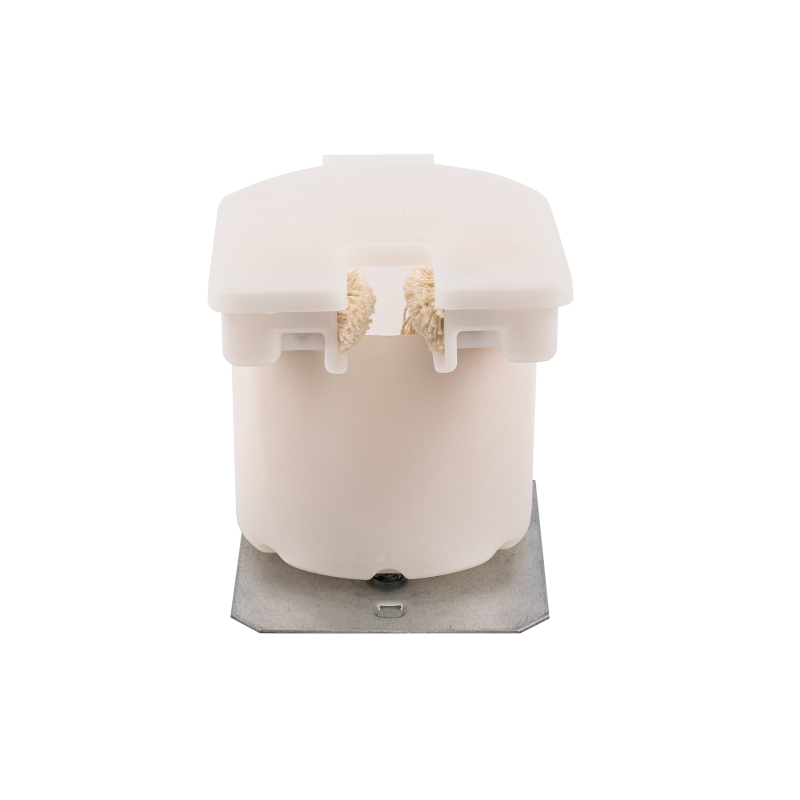
Wick-type cups use a felt or fiber wick to draw oil from the reservoir by capillary action and apply it to the contact surface via the wick tip. These deliver a more consistent, lower-volume oil film than drip-type cups and are well-suited to applications where over-lubrication is a concern — particularly in clean-room adjacent buildings or facilities where oil drip onto flooring is unacceptable. Wick cups require periodic wick replacement as the felt material hardens and loses capillary effectiveness over time.
Adjustable Elevator Oil Cup for Industrial Elevator Systems
An adjustable elevator oil cup for industrial elevator system applications incorporates a precision flow control mechanism — either a micrometer-style needle valve or a calibrated orifice disk system — that allows the oil delivery rate to be set and verified against a specification. This is essential in high-duty-cycle industrial and freight elevators where operating speed, ambient temperature, and vertical travel distance create variable lubrication demands that a fixed-rate cup cannot efficiently accommodate. Adjustable cups allow maintenance technicians to fine-tune delivery rates without replacing the cup assembly, reducing maintenance time and the risk of improper substitution with non-calibrated replacement parts.
| Oil Cup Type | Delivery Mechanism | Typical Capacity | Best Application | Adjustable? |
|---|---|---|---|---|
| Gravity drip cup | Needle valve / orifice | 15–50 mL | Residential, light commercial | Partially |
| Wick-type cup | Capillary wick | 10–30 mL | Clean-room adjacent, low-drip environments | No |
| Adjustable precision cup | Calibrated needle valve | 30–100 mL | Industrial, high-speed, freight elevators | Yes |
| Automatic lubricator cup | Spring or electro-mechanical pump | 125–250 mL | High-rise, high-duty-cycle systems | Yes (programmable) |
The Role of the Oil Cup in Elevator Safety and Regulatory Compliance
Elevator maintenance is governed by safety standards in virtually every jurisdiction — including EN 81 in Europe, ASME A17.1 in North America, and GB 7588 in China. These standards mandate periodic inspection of lubrication systems as part of the required maintenance protocol. A malfunctioning or empty oil cup is not merely a performance issue — it is a compliance deficiency that can result in failed inspections and mandatory service suspensions.
Beyond regulatory compliance, proper guide rail lubrication directly impacts elevator safety. Dry or inadequately lubricated guide rails increase the variability of stopping distances when the elevator's safety gear engages in an overspeed event. Safety gear — the mechanical braking device that clamps the guide rail when the governor detects overspeed — must engage within a defined deceleration range. Dry rail surfaces can cause the safety gear to engage more abruptly than designed, generating excessive deceleration forces that, in edge cases, can affect passenger safety. Consistent lubrication keeps the safety gear engagement profile within the designed operational envelope.
Industry maintenance data from elevator service providers indicates that guide rail lubrication deficiency is among the top five causes of elevator component replacement events outside of scheduled end-of-life intervals. Addressing oil cup condition at every scheduled maintenance visit — typically every 1 to 3 months depending on duty cycle — prevents the majority of these avoidable replacement events.
Elevator Oil Cup Replacement Parts for Elevator Maintenance: When and What to Replace
Understanding when to replace an oil cup — and which specific elevator oil cup replacement parts for elevator maintenance are needed — allows maintenance teams to plan proactively rather than responding to failures. Oil cup components have different service lives, and replacing individual components is often more practical than full cup assembly replacement.
Signs That an Oil Cup Requires Attention
- Empty reservoir between scheduled service intervals: Indicates either the delivery rate is set too high, or the cup has developed a leak at the body, fitting, or valve seat. Investigate before simply refilling.
- No visible oil film on guide rail surface: Inspect whether the cup is empty, the delivery orifice is blocked with debris or congealed oil, or the wick has hardened and lost capillary function.
- Oil pooling at guide shoe base: The delivery rate is set too high for the operating cycle, wasting lubricant and creating contamination below the guide shoe. Adjust the flow control or replace the orifice with a smaller calibrated size.
- Cracked or deformed cup body: Plastic cup bodies can become brittle in low-temperature machine rooms or after prolonged exposure to certain oil formulations. A cracked body requires full cup assembly replacement.
- Corroded or seized needle valve: The valve mechanism may seize in either open or closed position due to corrosion or oil residue accumulation. Replacement of the valve assembly restores adjustability without replacing the entire cup body.
Replacement Parts Inventory for Maintenance Teams
A well-stocked elevator maintenance inventory should include the following oil cup replacement components:
- Felt wicks: Replace every 6 to 12 months in wick-type cups. Hardened or oil-saturated wicks lose capillary effectiveness progressively.
- Needle valve assemblies: Replace when the valve can no longer be adjusted to maintain a steady drip rate or has corroded beyond functional range.
- Mounting brackets and fittings: Check thread condition and bracket rigidity at each service visit. A loose cup mounting causes inconsistent oil delivery as the cup vibrates during elevator operation.
- Complete cup assemblies: Stock at least two full replacement cup assemblies per elevator for rapid swap-out when field repair of individual components is not practical within the service window.
| Component | Typical Service Life | Failure Indicator | Replacement Action |
|---|---|---|---|
| Felt wick | 6–12 months | Dry rail despite full reservoir | Replace wick; check oil viscosity |
| Needle valve assembly | 2–5 years | Cannot adjust flow; seized or stripped | Replace valve; verify recalibration |
| Cup body (plastic) | 3–7 years | Crack, discoloration, deformation | Replace full assembly |
| Mounting bracket | 5–10 years | Loose fitting; corroded threads | Replace bracket; re-torque to spec |
| Delivery tube / fitting | 3–6 years | Oil leak at joint; blocked orifice | Clean or replace; inspect threads |
Selecting the Right Oil for Elevator Oil Cups
The oil cup is only as effective as the lubricant it contains. Using an incorrect oil viscosity — either too thin or too thick for the operating temperature and surface speed — undermines the lubrication system regardless of how well the cup itself is maintained.
Viscosity Requirements for Guide Rail Lubrication
Guide rail lubrication oil for elevator systems is typically specified in the ISO VG 32 to ISO VG 68 viscosity range. The correct grade depends on the ambient temperature in the machine room and hoistway, and the elevator's rated speed:
- ISO VG 32 (thinner): Appropriate for lower ambient temperatures (below 15°C) or for high-speed elevators where excessive viscosity would restrict oil flow through small orifices and reduce delivery rate.
- ISO VG 46 to 68 (standard): The most common specification for commercial elevator guide rail lubrication in temperate climates. Provides adequate film thickness at operating temperatures without blocking delivery orifices.
Never substitute gear oil, engine oil, or general-purpose industrial lubricants for elevator-specified guide rail oil. These products have different additive packages that may not be compatible with guide shoe materials, and their viscosity-temperature behavior differs from the elevator lubricant specification in ways that can cause either over-delivery in warm conditions or delivery failure in cold conditions.
Oil Compatibility With Cup Materials
Confirm that the lubricant selected is compatible with the cup body material. Certain synthetic lubricants and high-additive-content oils can cause swelling, softening, or cracking of standard plastic cup bodies over time. Always verify lubricant-material compatibility with the cup manufacturer's specifications before changing lubricant type in an existing installation.
Adjustable Elevator Oil Cup for Industrial Elevator System: Why Precision Matters
In industrial and freight elevator applications, the operating demands placed on the lubrication system are substantially more variable than in passenger elevators. An adjustable elevator oil cup for industrial elevator system applications is not a premium option — it is a functional requirement for maintaining consistent lubrication across the full range of operating conditions encountered in industrial environments.
Industrial elevators typically operate at higher duty cycles — sometimes 600 to 1,000 trips per day — with heavier loads, wider temperature ranges in unheated hoistways, and longer vertical travel distances than commercial passenger lifts. At higher speeds and greater travel distances, the oil consumption rate per hour of operation increases proportionally. A fixed-rate cup calibrated for a 50-trip-per-day residential elevator would run empty within hours on an industrial application, leaving the guide rails dry for the majority of the operating day.
Adjustable cups allow maintenance engineers to set the flow rate to match the actual oil consumption needed for the specific combination of speed, travel distance, and ambient temperature, confirmed by rail surface condition inspection at the initial service visit after installation. Subsequent inspections then verify that the set rate remains appropriate as conditions change seasonally.
About Ningbo Yinzhou Fukangda Elevator Parts Factory
Ningbo Yinzhou Fukangda Elevator Parts Factory is a professional elevator part manufacturer founded in 2006, located in Da'ao Industrial Park, Yinzhou District, Ningbo City, Zhejiang Province, China. The company is an innovative enterprise engaged in the research and development, production, and sales of elevator parts — with elevator oil cups and lubrication components forming a core product area within its broader elevator parts portfolio.
The production center operates a variety of advanced hardware and plastic processing equipment, supported by mature assembly production lines and rigorous inspection procedures. These capabilities provide effective guarantees for the high precision, high quality, and high performance of all products manufactured, while simultaneously ensuring the supply chain continuity that elevator maintenance operations require.
Fukangda's manufacturing infrastructure and technical team are dedicated to meeting the exacting dimensional and performance tolerances that elevator safety standards demand — making the factory a reliable supply partner for elevator maintenance companies, building management organizations, and elevator OEM parts procurement operations both domestically and internationally.