
 English
 中文简体
中文简体
Quick Answer
Sliding guide shoes use a lined contact surface that rides directly against the elevator guide rail, making them robust, low-cost, and well suited for low-to-medium speed elevators. Roller guide shoes replace that contact surface with spring-loaded wheels, dramatically reducing noise and vibration at higher speeds. In practice: sliding types are the standard choice for freight elevators and low-rise applications, while roller types are preferred for high-speed passenger elevators where ride comfort is the priority.
Content
- 1 What Does an Elevator Guide Shoe Actually Do?
- 2 Sliding Guide Shoes: How They Work and Where They Excel
- 3 Roller Guide Shoes: How They Work and Where They Excel
- 4 Side-by-Side Comparison: Sliding vs Roller Elevator Guide Shoes
- 5 Performance Comparison: Noise, Wear, and Ride Quality
- 6 The Role of the Elevator Guide Rail in Guide Shoe Selection
- 7 How to Choose the Right Guide Shoe for Your Elevator Project
- 8 Maintenance Guide: Keeping Elevator Guide Shoes in Peak Condition
- 9 About Ningbo Yinzhou Fukangda Elevator Parts Factory
- 10 Frequently Asked Questions
What Does an Elevator Guide Shoe Actually Do?
An elevator guide shoe is the sliding or rolling interface between the elevator car (or counterweight) and the elevator guide rail. Every elevator has at least four guide shoes — two on the car and two on the counterweight — each one clamping around a rail and keeping the car constrained to a precise vertical path as it travels up and down the shaft.
Without guide shoes, the car would sway laterally, tilt, or deflect under uneven load distribution — all of which create safety hazards and passenger discomfort. The guide shoe therefore performs two concurrent functions: it guides the car along the rail and it absorbs lateral forces generated by load shifts, acceleration, and deceleration.
Most guide shoes are designed around a standard T type elevator rail profile, where the T-shaped rail head fits into the shoe's channel. The shoe is mounted to the car sling or counterweight frame via a guide shoe seat, and the upper part of many sliding models incorporates an oil cup to lubricate the lining-to-rail interface continuously during operation.
Installation requirement: After the upper and lower guide shoes are installed, they must lie on the same vertical centreline with no skew or twist, and must align with the centre of the safety gear jaw. The clearance between the shoe lining and the top surface of the rail should be maintained between 0.5 mm and 2 mm for fixed sliding guide shoes.
Sliding Guide Shoes: How They Work and Where They Excel
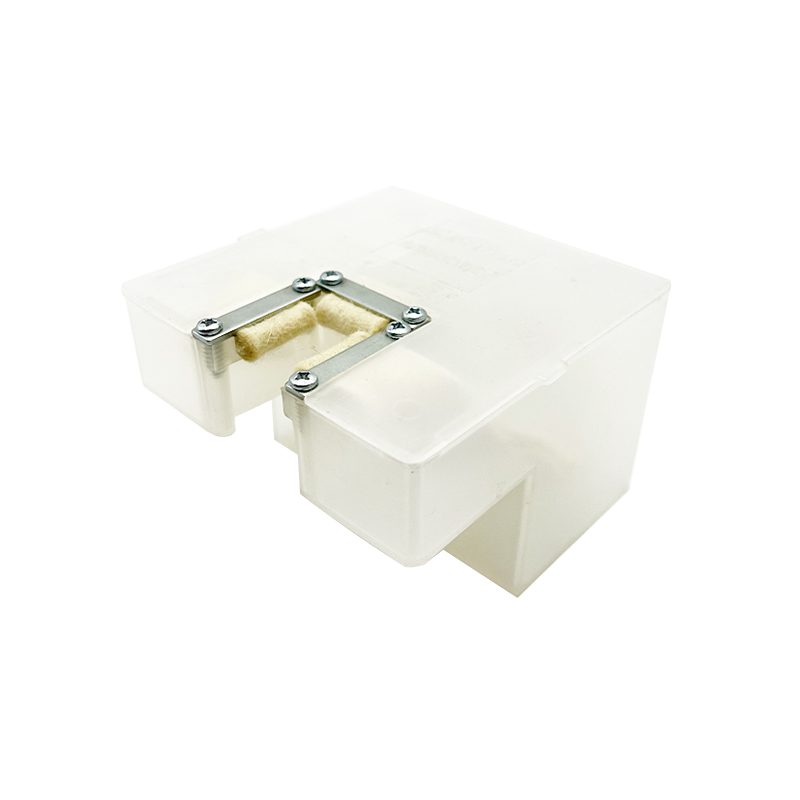
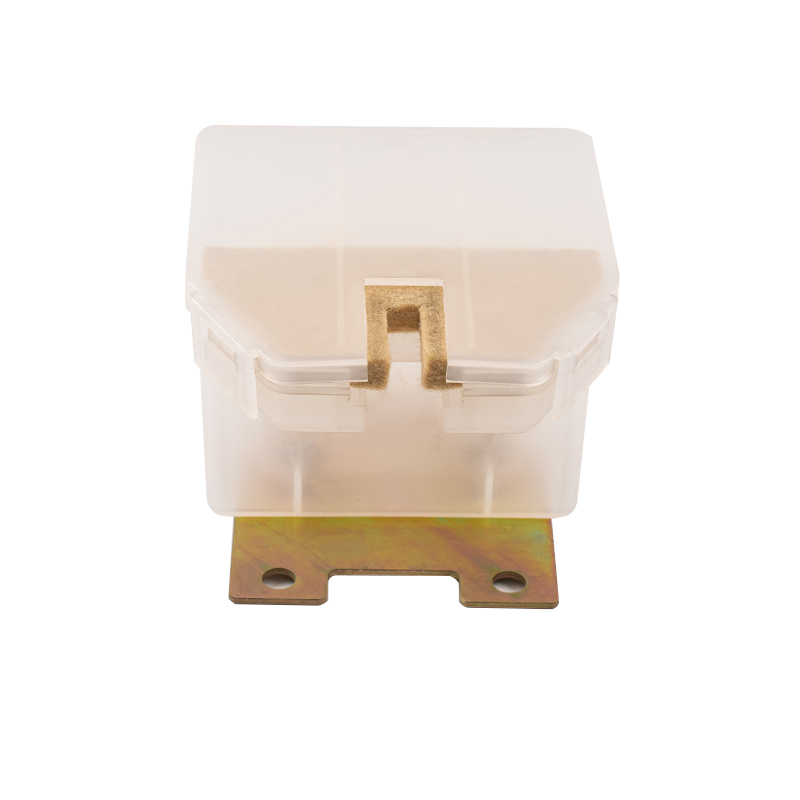
An elevator sliding guide shoe achieves guidance through direct surface contact. A replaceable shoe lining — typically made from nylon, UHMW polyethylene, or a composite material — wraps around the three faces of the T-rail head and slides along the rail as the car moves. The contact is continuous and passive: no moving parts, no springs, no bearings.
Fixed vs Elastic Sliding Guide Shoes
Sliding guide shoes are divided into two sub-types:
Fixed Sliding Guide Shoe
The shoe body is rigidly bolted to the car sling with no spring compensation. Used primarily on freight elevators and service lifts where load is stable and ride comfort is secondary. The clearance on both sides must be equal, and the lining-to-rail top clearance maintained at 0.5–2 mm.
Elastic Sliding Guide Shoe
A spring or rubber element is incorporated between the shoe body and the mounting seat, allowing limited lateral compliance. This absorbs minor rail irregularities and reduces vibration transmission to the car — making elastic sliding shoes a reasonable mid-range option for medium-speed passenger elevators.
Typical Operating Parameters for Sliding Guide Shoes
- Suitable elevator speed: up to 1.75 m/s for fixed types; up to 2.5 m/s for elastic types
- Rail compatibility: T-type guide rails, most commonly T89, T114, and T127 profiles
- Lubrication: continuous oil cup or periodic manual lubrication required to maintain lining life
- Lining material lifespan: typically 3–5 years under normal use before replacement is needed
- Primary applications: freight elevators, dumbwaiters, low-rise residential lifts, service elevators
Roller Guide Shoes: How They Work and Where They Excel
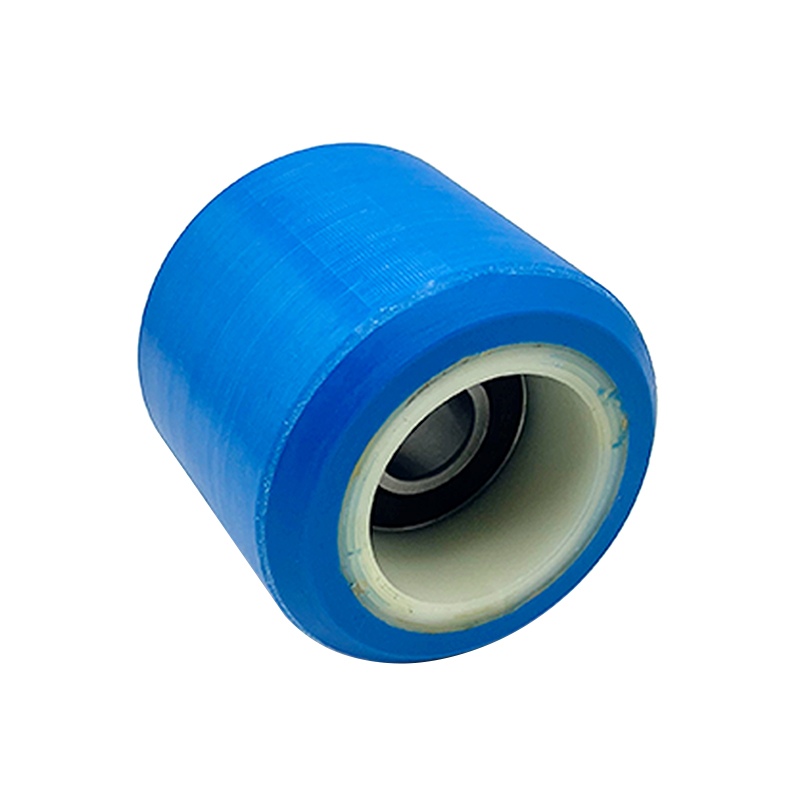
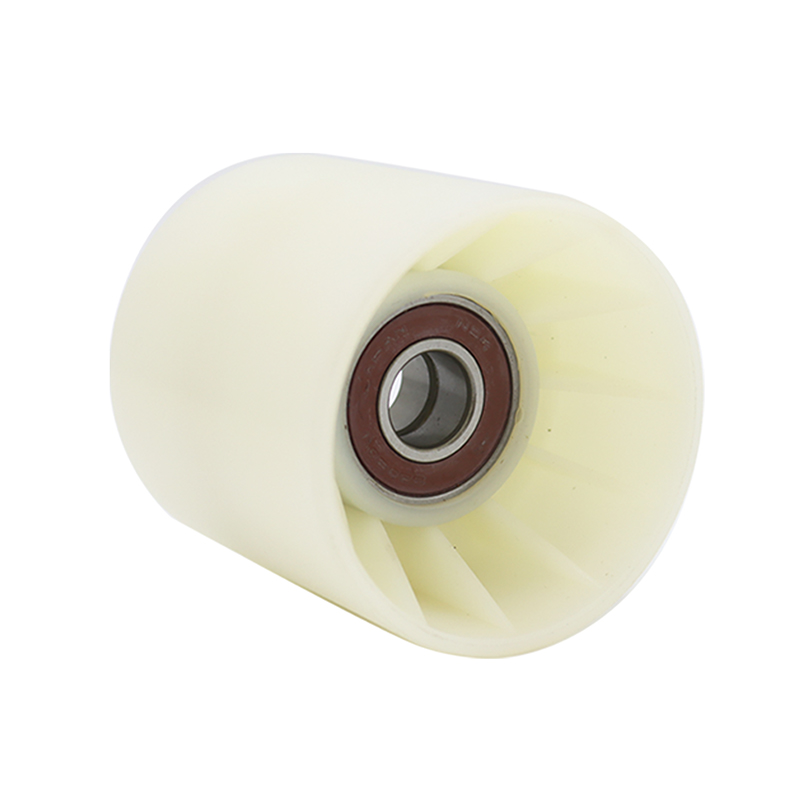
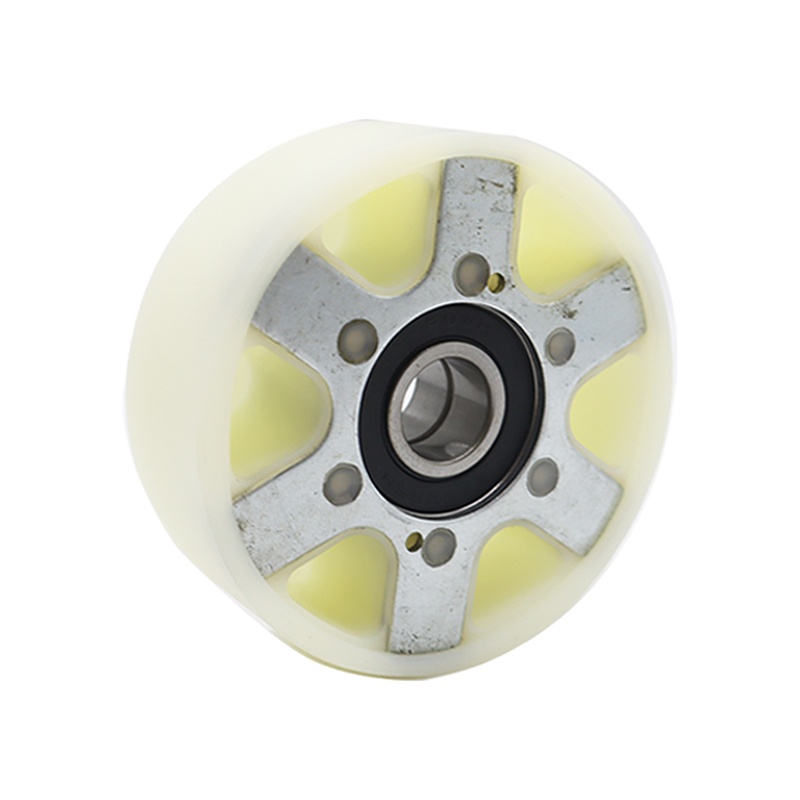
A roller guide shoe replaces the lining surfaces with three polyurethane or rubber-tyred wheels — one bearing against each of the three rail head faces. Each wheel sits on a spring-loaded arm, so the contact force is maintained dynamically as the rail surface varies. Rolling contact generates far lower friction and produces dramatically less noise than sliding contact at equivalent speeds.
Because the wheels roll rather than slide, they do not require the continuous lubrication that sliding linings need — which means the lift guide rail system stays cleaner and maintenance intervals are longer. The trade-off is mechanical complexity: roller guide shoes have more components, require periodic wheel inspection and replacement, and are more sensitive to rail surface quality. A high precision elevator rail with a well-machined running surface is essential for roller guide shoes to perform as intended.
Typical Operating Parameters for Roller Guide Shoes
- Suitable elevator speed: 1.0 m/s to 10 m/s and above — the standard choice for high-speed installations
- Rail surface requirement: machined or cold-drawn rails; rough mill-finish rails are not acceptable
- Lubrication: none required on the wheel-rail interface; bearing seals need periodic checking
- Wheel lifespan: typically 5–8 years, dependent on speed, load, and rail condition
- Primary applications: high-rise passenger elevators, hospital lifts, premium residential towers
Side-by-Side Comparison: Sliding vs Roller Elevator Guide Shoes
| Criterion | Sliding Guide Shoe | Roller Guide Shoe |
|---|---|---|
| Contact Method | Lining slides on rail surface | Wheels roll on rail surface |
| Max Recommended Speed | ≤2.5 m/s | Up to 10+ m/s |
| Noise & Vibration | Higher at speed | Significantly lower |
| Lubrication Required | Yes — continuous or periodic | No (wheel-rail interface) |
| Rail Surface Requirement | Standard mill finish acceptable | Machined or cold-drawn surface required |
| Mechanical Complexity | Low | Higher (springs, bearings, wheels) |
| Maintenance Interval | Frequent lining & oil check | Less frequent; wheel & bearing check |
| Typical Application | Freight, low-rise, service lifts | High-rise, high-speed passenger lifts |
| Ride Comfort | Good at low speed | Superior across all speeds |
Performance Comparison: Noise, Wear, and Ride Quality
The chart below illustrates how sliding and roller guide shoes compare across the three performance dimensions that matter most in elevator specification decisions.
Guide Shoe Performance Score (0–100, higher = better)
Ride Comfort at High Speed
Low-Maintenance Durability
Noise Reduction
Freight / Heavy Load Suitability
Figure 1: Relative performance scores — sliding vs roller guide shoes across key operational criteria
The Role of the Elevator Guide Rail in Guide Shoe Selection
The guide shoe and the elevator guide rail are co-dependent components — the performance of one directly constrains what the other can deliver. Selecting the correct guide shoe type without considering the installed rail specification is a common source of installation problems.
T-Type Rail Profiles and Their Guide Shoe Compatibility
The standard T type elevator rail is produced in a range of cross-sectional sizes classified by the width of the rail head (flange) and the height of the web. Common passenger lift rails include T89/B (9 kg/m), T114/A (18.5 kg/m), and T127/B (22.3 kg/m). Heavier rails are used on freight elevators where the guide shoe must withstand larger eccentric loads from unbalanced cargo.
For roller guide shoes, the rail running face must be produced to tighter tolerances — typically a straightness deviation no greater than 0.5 mm per 5-metre section and a surface finish of Ra ≤ 6.3 μm. Cold-drawn or machined rails meet these requirements; hot-rolled mill-finish rails generally do not, which is why specifying a high precision elevator rail is a prerequisite for any roller guide shoe installation.
Elevator Rail Bracket and Alignment
The elevator rail bracket anchors each rail section to the shaft wall at regular intervals, typically every 1.5–2.5 metres. Bracket alignment directly affects rail straightness and therefore the smoothness of guide shoe travel. Misaligned brackets cause rhythmic vibration that even high-quality roller guide shoes cannot fully compensate. During installation, bracket position and plumb must be verified before guide shoe clearances are set.
How to Choose the Right Guide Shoe for Your Elevator Project
The decision between sliding and roller guide shoes should be driven by four practical factors: elevator speed, building type, maintenance capacity, and the installed rail system. Use this decision framework as a starting point.
Speed ≤ 1.75 m/s
Fixed sliding guide shoe is the standard and cost-effective choice. Well-established technology with simple installation and widely available replacement linings.
Speed 1.75–2.5 m/s
Elastic sliding or entry-level roller guide shoe. Elastic sliding gives good value where ride comfort requirements are moderate; roller guide shoes are preferred where noise is a concern.
Speed > 2.5 m/s
Roller guide shoes are the technical requirement, not a preference. Above 2.5 m/s, sliding contact generates heat and noise levels that are incompatible with passenger comfort standards.
Freight / Heavy Duty
Fixed sliding guide shoes on heavy T-rail profiles. The rigid contact and robust lining material handles eccentric loading from pallets, machinery, and unbalanced cargo better than roller designs.
Regardless of type selected, the guide shoe specification must match the rail head width of the installed lift guide rail system. Mismatched shoe-to-rail fit — even by 1–2 mm — causes uneven contact pressure, accelerated lining wear, and increased lateral vibration.
Maintenance Guide: Keeping Elevator Guide Shoes in Peak Condition
A neglected guide shoe is one of the most common causes of abnormal elevator vibration, noise, and premature rail wear. Whether your installation uses sliding or roller types, a structured inspection schedule prevents most in-service problems before they escalate.
Sliding Guide Shoe Maintenance Checklist
- Check oil cup level monthly; refill with recommended elevator guide rail oil before the cup runs dry
- Inspect lining thickness every 6 months; replace when worn to less than 50% of original thickness
- Measure lining-to-rail clearance at each annual service; adjust if clearance exceeds 2 mm on any face
- Check that shoe mounting bolts are torqued to specification — vibration loosens fasteners over time
- Inspect the guide rail running surface for scoring or oil contamination that could cause uneven lining wear
Roller Guide Shoe Maintenance Checklist
- Spin each wheel by hand at every service visit; roughness, play, or noise indicates bearing wear requiring replacement
- Inspect wheel tread for flat spots or cracking in the polyurethane; flat spots cause periodic vibration impulses
- Check spring preload — a spring that has lost tension allows excessive wheel travel and reduced guidance precision
- Clean the rail running surface to prevent abrasive particle buildup that accelerates wheel wear
- Verify wheel contact force is equal on both side wheels; imbalance causes the car to pull toward one rail
About Ningbo Yinzhou Fukangda Elevator Parts Factory
The elevator guide shoe is a sliding guide device installed between the elevator guide rail and the car or counterweight frame. It stabilises the car on the rail so that it can only travel vertically, preventing deflection, tilting, or lateral swing during operation. An oil cup fitted to the upper section of sliding guide shoes provides continuous lubrication, reducing friction between the shoe lining and the rail surface. Guide shoes are composed of shoe linings, rail bodies, and guide shoe seats, and are available in both rolling and sliding series — with sliding types further divided into fixed and elastic sub-types suited to medium- and low-speed elevator applications.
Ningbo Yinzhou Fukangda Elevator Parts Factory, founded in 2006, is located in Da'ao Industrial Park, Yinzhou District, Ningbo City, Zhejiang Province, China. An innovative enterprise engaged in the research, development, production, and sales of elevator parts, the factory operates a production centre equipped with a wide range of advanced hardware and plastic processing equipment, mature assembly lines, and rigorous inspection procedures — all of which underpin the high precision, high quality, and high performance of every product shipped.
As a professional elevator guide shoe supplier and elevator guide rail company, Fukangda has built a strong reputation in China's elevator industry through mature cooperation with domestic first-line brands. The company's customers include major global and regional elevator manufacturers across residential, commercial, and industrial segments.