
 English
 中文简体
中文简体
Replacing elevator guide shoes is a structured maintenance procedure that a qualified technician can complete in 2 to 4 hours per car, depending on the elevator type and access conditions. Done correctly, it restores ride smoothness, reduces guide rail wear, and extends the service interval of adjacent components. This guide walks through the complete replacement process, covers selection criteria for the right shoe type, and highlights the most common errors that lead to premature failure.
Content
- 1 Understanding What Elevator Guide Shoes Do
- 2 Signs That Guide Shoes Need Replacement
- 3 Tools and Materials Required Before Starting
- 4 Step-by-Step Guide Shoe Replacement Procedure
- 4.1 Step 1 — Take the Elevator Out of Service and Apply Lockout
- 4.2 Step 2 — Position the Car for Access
- 4.3 Step 3 — Remove the Existing Guide Shoe Assembly
- 4.4 Step 4 — Inspect and Clean the Guide Rail
- 4.5 Step 5 — Install the Replacement Shoe or Liner
- 4.6 Step 6 — Set Clearance and Torque Fasteners
- 4.7 Step 7 — Lubricate the Rail
- 4.8 Step 8 — Test Run and Verify
- 5 Guide Rail Lubrication: Getting It Right
- 6 Selecting the Right Lift Performance Parts for Your Installation
- 7 Common Mistakes to Avoid During Installation
- 8 About Ningbo Yinzhou Fukangda Elevator Parts Factory
- 9 Frequently Asked Questions
Understanding What Elevator Guide Shoes Do
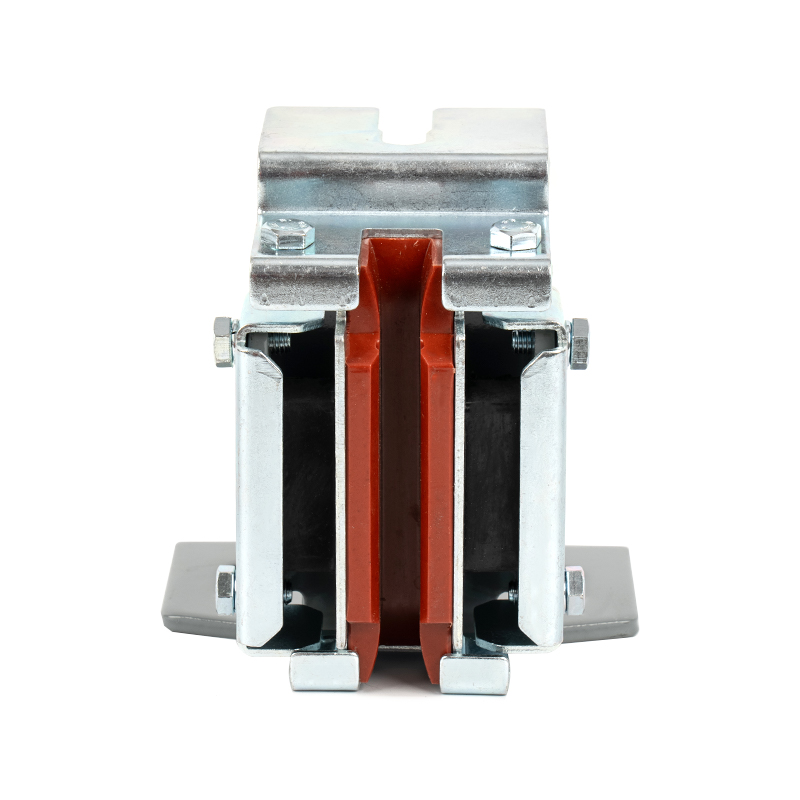
Guide shoes — also referred to as elevator stabilizing shoes — are the contact components that keep the elevator car and counterweight aligned with the guide rails as they travel through the shaft. Each car typically carries four guide shoes: two at the top and two at the bottom of the car frame. The counterweight carries an additional set.
Their core function is lateral stabilization. Without properly functioning guide shoes, the car would oscillate, vibrate, or contact the rail unevenly — generating noise, accelerating rail wear, and creating a ride quality that passengers notice immediately. Well-maintained lift performance parts at this level of the system typically account for a measurable share of overall ride comfort scores in building maintenance audits.
Sliding vs. Roller Guide Shoes
The two main types in service today are sliding guide shoes and roller guide shoes. Sliding shoes use a replaceable liner (typically nylon, UHMW polyethylene, or graphite-impregnated materials) that makes direct contact with the rail. Roller guide shoes use spring-loaded rollers on three faces of the rail and are used in higher-speed and higher-comfort applications. The replacement procedure differs between the two, and this guide covers both.
| Feature | Sliding Guide Shoe | Roller Guide Shoe |
|---|---|---|
| Typical Speed Range | Up to 1.75 m/s | 1.0 m/s and above |
| Contact Method | Liner on rail face | Rollers on three rail faces |
| Lubrication Required | Yes — guide rail lubrication essential | Minimal (bearing-sealed rollers) |
| Ride Comfort | Good at low speeds | Superior across all speeds |
| Liner Replacement | Periodic liner swap | Roller cartridge replacement |
Signs That Guide Shoes Need Replacement
Waiting for a failure before replacing guide shoes is poor maintenance practice. Most shoes give clear advance warning through observable symptoms. Technicians and building engineers should treat the following as replacement indicators:
- Lateral car sway or vibration during travel, particularly noticeable at mid-shaft where rail joints occur.
- Squeaking, scraping, or grinding noise from the guide shoe area — often the result of worn liners running dry on under-lubricated rails.
- Visible liner wear depth exceeding 3 mm from the original profile, or liner cracking and flaking.
- Asymmetric wear patterns on the rail face, indicating uneven shoe pressure or misalignment.
- Roller guide shoes: flat spots on rollers, increased rolling resistance, or audible clicking at rail joints.
- Oil consumption increase on the lubricator unit, which can indicate the shoe is no longer distributing lubricant evenly along the rail face.
Primary Causes of Premature Guide Shoe Failure (%)
Based on elevator maintenance service records across commercial and residential installations
Tools and Materials Required Before Starting
Gather all tools and replacement components before taking the elevator out of service. Incomplete preparation is the most common cause of extended downtime during guide shoe replacement.
- Replacement guide shoe assemblies or liner inserts (matched to the existing shoe body dimensions and rail profile)
- Feeler gauge set (for clearance measurement — typically 0.1 mm to 1.0 mm range)
- Torque wrench and appropriate socket set
- Rail cleaning solvent and lint-free cloths
- Elevator-grade lubricant for guide rail lubrication post-installation
- Safety lockout/tagout kit and car top access equipment
- Flashlight or portable work light
- Manufacturer's maintenance manual for the specific elevator model
Step-by-Step Guide Shoe Replacement Procedure
The following procedure applies to sliding guide shoe replacement on a standard traction elevator. Roller guide shoe replacement follows the same sequence, with the liner swap replaced by a roller cartridge change in Step 5.
Step 1 — Take the Elevator Out of Service and Apply Lockout
Place the elevator in inspection mode from the machine room or car top panel. Apply lockout/tagout to the main power disconnect. Post out-of-service signage at all landing call points. Confirm the car is stationary and the brake is engaged before accessing the car top or pit.
Step 2 — Position the Car for Access
For top guide shoes: position the car so the top of car is accessible from the top landing, or use car top inspection drive to bring the car to a convenient working height. For bottom guide shoes: position the car near the top of travel so the bottom of the car frame is accessible from the pit. Never work under a car that is not properly supported by a mechanical stop or buffer.
Step 3 — Remove the Existing Guide Shoe Assembly
Loosen and remove the fasteners securing the guide shoe to the car frame or sling. On adjustable shoe bodies, note the current clearance setting before disassembly — record this measurement as a reference for reinstallation. Slide the shoe off the guide rail. If the shoe is seized or heavily corroded, use a penetrating solvent and allow adequate dwell time before applying force.
Step 4 — Inspect and Clean the Guide Rail
With the shoe removed, inspect the accessible rail section for wear grooves, scoring, or rust pitting. Light surface rust can be removed with fine emery cloth. Deep grooves exceeding 0.5 mm in the rail face should be reported for rail section evaluation. Clean the rail face with solvent and allow to dry fully before fitting the new shoe.
Step 5 — Install the Replacement Shoe or Liner
For a complete shoe replacement: slide the new shoe assembly onto the rail and align it with the mounting holes on the car frame. Start all fasteners by hand before torquing to specification. For liner-only replacement on a serviceable shoe body: press the new liner into the shoe housing, ensuring it seats fully and evenly. Most liners are designed as snap-fit or slide-fit replacements that require no adhesive.
Step 6 — Set Clearance and Torque Fasteners
Use feeler gauges to set the lateral clearance between the liner and each rail face. The standard clearance for sliding shoes on T-section rails is 0.5 mm to 1.0 mm per side, though always defer to the manufacturer's specification for the specific shoe model. Uneven clearance causes accelerated one-sided wear. Once set, torque all fasteners to the specified value and re-check clearance after torquing, as tightening can shift the shoe position slightly.
Step 7 — Lubricate the Rail
Guide rail lubrication is not optional after a shoe replacement — it is a required commissioning step. Apply a thin, even film of elevator-grade lubricant to the rail face over the working travel zone. For installations with automatic lubricators, check and refill the lubricator reservoir and confirm the feed rate is set correctly for the application speed. Inadequate lubrication at this stage is the leading cause of premature liner wear, accounting for 38% of early failures in service data.
Step 8 — Test Run and Verify
Remove lockout, restore power, and run the car in inspection mode through the full travel range. Listen for noise and observe car behavior at rail joints. Then switch to normal operation and conduct a loaded test run. After 10–15 trips, re-check the clearance setting — initial bedding-in can sometimes shift the liner slightly. Adjust if required and re-torque.
Guide Rail Lubrication: Getting It Right
Guide rail lubrication is one of the most frequently mismanaged aspects of elevator maintenance, yet it directly determines the lifespan of the guide shoes. The three main lubrication approaches each have appropriate applications:
- Manual lubrication: Applied by a technician during scheduled maintenance visits. Suitable for low-use installations (fewer than 100 trips per day). Requires consistent scheduling to avoid dry-running intervals.
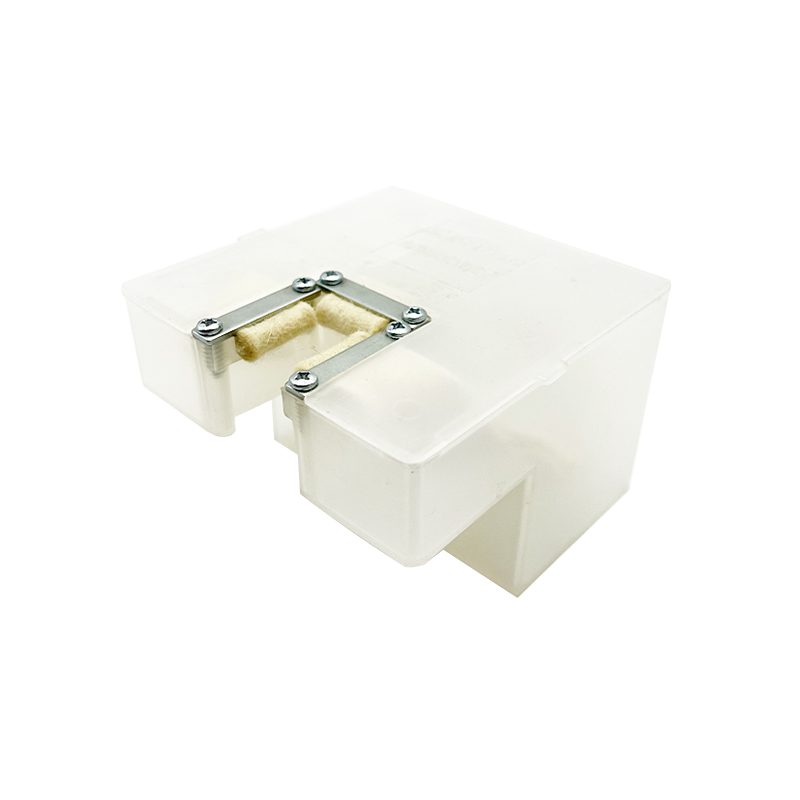
- Wick-type automatic lubricators: Spring-loaded wicks mounted on the shoe body deliver a continuous film of oil as the car travels. Feed rate is adjustable. Require monthly reservoir checks and refill.
- Pump-type automatic lubricators: Motor-driven units that deliver a metered dose of lubricant to the rail face at set intervals. Best suited for high-traffic installations above 200 trips per day. More precise control over lubrication quantity.
The lubricant specification also matters. Use only elevator-grade oil with the correct viscosity for your operating environment. In cold climates, lower-viscosity grades maintain flow at low temperatures. In hot machine rooms or high-speed applications, higher-viscosity oils resist film thinning under load. Never substitute general-purpose oils or greases not rated for elevator rail service, as these can attract dust and form abrasive deposits on the rail face.
Selecting the Right Lift Performance Parts for Your Installation
Not all guide shoes are interchangeable. Selecting compatible lift performance parts requires matching several parameters to the existing installation. The following table summarizes the key selection criteria:
| Parameter | What to Measure / Check | Why It Matters |
|---|---|---|
| Rail Profile (T-section size) | Rail blade width and thickness (e.g., T89, T114) | Shoe groove must match rail blade width exactly |
| Car Speed | Rated speed in m/s | Determines sliding vs. roller shoe requirement |
| Car Load Rating | Rated capacity in kg | Heavier cars require higher-load shoe bodies |
| Liner Material | Nylon, UHMWPE, or graphite-filled | Affects wear rate, noise, and lubrication needs |
| Mounting Interface | Bolt pattern and frame bracket dimensions | Must match car sling or frame mounting points |
Expected Liner Service Life by Material Type (months, medium-traffic installation)
Estimated service life based on 150–250 trips per day with correct lubrication
Common Mistakes to Avoid During Installation
The majority of guide shoe failures that occur within the first three months after replacement can be traced back to installation errors. The following list covers the most frequent problems encountered in the field:
- Setting clearance too tight. A clearance below 0.3 mm on either side creates binding under load, generating heat, noise, and accelerated liner wear. Always use feeler gauges — do not estimate by feel.
- Setting clearance too loose. Excessive clearance above 1.5 mm allows lateral movement that becomes perceptible to passengers and increases wear at rail joints.
- Skipping rail cleaning. Fitting a new shoe on a contaminated or corroded rail surface immediately transfers the contamination into the new liner, shortening its life by 30–50%.
- Using the wrong liner material. A standard nylon liner installed on a high-speed (above 2 m/s) application will fail within weeks. Confirm the liner specification against the elevator's rated speed before ordering.
- Not re-checking clearance after torquing. Fastener tightening frequently shifts the shoe body position by 0.1–0.3 mm. Always re-measure after the final torque pass.
- Failing to re-lubricate. A dry rail after shoe installation will show measurable liner wear within the first 50–100 trips. Apply lubricant before restoring the car to service without exception.
About Ningbo Yinzhou Fukangda Elevator Parts Factory
Ningbo Yinzhou Fukangda Elevator Parts Factory was founded in 2006 and is located in Da'ao Industrial Park, Yinzhou District, Ningbo City, Zhejiang Province, China. The company is an innovative enterprise engaged in the research and development, production, and sales of elevator parts, with a specialization in elevator guide shoes and guide rail components.
The production center is equipped with a variety of advanced hardware and plastic processing equipment, mature assembly production lines, and rigorous inspection procedures. These capabilities provide effective guarantees for the high precision, high quality, and high performance of every product — while also ensuring consistent supply chain reliability for customers across the industry.
As a professional elevator guide shoe supplier and elevator guide rail company, Fukangda has established a strong reputation in China's elevator industry and has developed mature cooperation experience with domestic first-line elevator brands. The company's customer base includes major industry names across commercial, residential, and institutional elevator applications — reflecting the trust that elevator manufacturers and maintenance organizations place in Fukangda's products and service standards.