
 English
 中文简体
中文简体
Content
- 1 The Short Answer: What Defines a Reliable Elevator Oil Cup Manufacturer
- 2 What an Elevator Oil Cup Does Within a Lubrication System
- 3 Core Functions of Elevator Guide Rail Lubrication Components
- 4 Materials and Build Quality Considerations for Elevator Oil Cups
- 5 Types of Elevator Oil Cups and Lubrication Devices
- 6 How to Evaluate an Elevator Oil Cup Supplier
- 7 OEM and Custom Elevator Oil Cup Solutions
- 8 Installation and Placement Guidelines
- 9 Maintenance, Refilling, and Replacement Guidance
- 10 Working with an Established Elevator Oil Cup Factory
- 11 Practical Checklist Before Ordering Elevator Oil Cups
- 12 Frequently Asked Questions About Elevator Oil Cups
The Short Answer: What Defines a Reliable Elevator Oil Cup Manufacturer
A dependable elevator oil cup manufacturer is one that combines consistent lubrication performance with stable production quality across every batch. Before comparing suppliers, it helps to focus on five practical points that most directly affect how well an elevator guide rail oil cup performs once installed in a running system.
- Confirm the oil cup design matches the specific guide rail or guide shoe configuration in use
- Check whether the manufacturer offers both standard and OEM elevator oil cup options
- Review the wick or felt material used for oil delivery consistency
- Ask about assembly tolerance and how the cup mounts to the rail bracket
- Look into the supplier production capability for spare parts continuity over time
What an Elevator Oil Cup Does Within a Lubrication System
An elevator oil cup is a small but essential component within the broader elevator lubrication system. Its core purpose is to deliver a controlled, steady flow of oil onto the guide rail surface as the car travels up and down the shaft. This ongoing lubrication reduces direct metal to metal contact between the guide shoe and the guide rail, which in turn lowers friction, noise, and long term wear on both parts.
Beyond friction reduction, the oil film left behind by the cup also acts as a light protective barrier against surface rust, particularly relevant in shafts exposed to humidity or temperature swings. A properly functioning elevator guide rail oil cup therefore supports two goals at once: smoother mechanical movement and a longer service life for the rail itself.
Because the oil cup sits directly in the travel path of moving components, even small variations in build quality, such as an uneven wick cut or a loose mounting bracket, can affect how evenly oil reaches the rail surface. This is why manufacturing consistency matters more for this component than its small size might suggest.
Core Functions of Elevator Guide Rail Lubrication Components
Friction Reduction Between Guide Shoe and Rail
As the elevator car moves, the guide shoe slides continuously along the guide rail. Without adequate lubrication, this repeated contact gradually wears down both the shoe lining and the rail surface. A steady, metered oil supply from the cup keeps this contact smoother, which supports quieter and more stable car movement during regular operation.
Corrosion Prevention on Guide Rail Surfaces
A thin oil film left on the rail after each pass also helps limit surface oxidation, especially in shafts where humidity levels shift throughout the year. This protective function works alongside friction reduction, meaning a well maintained oil cup contributes to both mechanical performance and the physical condition of the rail over time.
Supporting Passenger Comfort
Reduced friction along the guide rail path generally translates into smoother acceleration and deceleration, which passengers experience as a steadier ride. While many factors influence ride comfort, consistent guide rail lubrication remains one of the more overlooked contributors to overall system smoothness.
Materials and Build Quality Considerations for Elevator Oil Cups
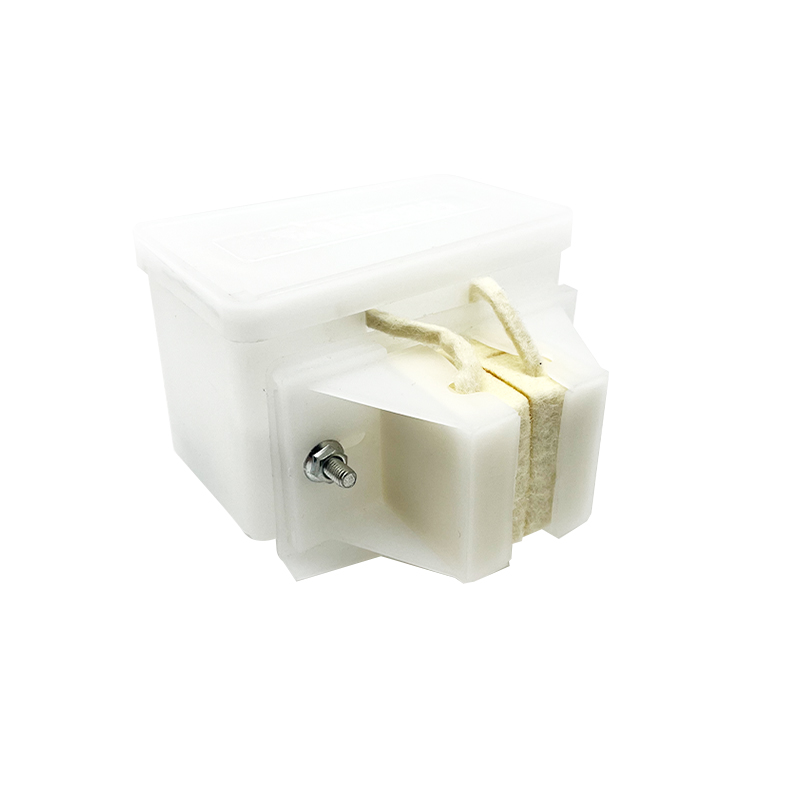
The performance of an elevator lubrication oil cup depends heavily on the materials selected for its housing, wick, and internal oil reservoir. A housing built from durable plastic or metal alloy resists cracking under the vibration typical of shaft environments, while the internal wick material determines how evenly oil is drawn and released onto the rail.
| Component | Typical Material | Function |
|---|---|---|
| Outer housing | Engineering plastic or metal alloy | Structural support and vibration resistance |
| Wick or felt insert | Absorbent felt or fiber material | Controlled oil absorption and release |
| Mounting bracket | Stamped or cast metal | Secure attachment to guide rail structure |
| Reservoir seal | Rubber or silicone gasket | Prevents unwanted oil leakage |
A manufacturer that pays close attention to wick cutting precision and reservoir sealing tends to produce oil cups with more predictable, even lubrication over the full service interval, rather than an uneven flow that drops off early.
Types of Elevator Oil Cups and Lubrication Devices
Elevator lubrication components are not a single fixed design. Depending on the elevator model, shaft layout, and maintenance approach, several variations of oil cups and related lubricators are commonly used across the industry.
- Manual elevator oil cups that are refilled during scheduled maintenance visits
- Automatic elevator oil cup designs that release oil at set intervals without manual refilling each time
- Elevator guide shoe lubricator units mounted directly on the guide shoe assembly
- Elevator guide rail lubricator brushes that spread oil across a wider rail surface area
- Compact rail lubrication systems designed for narrow shaft clearances
Selecting between these options generally depends on how frequently a building's maintenance team visits the site and how much automation the elevator operator prefers within its overall elevator rail lubrication system.
How to Evaluate an Elevator Oil Cup Supplier
Working with an established elevator oil cup supplier involves more than comparing a single sample. Since this component operates continuously inside a moving system, consistency across every production batch matters as much as the initial design quality.
Production and Quality Control Capability
A supplier operating dedicated hardware and plastic processing equipment, along with structured assembly lines, is generally better positioned to maintain tight tolerances on wick sizing and housing dimensions. Ask about internal inspection steps applied during assembly, particularly around wick placement and reservoir sealing.
Range of Elevator Spare Parts
Many elevator maintenance teams prefer sourcing multiple components from a single elevator spare parts manufacturer to simplify inventory and ensure compatible fit across related parts. A supplier offering oil cups alongside broader elevator maintenance accessories can reduce coordination effort for maintenance planning.
Long Term Supply Continuity
Because oil cups are a recurring maintenance item rather than a one time purchase, checking a supplier's production capacity and typical turnaround time helps avoid future supply gaps, especially for maintenance companies managing service contracts across many buildings.
OEM and Custom Elevator Oil Cup Solutions
Not every elevator model uses an identical rail or guide shoe configuration, which is why many maintenance companies and elevator part distributors look toward custom elevator oil cup options rather than a single universal design.
Matching Rail and Bracket Configurations
An OEM elevator oil cup program typically starts with the exact rail profile and bracket mounting pattern used on a specific elevator model. From there, a manufacturer can adjust the housing shape and mounting points so the cup fits without modification during installation.
Adjusting Oil Flow Rate
Different shaft conditions call for different oil release rates. A custom program allows adjustment of wick density or reservoir capacity to better match the travel speed and usage frequency of a particular elevator installation, whether a low rise residential building or a higher traffic commercial tower.
Installation and Placement Guidelines
Where an Elevator Oil Cup Is Installed
Oil cups are typically mounted directly onto the guide rail bracket at a height positioned to make consistent contact with the guide shoe as the car passes. Correct alignment ensures the wick maintains steady contact with the rail surface without excessive pressure that could accelerate wick wear.
Basic Installation Steps
- Confirm the oil cup model matches the guide rail width and bracket type
- Secure the mounting bracket firmly against the rail structure
- Position the wick so it maintains light, even contact with the rail surface
- Fill the reservoir with the recommended lubrication oil type
- Test car movement at low speed to confirm even oil transfer before returning to normal service
Maintenance, Refilling, and Replacement Guidance
Routine attention to the elevator guide rail oil cup is a standard part of scheduled elevator maintenance visits. Since the wick gradually wears and the reservoir depletes over time, a simple periodic check helps confirm the lubrication system continues working as intended.
| Maintenance Task | Typical Frequency | Purpose |
|---|---|---|
| Visual inspection | Each scheduled maintenance visit | Check wick condition and mounting stability |
| Oil level check and refill | Monthly or per maintenance schedule | Maintain consistent lubrication flow |
| Wick replacement | When wear or hardening is noticed | Restore even oil absorption and release |
| Full cup replacement | Based on housing or bracket wear condition | Prevent leakage or mounting failure |
Maintenance teams generally find it useful to log oil refill dates alongside other elevator maintenance records, since a sudden change in refill frequency can sometimes indicate a wick issue or a change in usage patterns worth investigating further.
Working with an Established Elevator Oil Cup Factory
Ningbo Yinzhou Fukangda Elevator Parts Factory, founded in 2006, is located in Da'ao Industrial Park, Yinzhou District, Ningbo City, Zhejiang Province, China. The company focuses on the research, development, production, and supply of elevator components, positioning itself as both an elevator oil cup manufacturer and a broader elevator components supplier.
The production center operates a range of hardware and plastic processing equipment alongside established assembly lines and inspection procedures, supporting consistent precision and performance across each production run while helping maintain steady supply chain continuity for ongoing maintenance needs.
Through years of operation within the elevator parts industry, the factory has built cooperative experience with a number of well known elevator system providers, reflecting a track record of meeting the practical requirements expected by maintenance companies and elevator part distributors across different markets.
Practical Checklist Before Ordering Elevator Oil Cups
Before placing a bulk order with an elevator oil cup factory, reviewing a short internal checklist can help avoid mismatched parts or delayed installation later on.
- Confirm the exact guide rail profile and bracket type used across target elevator models
- Clarify whether a manual or automatic elevator oil cup design better suits the maintenance schedule
- Request a sample to test wick contact and oil flow under real installation conditions
- Discuss packaging and labeling needs for maintenance teams managing multiple building sites
- Align on production lead time to support ongoing maintenance contract schedules
Frequently Asked Questions About Elevator Oil Cups
|
Q1. What is an elevator oil cup? It is a small lubrication device mounted on the guide rail system to supply oil to the guide shoe and rail surface during elevator operation. |
Q2. What does an elevator oil cup do? It reduces friction between the guide shoe and rail while also helping protect the rail surface against rust. |
|
Q3. How to install an elevator oil cup? The bracket is secured to the guide rail so the wick maintains steady contact with the rail surface, followed by filling the reservoir with suitable lubrication oil. |
Q4. How to maintain an elevator oil cup? Routine visual checks, oil level monitoring, and periodic wick inspection during scheduled maintenance visits help keep the system working properly. |
|
Q5. Where is an elevator oil cup installed? It is mounted on the guide rail bracket at a position aligned with the guide shoe travel path. |
Q6. What oil is used in an elevator oil cup? A lubrication oil recommended by the elevator manufacturer or maintenance provider is typically used, matched to the wick material and rail type. |
|
Q7. How often should an elevator oil cup be replaced? Replacement timing depends on wick condition and housing wear, generally assessed during routine maintenance inspections rather than on a fixed universal schedule. |
Q8. How do you refill an elevator oil cup? The reservoir cap is opened and oil is added to the recommended level, taking care not to overfill or disturb the wick positioning. |