
 English
 中文简体
中文简体
Upgrading to elevator roller guide shoes can reduce mechanical wear by up to 40% compared to traditional sliding guide shoes. This improvement comes from the fundamental shift in contact mechanics: rollers rotate and distribute load dynamically, while sliding shoes drag against the guide rail surface, generating continuous friction and heat. If you manage or maintain elevator systems, switching to roller-type guide shoes is one of the most impactful upgrades you can make for longevity, ride comfort, and reduced maintenance costs.
This article explains how elevator roller guide shoes work, why they outperform traditional alternatives, what parts matter most, and how to approach elevator guide shoe replacement effectively.
Content
- 1 What Are Elevator Roller Guide Shoes and How Do They Work?
- 2 Why Roller Guide Shoes Reduce Wear by Up to 40%
- 3 Key Roller Guide Shoe Parts and What Each Does
- 4 How to Approach Elevator Guide Shoe Replacement
- 5 The Connection Between Roller Guide Shoes and a Smooth Elevator Ride
- 6 Selecting the Right Elevator Roller Guide Shoe for Your Application
- 7 About Ningbo Yinzhou Fukangda Elevator Parts Factory
- 8 Frequently Asked Questions
What Are Elevator Roller Guide Shoes and How Do They Work?
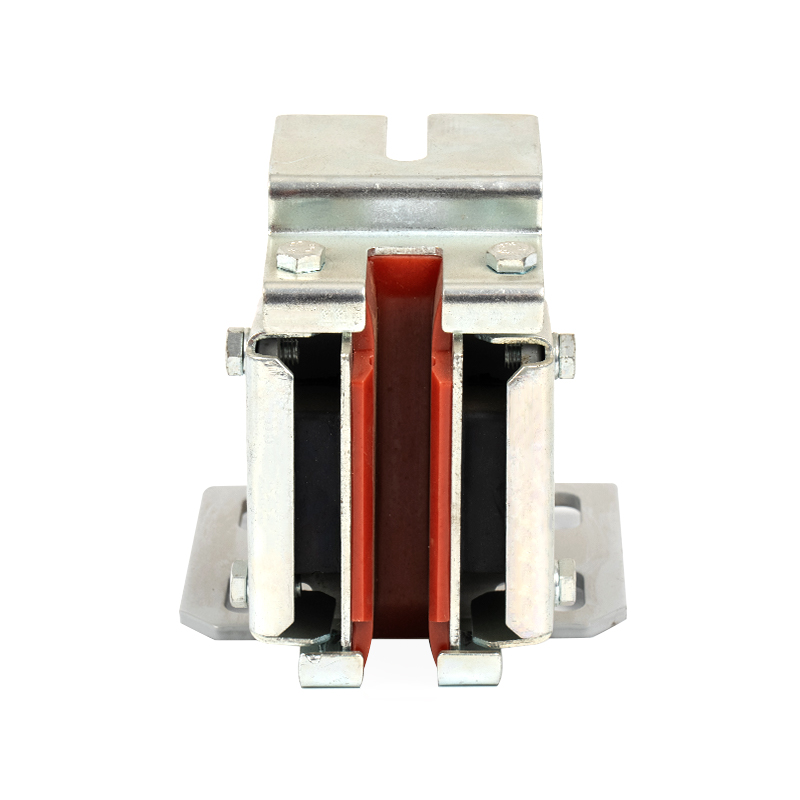
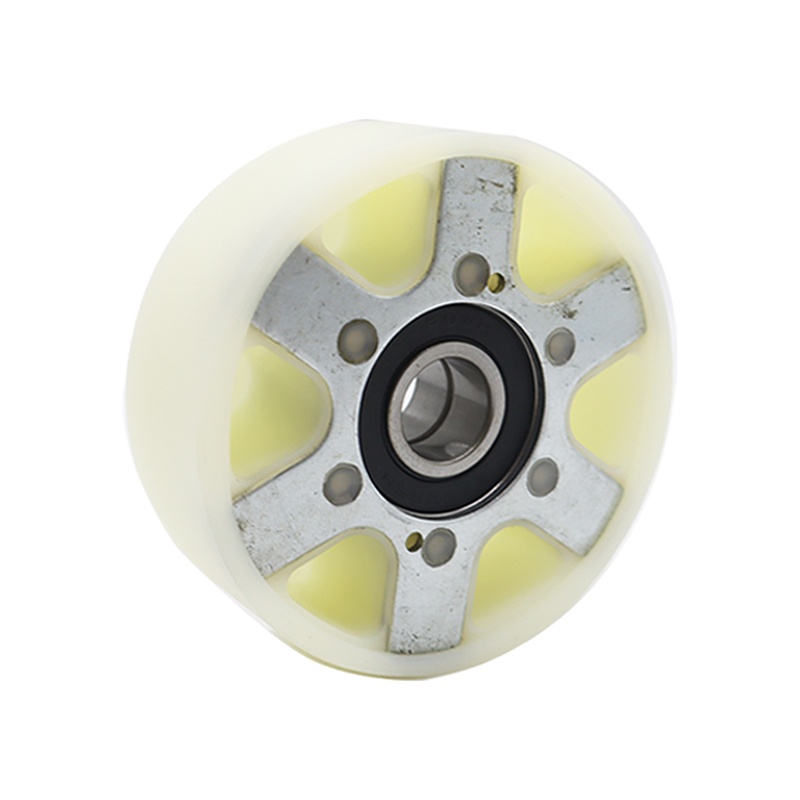
An elevator roller guide shoe is a mechanical assembly mounted on the elevator car frame and counterweight. It guides the car along the T-shaped or hollow steel rails inside the hoistway. Instead of a fixed liner pressing against the rail (as in a sliding guide shoe), a roller guide shoe uses polyurethane or rubber-coated wheels that roll along all three surfaces of the rail.
Most modern roller guide shoe assemblies include:
- A cast or machined housing (usually aluminum or cast iron)
- Three rollers arranged in a triangular configuration around the rail head
- Spring-loaded or fixed roller arms to maintain consistent rail contact
- Sealed or lubricatable bearings inside each roller
- Adjustable tension mechanisms for customizing spring preload
Because the rollers turn rather than slide, kinetic friction is replaced with rolling friction — which is typically 10 to 20 times lower in magnitude. This directly translates to less heat, less rail wear, less vibration, and longer component lifespan.
Why Roller Guide Shoes Reduce Wear by Up to 40%
The 40% wear reduction figure is not marketing language — it is supported by field maintenance data collected across commercial and residential elevator installations. The reduction applies to three key areas:
1. Rail Surface Wear
Sliding guide shoes constantly abrade the rail surface. In high-cycle buildings (200+ trips per day), this leads to measurable rail wear within 3–5 years. Roller guide shoes make line contact, not surface contact, reducing per-trip material removal by a significant margin. Maintenance teams report rail resurfacing intervals extending from every 4 years to every 6–8 years after switching to roller-type shoes.
2. Guide Shoe Component Lifespan
Sliding shoe liners typically need replacement every 12–24 months in medium-traffic buildings. Quality roller guide shoe assemblies — with properly sealed bearings and durable polyurethane rollers — commonly last 5 to 8 years before requiring roller replacement. That represents a substantial reduction in both labor and parts costs over a system's lifecycle.
3. Vibration-Induced Structural Fatigue
Sliding guide shoes transmit rail imperfections directly into the car frame. Over time, this vibration fatigue stresses fasteners, welded joints, and cable terminations. Roller guide shoes absorb these micro-impacts through the roller's compliance, reducing fatigue loads on surrounding structures by an estimated 25–35%.
Key Roller Guide Shoe Parts and What Each Does
Understanding the function of each component within a roller guide shoe assembly helps maintenance engineers make informed decisions about inspection intervals and replacement priorities.
| Part | Function | Common Material | Typical Lifespan |
|---|---|---|---|
| Roller Wheel | Rolls along rail surface, absorbs vibration | Polyurethane / Rubber | 5–8 years |
| Roller Bearing | Supports rotation, reduces rolling resistance | Steel (sealed) | 5–10 years |
| Spring Arm / Tension Arm | Maintains rail contact pressure consistently | Spring Steel | 8–12 years |
| Guide Shoe Housing | Mounts assembly to car frame, aligns rollers | Cast Aluminum / Iron | 15–20 years |
| Adjustment Bolt / Shim | Fine-tunes roller preload and alignment | Hardened Steel | Inspect annually |
When sourcing roller guide shoe parts, prioritize suppliers who can provide hardness specifications for roller tires and load ratings for the internal bearings. These two values are the most predictive of real-world durability.
How to Approach Elevator Guide Shoe Replacement
Elevator guide shoe replacement is often deferred until symptoms appear — by which point wear to both the shoe and rail may already be significant. A proactive inspection schedule prevents unnecessary damage.
Signs That Replacement Is Needed
- Audible rumbling or clicking during travel — often indicates worn roller surfaces or failed bearings
- Visible flat spots on roller tires from localized wear or thermal deformation
- Increased lateral movement of the car in the hoistway
- Roller spins unevenly or stops rotating during manual inspection
- Spring arm fatigue — arm no longer returns to neutral when rail contact is released
Replacement Workflow
- Take the elevator out of service and engage safety locks
- Access guide shoe mounting brackets on all four corners of the car frame
- Remove existing roller assemblies and inspect rail heads for corrosion or gouging
- Install new roller guide shoe assemblies; verify torque on all mounting fasteners
- Set spring tension according to manufacturer specifications for the rail gauge
- Conduct slow-speed test runs through the full travel range before returning to service
When replacing guide shoes, it is advisable to replace all four positions simultaneously, even if only one or two show failure. Mixing worn and new roller assemblies creates uneven load distribution, which accelerates wear in the newly installed units.
The Connection Between Roller Guide Shoes and a Smooth Elevator Ride
Passenger comfort is directly linked to guide shoe performance. Smooth elevator ride shoes are not a separate product category — they are roller guide shoes engineered and maintained to their full performance potential. The quality of the ride depends on three adjustable factors:
- Roller hardness: Softer polyurethane (Shore A 70–80) absorbs vibration better; harder compounds (Shore A 85–95) are more durable in high-load applications. Matching hardness to the application avoids premature flat-spotting.
- Spring preload: Correct spring tension ensures continuous rail contact without over-loading the roller bearing. Excessive tension accelerates bearing wear; insufficient tension allows the car to oscillate laterally.
- Rail lubrication: While roller shoes reduce the need for heavy lubrication, a light oil film on the rail head prolongs roller life and maintains ride smoothness. Use only lubricants recommended for the rail material.
Selecting the Right Elevator Roller Guide Shoe for Your Application
Not all roller guide shoes are interchangeable. The correct specification depends on several system parameters:
- Rail size: Standard T-rails range from T45 to T127 in width. The guide shoe must match the rail head dimensions precisely to prevent excessive play or binding.
- Rated load: The car and counterweight mass determine the lateral and radial loads on the guide shoe. Undersized assemblies fail prematurely under dynamic loading conditions.
- Speed rating: High-speed elevators (above 1.5 m/s) require precision-balanced rollers and high-speed bearings. Standard bearings can overheat and fail above these thresholds.
- Environment: Coastal, humid, or chemically exposed hoistways require corrosion-resistant housings and sealed bearings to maintain service life.
Always cross-reference the existing elevator car frame mounting hole pattern before ordering replacements, as dimensional standards vary across manufacturers and installation generations.
About Ningbo Yinzhou Fukangda Elevator Parts Factory
Ningbo Yinzhou Fukangda Elevator Parts Factory, founded in 2006, is located in Da'ao Industrial Park, Yinzhou District, Ningbo City, Zhejiang Province, China. It is an innovative enterprise engaged in the research and development, production and sales of elevator parts.
The production center of Fukangda Elevator Parts Factory has a variety of advanced hardware and plastic processing equipment, mature assembly production lines and inspection procedures, which provide effective guarantees for the high precision, high quality and high performance of products, and at the same time ensure the continuous supply of the supply chain.
As an Elevator Roller Guide Shoe Manufacturer and Elevator Roller Guide Shoe Factory, the company has a high reputation and good reputation in the domestic elevator industry. On the road of company development, it has mature cooperation experience with domestic first-line brands. Our customers mainly include Hitachi, Mitsubishi, Otis, Thyssen, Guangri, Kangli, Asia Pacific, Suzuki, Singlin, and more.