
 English
 中文简体
中文简体
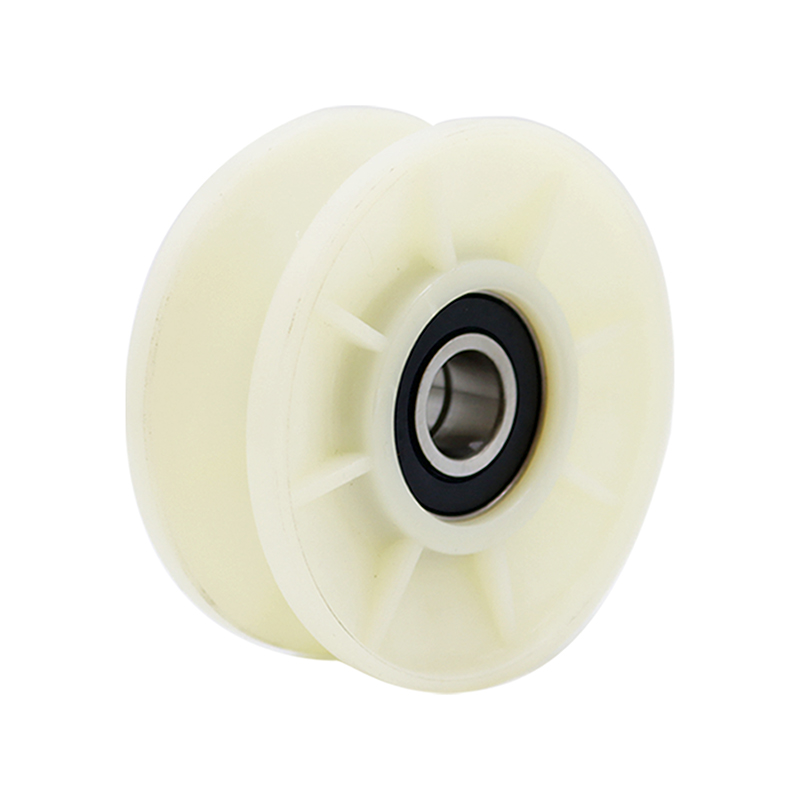
Escalator rollers are critical to safe escalator operation because they support the step chain, guide step movement along the track, and absorb the continuous mechanical loads generated by passenger traffic. Without properly functioning escalator rollers, steps can misalign, vibrate excessively, or jam — conditions that directly cause passenger falls, equipment damage, and unplanned shutdowns. Every escalator contains dozens to hundreds of rollers working in coordinated sequence, and the failure of even a single roller can cascade into a safety incident. The sections below explain exactly how rollers function, what happens when they fail, and how maintenance programs protect both passengers and equipment.
Content
- 1 What Escalator Rollers Do: Function and Position
- 2 Types of Escalator Rollers and Their Specific Roles
- 3 How Roller Failure Directly Creates Safety Hazards
- 4 Materials and Construction Quality in Escalator Rollers
- 5 Service Life and Replacement Intervals: What the Data Shows
- 6 Key Warning Signs That Escalator Rollers Need Attention
- 7 Maintenance Best Practices to Maximize Roller Performance
- 8 International Safety Standards Governing Escalator Roller Performance
- 9 About Ningbo Yinzhou Fukangda Elevator Parts Factory
- 10 Frequently Asked Questions
What Escalator Rollers Do: Function and Position
An escalator is a continuous loop of individual steps driven by a step chain. Rollers are the interface between this moving chain-and-step assembly and the fixed track structure of the escalator truss. They perform three distinct mechanical functions simultaneously:
- Load bearing: Step rollers carry the full weight of each step plus the dynamic load of passengers standing on it. In a standard commercial escalator, each step can support up to 3–4 adults simultaneously, meaning individual step rollers routinely carry loads of 200–320 kg in service.
- Guidance and alignment: Track rollers (also called guide rollers or side rollers) keep each step aligned horizontally as it travels around curves at the top and bottom of the escalator. Without precise guidance, step edges drift toward the comb plate or skirt panel, creating entrapment hazards.
- Friction reduction: By converting sliding contact into rolling contact, escalator rollers reduce the drive force needed to move the step chain by a factor of 40–100 compared to plain sliding bearings, dramatically reducing motor load and heat generation.
A typical escalator uses two step rollers and two track rollers per step. With 20–40 steps in a standard escalator loop, the total roller count per escalator ranges from 80 to over 200 individual roller units, all running continuously during operating hours.
Types of Escalator Rollers and Their Specific Roles
Different roller positions in an escalator serve different mechanical purposes and experience different load profiles. Understanding the types helps maintenance teams prioritize inspection resources correctly.
| Roller Type | Position | Primary Function | Typical Diameter |
|---|---|---|---|
| Step Roller (Main) | Front and rear of each step axle | Carries vertical passenger load on the main track | 70–100 mm |
| Track Roller (Guide) | Side of step frame, runs on auxiliary track | Maintains horizontal alignment and prevents step drift | 50–75 mm |
| Chain Roller | Step chain links | Reduces chain-to-track friction along the drive run | 25–50 mm |
| Handrail Pressure Roller | Handrail drive section | Maintains tension and grip on the handrail belt | 40–60 mm |
| Deflection Roller | Return run curve sections | Redirects step chain around upper and lower curves | 80–120 mm |
How Roller Failure Directly Creates Safety Hazards
Escalator roller failures do not occur suddenly in isolation — they progress through predictable stages before reaching a critical point. Understanding the failure chain shows why early intervention is essential.
Step Misalignment and Comb Plate Hazard
When a track roller wears beyond its tolerance, the step it supports can drift laterally by as little as 2–3 mm. This is sufficient to cause the step tread to contact the adjacent step riser or to misalign with the comb plate at the landing. Comb plate misalignment is one of the leading causes of shoe and clothing entrapment incidents on escalators globally, accounting for approximately 30% of escalator-related injury reports in transportation authority data.
Vibration and Passenger Instability
Flat spots, cracked polyurethane tires, or seized bearings on step rollers generate periodic vertical jolts as the flat section contacts the track. In high-traffic escalators running at 0.5 m/s, a single flat-spotted roller produces a noticeable jolt every 0.3–0.5 seconds per revolution. Elderly passengers, children, and those carrying luggage are particularly vulnerable to losing balance on a vibrating step surface.
Chain Derailment and Sudden Stop
A failed chain roller that seizes and locks can cause the step chain to lift off the track locally. In the worst case, this triggers the escalator's chain slack safety device, causing an abrupt emergency stop. An unannounced sudden stop of an escalator under full passenger load is a significant fall hazard, particularly on high-rise installations where many passengers are in transit simultaneously.
Materials and Construction Quality in Escalator Rollers
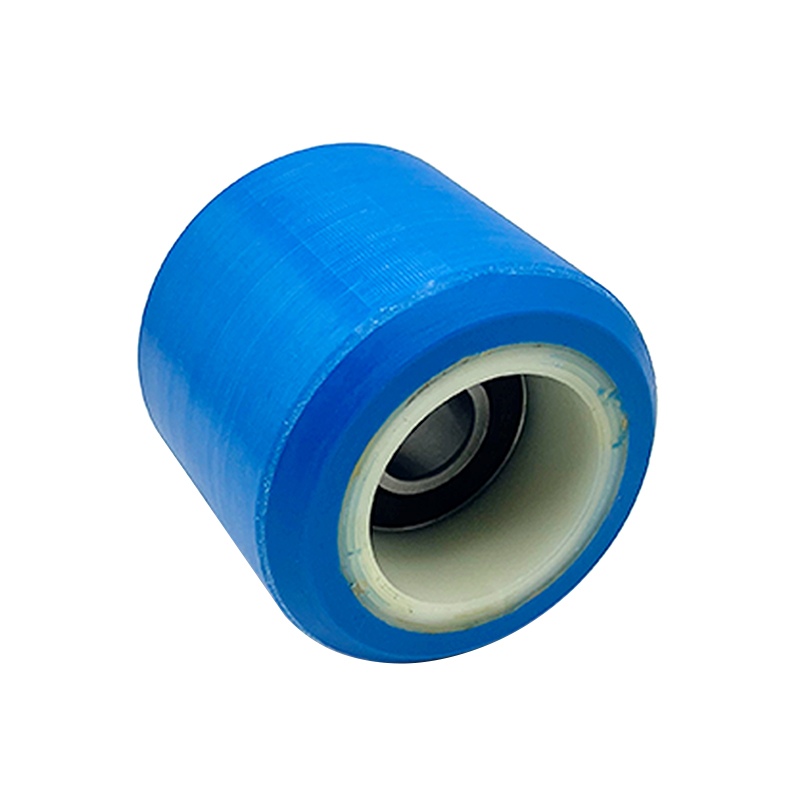
The performance and service life of an escalator roller depend heavily on the materials used in its construction. A standard escalator roller consists of three main components: the inner bearing, the hub or core, and the outer tread surface.
Bearing Selection
Deep groove ball bearings with sealed or shielded designs are standard in quality escalator rollers. The bearing steel grade, internal clearance, and grease specification determine the operating temperature range and load rating. Rollers intended for high-rise or high-traffic installations require bearings rated for C3 or C4 internal clearance to accommodate thermal expansion during continuous operation.
Tread Material
The outer tread is the component that contacts the track directly. Common tread materials and their characteristics are:
- Polyurethane (PU): The most widely used material for modern escalator rollers. Provides excellent wear resistance, low noise, good oil resistance, and hardness typically in the 85–95 Shore A range. Service life in normal conditions: 3–5 years.
- Nylon (PA66): Higher rigidity and heat resistance than PU. Used where track speeds or load profiles exceed PU limits. Produces slightly more noise but lasts longer in high-temperature machine rooms.
- Rubber: Used in older installations or where vibration dampening is prioritized. Lower wear resistance than PU; typically requires more frequent replacement.
- Steel (bare or coated): Used exclusively for specific chain roller applications where the load exceeds polymer limits. Generates more noise and requires more frequent track lubrication.
Service Life and Replacement Intervals: What the Data Shows
Escalator roller service life varies significantly depending on installation type, traffic volume, lubrication regime, and roller quality. The following data represents typical real-world replacement intervals observed in commercial and transit escalator maintenance programs:
These figures assume standard polyurethane rollers with sealed bearings under a regular lubrication and inspection regime. Neglected lubrication can reduce roller service life by 40–60%, while substandard roller materials in high-traffic environments may require replacement in under 12 months.
Key Warning Signs That Escalator Rollers Need Attention
Maintenance teams and facility managers should be alert to the following indicators of escalator roller deterioration. Early detection allows scheduled replacement during planned maintenance windows rather than reactive repairs following failure.
- Unusual noise: Rhythmic clicking, grinding, or squealing during escalator operation. Clicking often indicates a flat spot or crack in the roller tread; grinding indicates bearing contamination or seizure.
- Visible vibration: Passengers or observers can see or feel individual steps bouncing or jolting during travel — a clear sign of compromised step rollers.
- Step wobble: Any lateral movement of a step during normal travel indicates guide roller wear beyond tolerance.
- Increased drive motor current: Higher-than-baseline motor current draw with no increase in load indicates elevated rolling resistance from degraded rollers, often detectable through building management system monitoring before any visible symptom appears.
- Step-to-skirt contact marks: Black rubber marks on the escalator skirt panel indicate lateral step drift caused by worn track rollers.
- Tread surface cracking or chunking: Visible deterioration of the polyurethane or nylon roller tread surface observed during inspection.
Maintenance Best Practices to Maximize Roller Performance
A structured maintenance program significantly extends escalator roller service life and reduces the probability of in-service failure. The following practices represent the industry standard for commercial and transit escalator maintenance:
- Monthly visual inspection: Check accessible rollers for tread cracking, flat spots, contamination, and evidence of bearing noise during operation. Document findings for trend tracking.
- Lubrication schedule: Apply manufacturer-specified lubricant to roller bearing housings at intervals of 1,000–2,000 operating hours. Over-lubrication is as damaging as under-lubrication — excess grease attracts metal particles and accelerates bearing wear.
- Track cleaning: Keep roller tracks free of debris, particularly grit and metal particles from worn components, which act as abrasives and accelerate tread wear by a factor of 3–5x compared to clean track conditions.
- Dimensional checks: Measure roller outer diameter at regular intervals. A reduction of more than 2 mm from nominal diameter in step rollers typically indicates replacement is required to maintain correct step-to-comb clearance.
- Full roller replacement at major overhaul: Industry guidance recommends replacing all step and track rollers as a complete set during major overhauls rather than individually replacing failed units, since rollers of the same installation batch will reach end-of-life within a similar timeframe.
International Safety Standards Governing Escalator Roller Performance
Escalator roller performance requirements are embedded within international escalator safety standards. Compliance with these standards is mandatory for escalators in public buildings, transit facilities, and commercial premises in most markets.
| Standard | Region | Relevant Roller Requirements |
|---|---|---|
| EN 115-1 / EN 115-2 | European Union | Step guidance tolerances, step-to-skirt clearance limits, maintenance interval requirements |
| ASME A17.1 / CSA B44 | USA / Canada | Component fatigue life, step lateral play limits, inspection frequency |
| GB 16899 | China | Step roller dimensional standards, material specifications, wear limits |
| ISO 22559 | International | Global safety requirements framework covering step guidance, clearances, and component reliability |
About Ningbo Yinzhou Fukangda Elevator Parts Factory
Ningbo Yinzhou Fukangda Elevator Parts Factory was founded in 2006 and is located in Da'ao Industrial Park, Yinzhou District, Ningbo City, Zhejiang Province, China. The company is an innovative enterprise engaged in the research and development, production, and sales of elevator and escalator parts.
The production center is equipped with a variety of advanced hardware and plastic processing equipment, mature assembly production lines, and rigorous inspection procedures. These capabilities provide effective guarantees for high precision, high quality, and high performance across the full product range, while ensuring continuous and reliable supply chain delivery.
As a professional Escalator Roller Manufacturer and Escalator Roller Factory, Fukangda has built a strong reputation in the domestic elevator and escalator industry over nearly two decades. The company has established mature cooperation with leading domestic and international elevator brands, with customers including Hitachi, Mitsubishi, Otis, Thyssen, Guangri, Kangli, Asia Pacific, Suzuki, Singlin, and others. This track record reflects the company's consistent commitment to dimensional accuracy, material quality, and reliable product performance in demanding commercial and transit escalator applications.