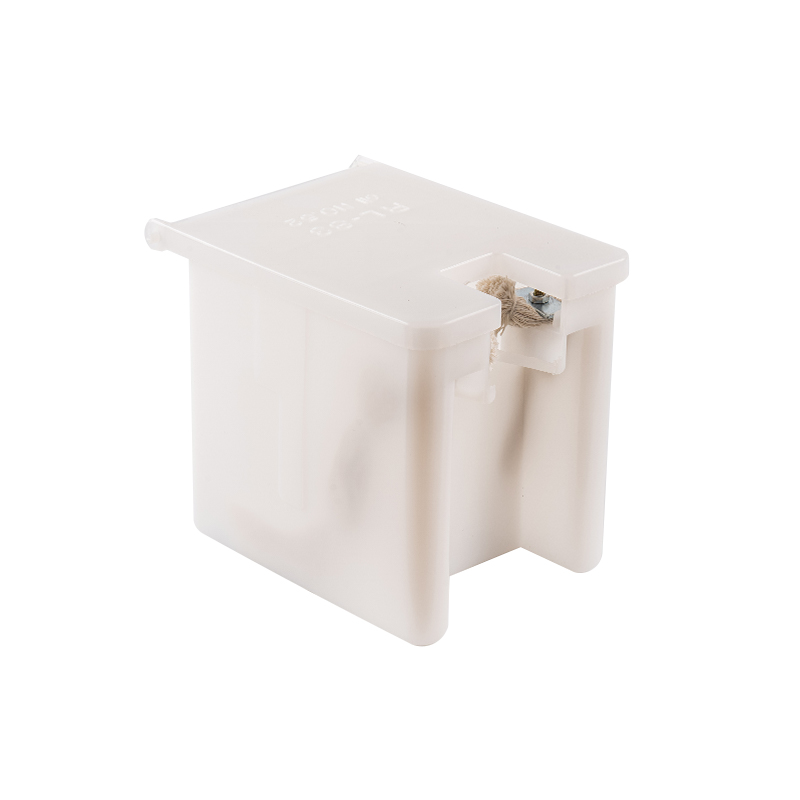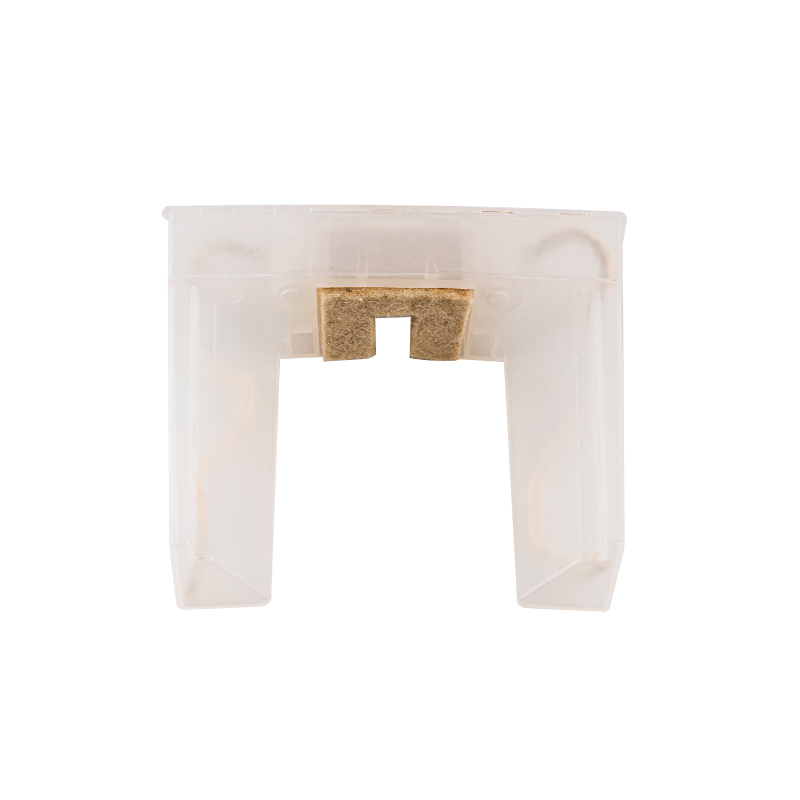

 English
 中文简体

Push on a closed landing door when the car is one floor away and it will not move. That behaviour comes from a component smaller than your hand: the landing door lock. It does two jobs at once — it holds the door shut mechanically and, through a safety contact, proves to the controller that the door is locked before the car is allowed to run. Which type of lock is fitted decides how that proof is generated, how the door is released in an emergency, and how many adjustment points your maintenance team will be chasing for the next ten years. Four families cover most installations, and every one of them depends on the same triangle-key release hardware.
Content
- 1 What a Landing Door Lock Has to Do
- 2 The Four Landing Door Lock Types in Practice
- 3 Inside a Hook-and-Roller Lock
- 4 How the Families Compare on the Criteria That Decide the Order
- 5 What the Standards Set as the Pass Line
- 6 Emergency Release: Where the Triangle Lock Assembly Belongs
- 7 Selection and Installation Checklist
- 8 Field Failures Worth Recognising
- 9 Matching a Replacement Lock
- 10 Frequently Asked Questions
- 10.1 Q1. What is an elevator landing door lock?
- 10.2 Q2. How many types of elevator landing door locks are there?
- 10.3 Q3. What is the minimum locking engagement for a door lock?
- 10.4 Q4. Why does the elevator stop when a door lock contact fails?
- 10.5 Q5. Which key opens an elevator landing door lock in an emergency?
- 10.6 Q6. How often should landing door locks be checked?
What a Landing Door Lock Has to Do
A landing door lock is more than a latch. Under EN 81-20, which GB/T 7588.1 follows, three conditions are inspected separately:
- Mechanical restraint: the locking element must engage at least 7 mm and stay engaged under any load a person could apply to the door.
- Electrical proving: a positively operated safety contact must close only when the lock is in the locked position, and that contact sits in the safety chain that permits the car to run.
- Controlled release: the lock must be releasable by the car door mechanism at the landing, and by a special tool from the landing side when the car is in the unlocking zone of about 0.2 m.
Miss any one of the three and the symptom looks identical from the corridor: the car refuses to start, or worse, starts with a door unproved. Lock selection is therefore a system decision, not a spare-part decision.
The Four Landing Door Lock Types in Practice
1. Hook-and-roller interlock with integrated safety contact
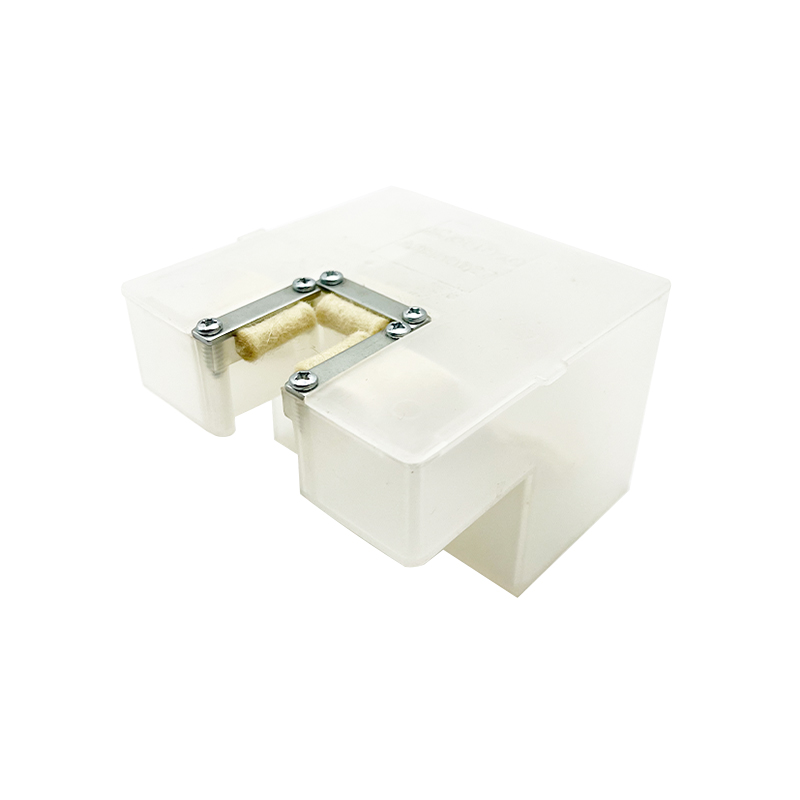
The default for automatic sliding landing doors on passenger and goods lifts. A hook on the door panel rotates over a roller mounted on the frame column. The roller is lifted only when the car door's unlocking vane arrives at the landing, which frees the hook. Because the safety contact lives in the same housing, the electrical proof follows the mechanical state directly. Fewer adjustment points, and a closer match between what the mechanic sees and what the controller sees.
2. Separate mechanical lock and independent safety switch
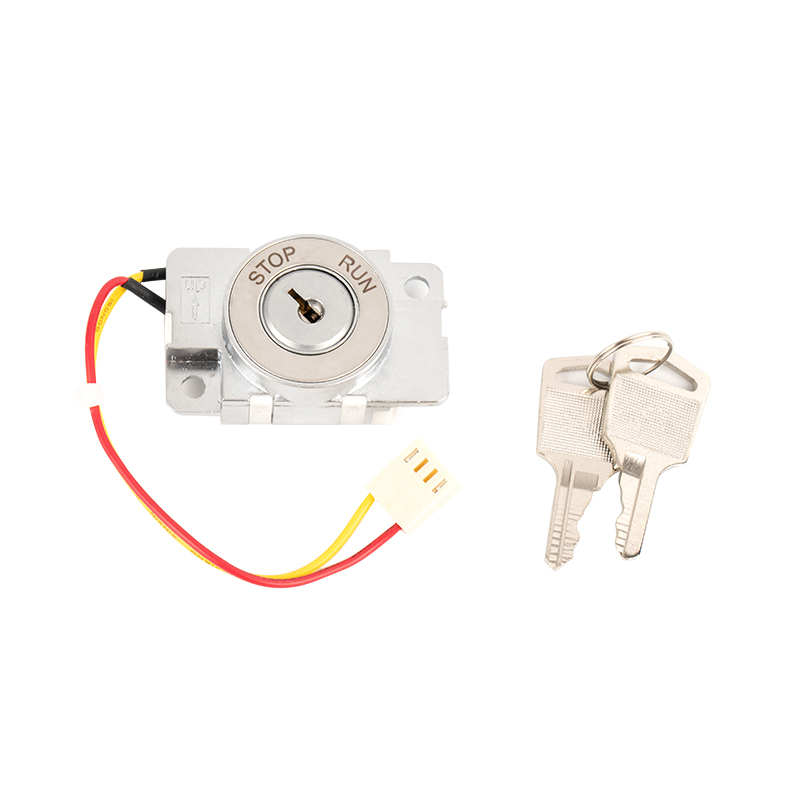
Found on older installations, some freight lifts and retrofit jobs. The lock and the switch that senses the lock arm are two devices. It works, but the mechanical and electrical states can drift apart: the hook may be home while the switch roller rests on a worn cam. Every visit becomes a two-point check, and both points must agree before the door is proved closed.
3. Powered locks: solenoid, electromagnetic and motorised
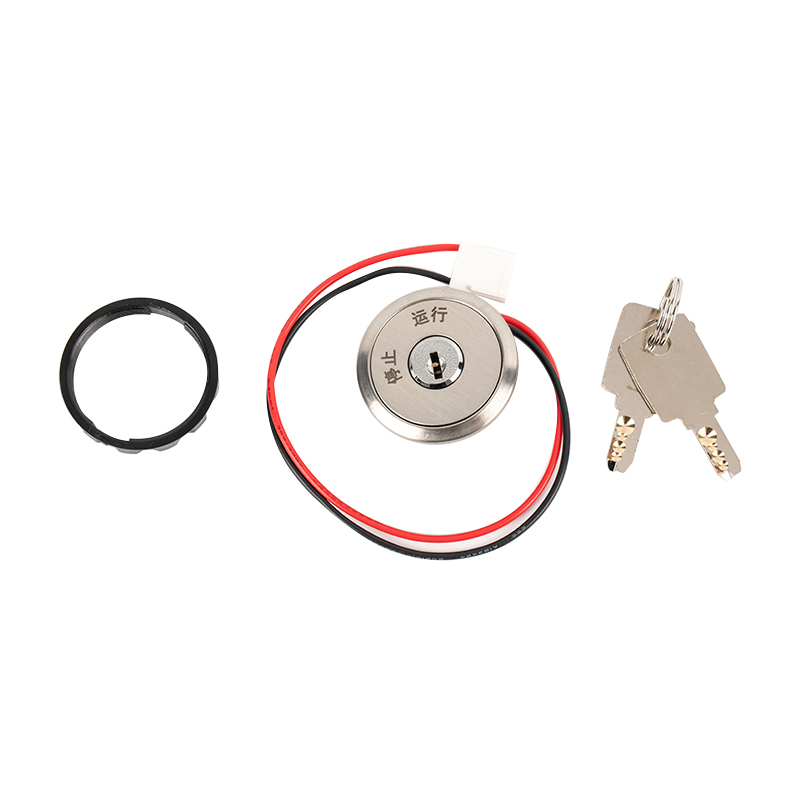
Where landing doors must stay locked outside authorised use — plant rooms, secure floors, fire doors on stair landings — the lock is driven electrically. The decisive specification is not holding force but behaviour on power loss. A fail-secure lock stays locked and must still allow emergency release with the special key; a fail-safe lock releases. Either way the controller needs a separate monitoring contact, otherwise "locked" is only an assumption.
4. Manual swing-door and gate locks for villa and freight lifts
Villa elevators with manual swing landing doors, and goods lifts with hinged gates, use a simpler latch with a proving contact. The risk profile changes: nobody can force a roller out of position, but a door left on the latch, a sagging hinge or a missing spring silently defeats the interlock. On these doors, hinge and latch alignment matters as much as the lock itself.
| Lock type | Typical door | Electrical proving | Emergency release | Main watch-out |
|---|---|---|---|---|
| Hook-and-roller, integrated contact | Automatic sliding landing doors | Safety contact inside the lock housing | Special key in the lock body | Roller wear eats the 7 mm engagement |
| Separate lock and switch | Older installs, freight, retrofit | Independent switch on the lock arm | Key release at the lock | Two adjustment points can disagree |
| Solenoid or electromagnetic | Secure floors, landing fire doors | Monitoring contact on the armature | Key release must work without power | Fail-secure vs fail-safe behaviour |
| Manual swing-door or gate latch | Villa lifts, hinged goods gates | Switch operated by the latch bolt | Manual key or handle sequence | Hinge sag, missing springs |
Inside a Hook-and-Roller Lock
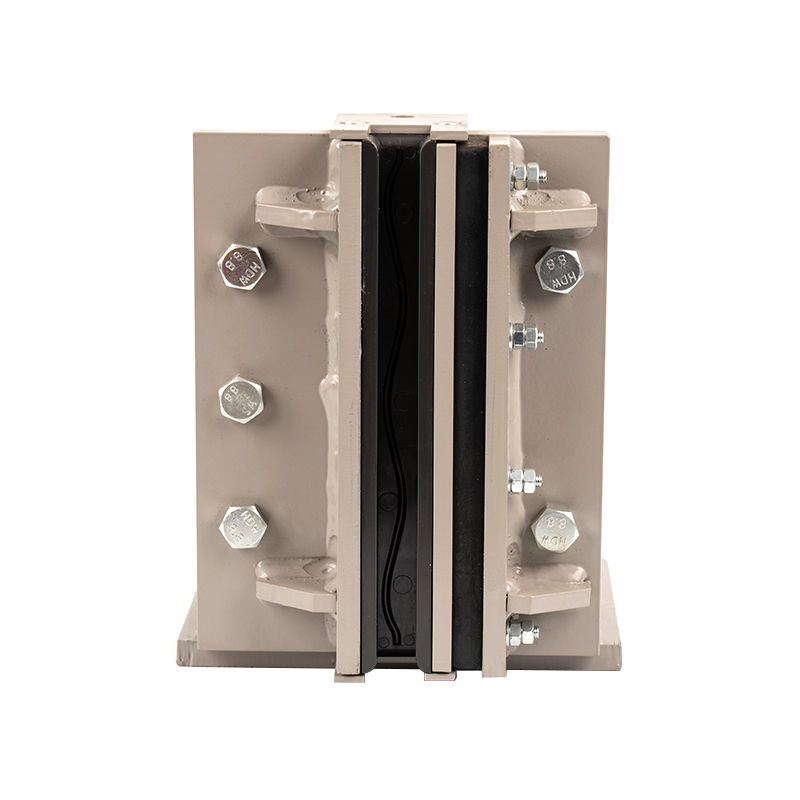
The most common type rewards a closer look, because almost every field complaint traces back to one of its four basic blocks: the hook that carries the mechanical load, the safety contact that proves position, the terminal block that carries the safety chain wiring, and the base plate that holds all of it in alignment.
Alignment is the quiet factor. The hook must reach full engagement without the base plate being shimmed, and the contact must be operated by the lock itself — never by the door panel, the door closer or a separate cam that a fitter can bend back into position.
How the Families Compare on the Criteria That Decide the Order
Buyers rarely choose on price alone. The criteria that decide the order are holding force, reliability of the electrical proof, release speed in an emergency, tolerance to installation error and lifetime cost. The chart below is a qualitative comparison of typical application requirements, not a laboratory test report.
Read it this way: the integrated interlock wins on holding force and adjustment tolerance; the powered lock wins on release speed and remote control, but demands a monitored contact and a documented power-loss strategy; the split arrangement sits between the two and pays for it in maintenance time.
What the Standards Set as the Pass Line
Three numbers settle most disputes on site. First, the 7 mm minimum engagement of the locking element, measured with the door closed and the lock in the locked position. Second, the unlocking zone of about 0.2 m — the door may be unlocked from the landing side only while the car is within that band of the floor level. Third, the requirement that the safety contact be positively operated by the lock, so that a broken spring, a bent lever or a seized roller cannot leave the contact closed while the door is free.
Inspectors also check that the lock cannot be defeated by a simple tool from the landing side, and that any key release returns to the locked state when the key is withdrawn. A lock that stays released because the return spring is tired is a defect, not a convenience.
Emergency Release: Where the Triangle Lock Assembly Belongs
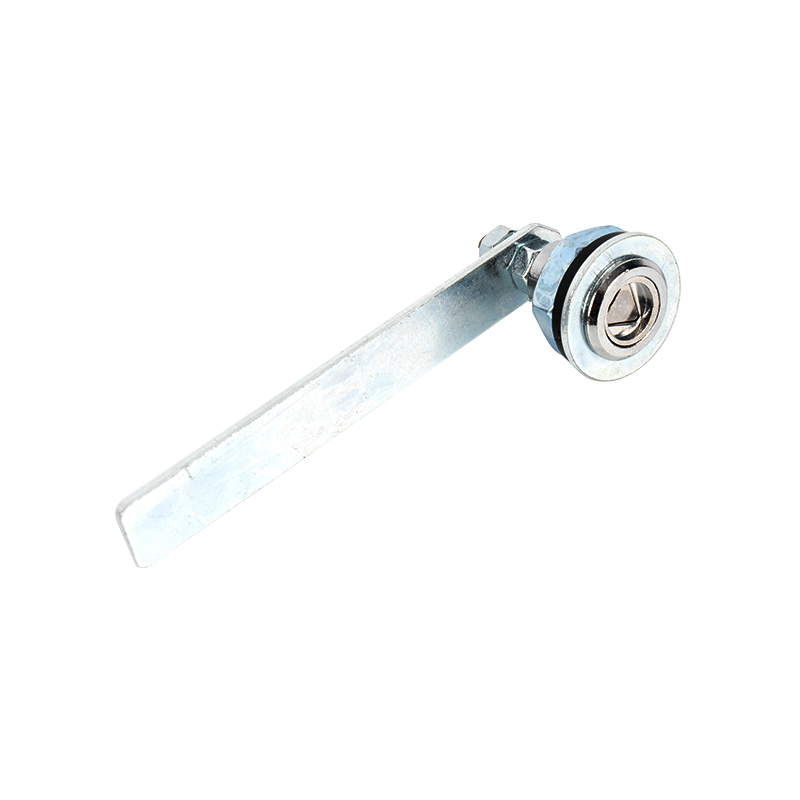
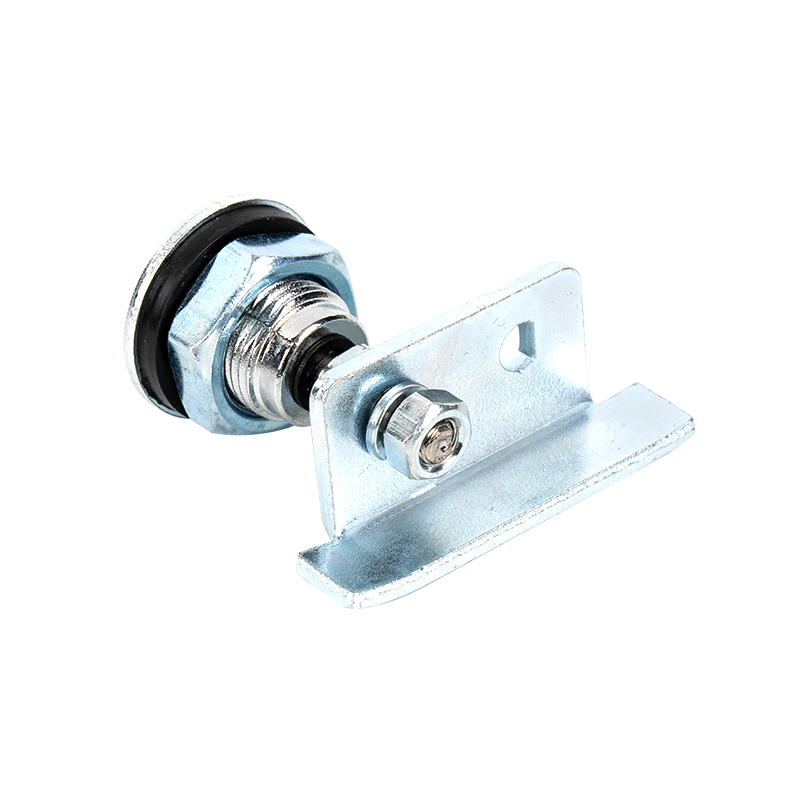
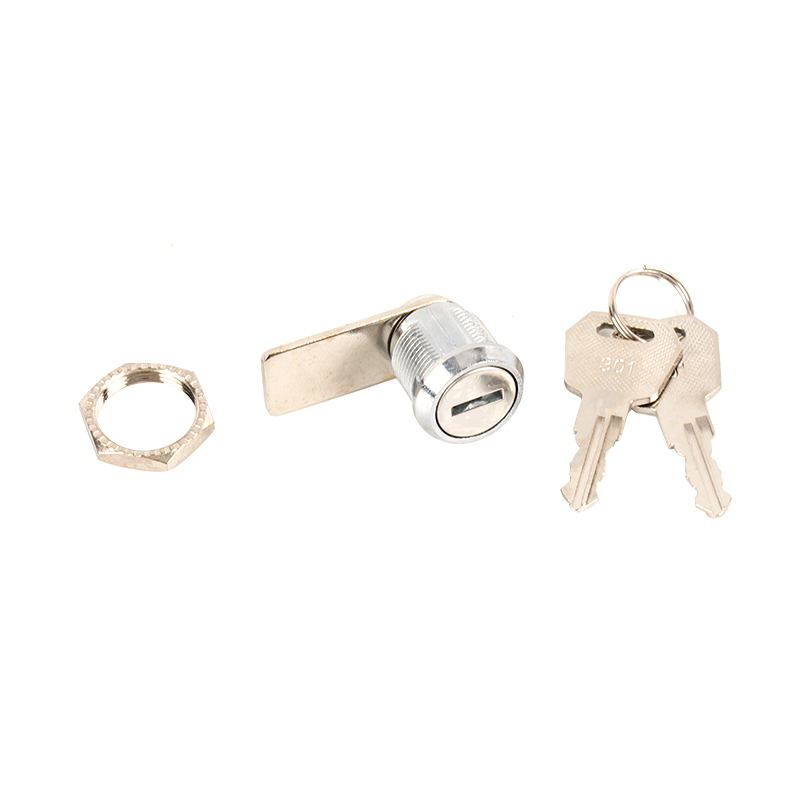
Every automatic landing door lock needs a way in from the corridor. That is the job of the triangle lock assembly: a keyed plate, a rotating latch and a return spring that opens the mechanical lock so the panels can be parted. It is not the lock itself, but the lock is only as serviceable as this interface. Poorly shielded triangle locks invite casual opening from the landing, which is why the misoperation prevention design of the triangle lock matters as much as the locking depth behind it.
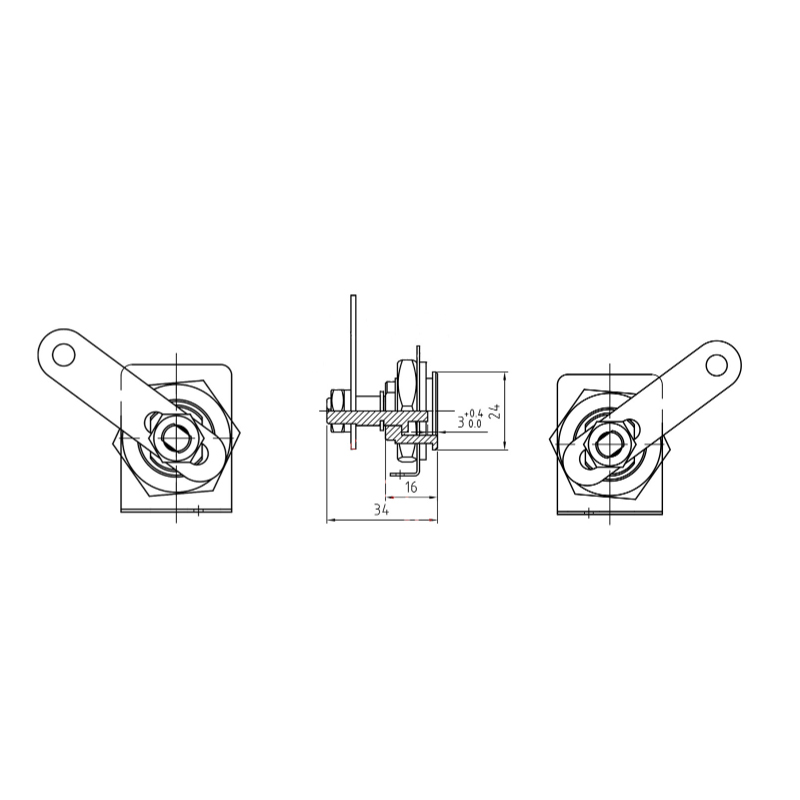 FKD-0073 Elevator Floor Door Triangular Lock AssemblyMechanical floor-door triangle lock assembly for keeping landing doors closed; check key profile, hole pitch, spring force and monitoring-contact needs before specifying.View Product →
When specifying this part, confirm the key profile, the plate hole pitch, the return-spring force and whether the assembly must also carry a monitoring contact for the unlocking action.
Selection and Installation Checklist
- Match the lock family to the door construction first; a hook interlock on a swing door is a design error, not an installation one.
- Confirm engagement of at least 7 mm with adjustment margin left on the mounting slots, not at the limit of travel.
- Verify the safety contact is operated by the lock body alone and opens before the hook can be lifted clear.
- Check the return spring and the roller for free movement; a stiff roller produces false "door open" faults within weeks.
- Test the key release from the landing, then confirm the lock re-latches and the contact re-closes on key withdrawal.
- Record contact type and voltage drop so the next replacement matches the safety chain, not just the mounting holes.
Field Failures Worth Recognising
- Recurring door-open faults with a clean contact usually mean a worn roller has reduced hook engagement.
- Intermittent faults after door adjustment point to a switch whose roller now rides the cam edge instead of its centre.
- A door that rattles but proves locked is often a sagging panel; the lock is doing its job while the guide shoes are not.
- Locks that release but will not re-latch in cold weather usually have grease on the hook face or a tired spring.
- Triangular lock assemblies with a bent plate let the key turn without releasing the hook — the operator forces it, and the plate deforms further.
Matching a Replacement Lock
Replacement is where most sites lose time. Three details decide whether a part drops in: the mounting hole pattern on the frame column, the contact configuration in the safety chain, and the key profile of the release. Photograph the existing lock from the landing side before removal, measure the engagement with the door closed, and note whether the safety contact is normally closed with the door locked. A short list of verified options makes the whole exercise faster — the floor door triangle lock assemblies used across common landing door profiles are a sensible starting point, and a supplier who can confirm hole pitch and contact type from a photo will usually save a second site visit.
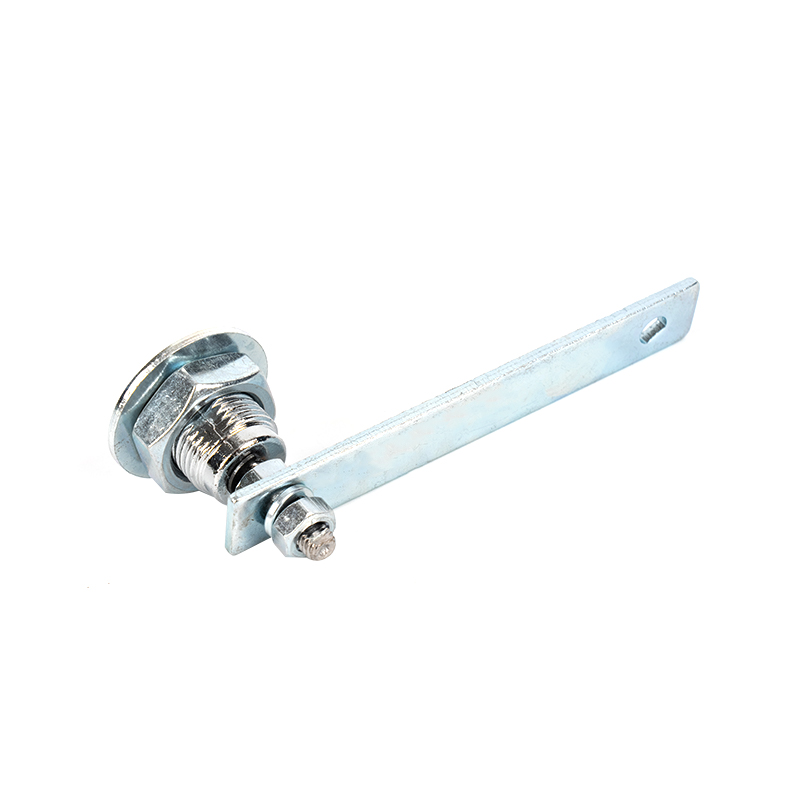 Elevator Triangle Lock for Floor Door AssembliesTriangular floor-door lock body with anti-pry, anti-shear and corrosion-resistant surface treatment; useful when replacing landing-door hardware and confirming contact configuration.View Product →
Frequently Asked Questions
Q1. What is an elevator landing door lock?
It is the interlock fitted to every landing door. It keeps the door closed mechanically and, through a safety contact, proves the door is locked before the car is allowed to move.
Q2. How many types of elevator landing door locks are there?
Four families cover most installations: hook-and-roller interlocks with an integrated contact, separate lock-and-switch sets, powered solenoid or electromagnetic locks, and manual swing-door or gate latches.
Q3. What is the minimum locking engagement for a door lock?
EN 81-20 requires the locking element to engage at least 7 mm. Inspectors measure this with the door closed, so wear that eats into the margin counts as a defect.
Q4. Why does the elevator stop when a door lock contact fails?
The safety contact is wired in series in the safety chain. Dirt, misalignment or a loose terminal opens that chain, and the controller refuses to run until the door is proved locked again.
Q5. Which key opens an elevator landing door lock in an emergency?
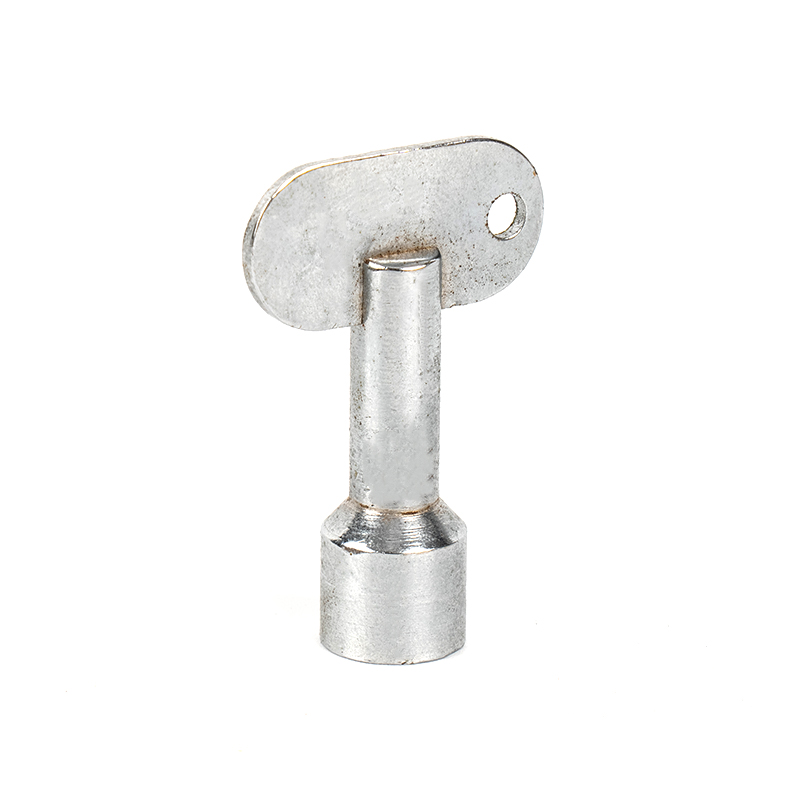
A special triangle key held by authorised service staff. It releases the lock from the landing only while the car is inside the unlocking zone of roughly 0.2 m.
Q6. How often should landing door locks be checked?
At every scheduled maintenance visit: engagement depth, contact operation, roller and spring condition, and the key release. High-traffic doors benefit from an annual strip-down and re-grease.